
“What is more noble than Gold” ?
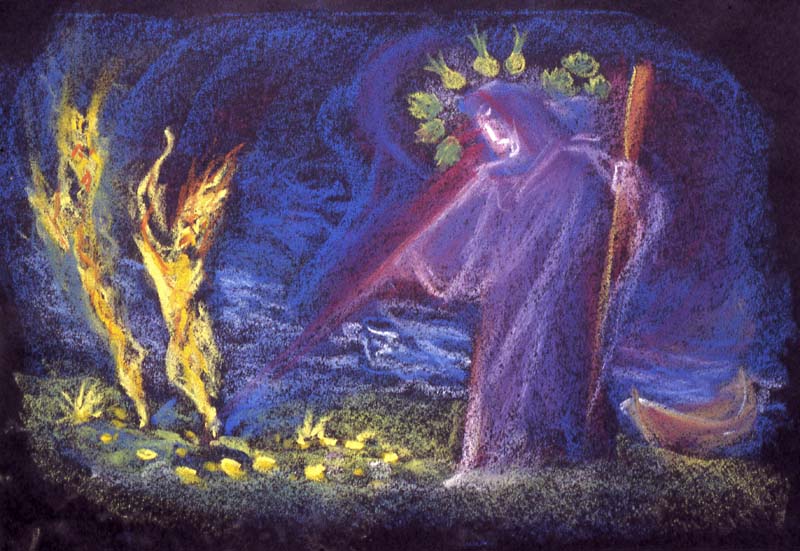
Appearing at Michaelmas in a German magazine in 1795 This gloriously mystical adult fairy tale by Johann Wolfgang von Goethe – “The Green Snake and the Beautiful Lily” explores the theme of personal alchemy inspired by light and balance, as virtues for spiritual transformation. The journey of the soul is outlined in a tale that champions morality and ethics over commerce and capital. It perfectly encapsulates the eternal pilgrimage of the mystic’s soul, and the treasure it seeks – the balance in all things.
“What is more noble than Gold?”.
“Light” replies the Snake.
“And what is more refreshing than Light?” asks the King.
“Speech” replies the Snake”
Goethe’s intensely mystical treatise is analysed at length: https://www.newview.org.uk/goethe.php
If the extracts selected below whet your appetite, please do read it in full, visit the attendant artworks and read other connected works associated with it.
“Goethe came to recognise three principles at work in organic nature: metamorphosis, polarity and enhancement. In other words: changing of form, the meeting of opposites (for example, day and night) and a climax or ‘crowning glory’ in a piece of creation (like a flower on top of a plant). It is just these qualities of magical change, meeting of opposites and glorious moments of achievement, of fulfilment, that one finds in a Fairy Tale! When we bear this in mind, Goethe’s life-path of development as a natural scientist – bringing his art into science and his science into art – becomes more visibly relevant to his ability to create a true Fairy Tale. https://www.newview.org.uk/goethe.php
This Fairy Tale was written by Goethe as a response to a work of Schiller’s entitled Über die aesthetische Erziehung des Menschen (Letters on the Aesthetic Education of Man). One of the main thoughts considered in these ‘letters’ centred around the question of human freedom. What should be the condition of the human soul forces to achieve this freedom? Schiller recognised Necessity (instinct, passion, the realm of the Senses) and Reason as two forces in the human soul. If either one predominated over the other, it prevented the human being from attaining real freedom; either the soul would be driven by blind necessity, or else a cold reason would suppress all passion and instinct. https://www.newview.org.uk/goethe.php
Only by establishing a middle ground, where necessity and reason harmonised, could freedom exist. Thus Schiller had conceived of a threefold model of the human being, where, in the balance between the two poles of Necessity and Reason, Freedom would exist for the Human Personality. Schiller saw that a harmonious social life could only be founded on the basis of free human personalities. He saw that there was an ‘ideal human being’ within everyone and the challenge was to bring the outer life experiences into harmony with this ‘ideal’. Then the human being would lead a truly worthy existence. Schiller was trying to build an inner bridge between the Person in the immediate reality and the ‘ideal human being’. He wrote these ‘Letters’ during the time and context of the French Revolution. This revolution was driven by a desire for outer social changes to enable human personalities to become free. But both Schiller and Goethe recognised that freedom cannot be ‘imposed’ from the outside but must arise from within each person.”https://www.newview.org.uk/goethe.php
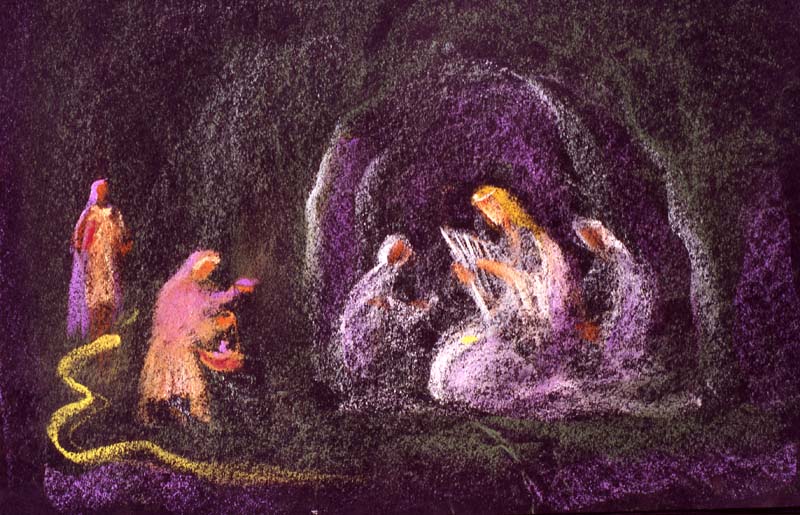
This remarkable tale does not end there however.
“At Michaelmas, September 29th, 1900, Steiner gave a private lecture where he spoke about the Fairy Tale under the title Goethe’s Secret Revelation(Goethe’s geheime Offenbarung). He was later to refer to this as his first anthroposophical lecture. […] The theme of Goethe’s Fairy Tale is the transformation of the soul, which is an alchemical process. The Fairy Tale itself is a piece of alchemy, as Steiner discovered, whereby he was able to state from his own spiritual research that it was a work of art inspired by Rosicrucian wisdom.” https://www.newview.org.uk/goethe.php
Both men insightfully aligned this mystical theme founded in balance to Michaelmas
“Those serving the Rosicrucian path are concerned with the transformation of substance – both the substance of the human soul and of the earth Herself. Matter can be viewed as condensed spirit, darkened light, held fast, ‘spell-bound’, enchanted into physical form, as it were. When a transforming spiritual impulse can penetrate into matter, the condensed, imprisoned spirit-form can be released anew into pure spirit. The transforming of ‘soul substance’ is the overcoming of selfish human desires, making the soul a fit vessel for the spirit. Spiritual transformation of substance is the basis of a true alchemy. Goethe’s Fairy Tale has an inner architecture that follows alchemical principles. These principles – of separation, purification and re-combining in a new way – can be seen in the tale: the differentiation of the characters and their tasks, the purification through love and sacrifice (which the Green Snake willingly does), then leading to a new community life-condition imbued with spirit. On the way through this process, death occurs, showing the Rosicrucian principle of ‘dying in order to become’. This principle Goethe upheld in his own life and creative work. Nature, going through Her cycles, readily describes this process with the dying away in autumn and the birth of new life in spring.” https://www.newview.org.uk/goethe.php
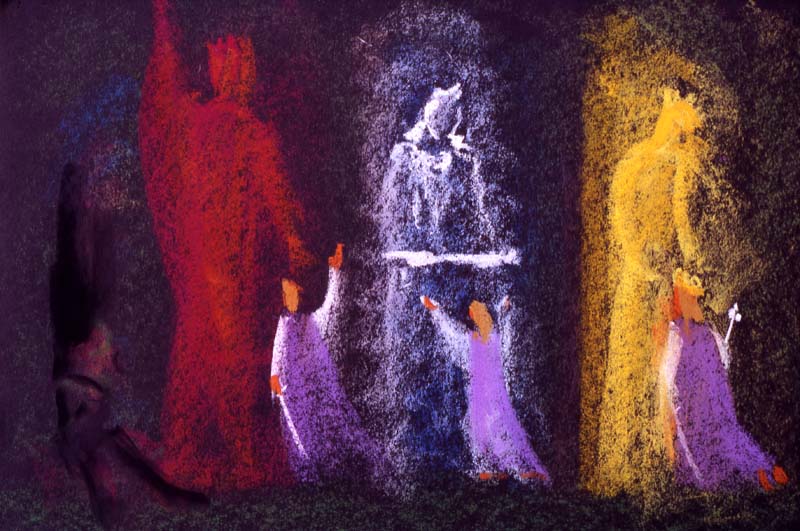
[…] The Green Snake, who has her home in a cleft in the rocks, is the embodiment of the subterranean forces of the soul. Life on Earth brings experiences to the human soul and the Green Snake is the embodiment of the sum of these experiences which when ripe, when ‘the Time has come’, can be sacrificed to form a permanent and fully conscious bridge to the spirit. These two conditions – of Lily and Snake – must be freely united in the soul in order for it to fulfil its true being. (Here we might recall Schiller’s three-fold picture.) The young Prince is the seeking soul. By the end of the tale, his unity with the Beautiful Lily has come about due to the awakening of previously slumbering soul forces enabling the Prince to unite with Freedom through the sacrifice of his life experience, when the time is ripe, as embodied in the actions of the Green Snake. His earthly life experience has now been transformed, becoming a new inner quality uniting the ‘two lands’. This is the new condition of soul that both Schiller and Goethe were striving to experience: The Free Human Personality. This soul transformation, bringing about new human community, is the outcome of the Fairy Tale.[…]
Originally Steiner had intended to create a dramatic form of Goethe’s Fairy Tale, but discovered that it could not happen because “it was clearly necessary to present these images in a far more concrete manner suited for our time”. And so Steiner metamorphosed the figures of Goethe’s Fairy Tale, essentially the different soul forces at work in one human soul, into individual human beings, where one soul force or another predominates, dealing with life’s tensions in a contemporary setting. This drama he called “The Portal of Initiation”. echoing the qualities of Jacob Boehme (a German mystic of the Middle ages), The characters in this mystery drama show the relationship of karma and destiny in human souls striving to come closer to the spirit. This Drama was performed in 1910 and Steiner wrote three more. In the second he drew upon traditions of the Knights Templar. The third and fourth Steiner claims as purely his own, representing the workings of Anthroposophy.
The incredible artwork featured in this article can be found here : https://davidnewbatt.com/2020/12/13/the-green-snake-slides/
If these snippets have inspired you, then please read the following thesis on ‘light’ and human consciousness – it is more than worthy of your time.

 People of Goda, the Clan of Tubal Cain