ANNO MUNDI

•May 20, 2011 • 1 Comment

ANNO MUNDI
Can you see me, are you near me?
Can you hear me crying out for life?
Can you tell me, where’s the glory?
Ride the days and sail the nights
When it’s over you’ll find the answer
Running in the whispering rain
Anno Mundi? Can you wonder!
Truth or thunder, life or blame

Do you see a vision of a perfect place?
Does it make you laugh, put a smile on your face?
Do you need a mirror, do you see it well?
Does the hand of God still toll the bell?
There are people laughing
They’re all laughing at you
If only they could see what you’re saying is true
Still generals fighting, making war on the world
Don’t they know, don’t they know?
No, no, no


The wind in the night blows cold
Your eyes are burning
As the sands of our time grow old
Anno Mundi

Do you follow the path that so many tread?
Are you among the blind so easily lead?
Do you join the war, do you fight for the cause?
Depend on another to fight it alone

The wind in the night blows cold
Your eyes are burning
As the sands of our time grow old
Anno Mundi

Can you see me now, can you hear me now?
Can you tell me where’s the glory?
Ride the days and sail the nights

When it’s over, you’ll find the answer
running in the rain

There’s a hope that’s growing and a vision too
All those angry hearts now reach out for you
Do you look to the dawn, see a new day begun?
No longer the fool, the vision is done.

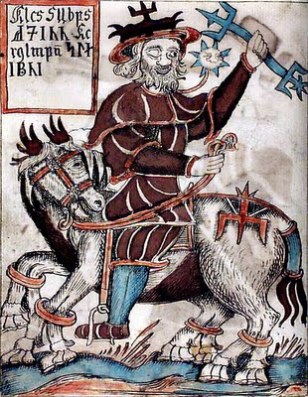
ODIN’S COURT
As you walk alone the night surrounds you like a shroud
The dreams you had were once of love and being proud
Misty horizons block your vision of the world
But the raven’s eyes will show you all you need to know

The land you loved is now so barren and so cold
The name of God rings out so high in your soul
This time the masters will lead us by the sword
And should we fail then all prevails in Odin’s court

IMAGES:
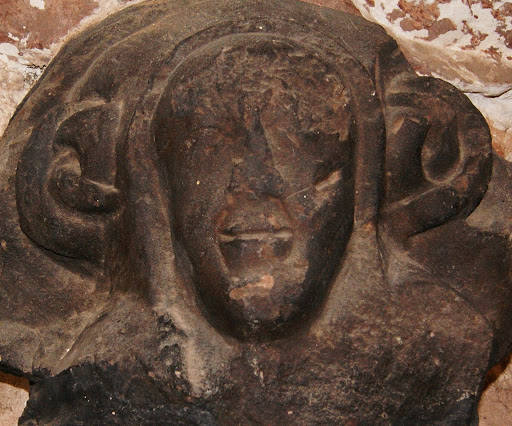
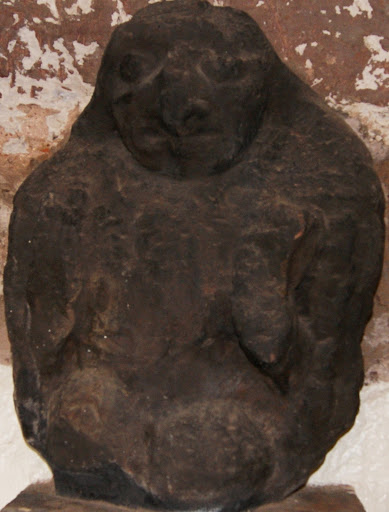
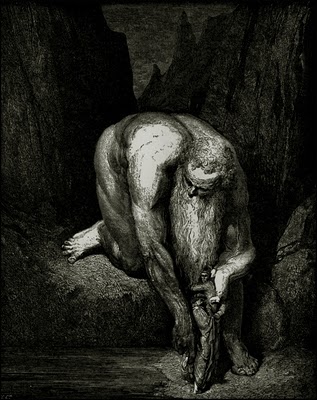
beforeitsnews.com
justseeds.org
flickriver.com
alfred-sisley.org
thebooksmugglers.com


KUBLA KHAN

•May 11, 2011 • 1 Comment
KUBLA KHAN
In Xanadu did Kubla Khan
A stately pleasure-dome decree:
Where Alph, the sacred river, ran
Through caverns measureless to man
Down to a sunless sea.
So twice five miles of fertile ground
With walls and towers were girdled round:
And there were gardens bright with sinuous rills,
Where blossomed many an incense-bearing tree;
And here were forests ancient as the hills,
Enfolding sunny spots of greenery.

But oh! that deep romantic chasm which slanted
Down the green hill athwart a cedarn cover!
A savage place! as holy and enchanted
As e’er beneath a waning moon was haunted
By woman wailing for her demon-lover!
And from this chasm, with ceaseless turmoil seething,
As if this earth in fast thick pants were breathing,
A mighty fountain momently was forced:

Amid whose swift half-intermitted burst
Huge fragments vaulted like rebounding hail,
Or chaffy grain beneath the thresher’s flail:
And ‘mid these dancing rocks at once and ever
It flung up momently the sacred river.

 Five miles meandering with a mazy motion
Through wood and dale the sacred river ran,
Then reached the caverns measureless to man,
And sank in tumult to a lifeless ocean:
And ‘mid this tumult Kubla heard from far
Ancestral voices prophesying war!


The shadow of the dome of pleasure
Floated midway on the waves;
Where was heard the mingled measure
From the fountain and the caves.
It was a miracle of rare device,
A sunny pleasure-dome with caves of ice!
A damsel with a dulcimer
In a vision once I saw:
It was an Abyssinian maid,
And on her dulcimer she played,
Singing of Mount Abora.
Could I revive within me
Her symphony and song,
To such a deep delight ‘twould win me
That with music loud and long
I would build that dome in air,
That sunny dome! those caves of ice!
And all who heard should see them there,
And all should cry, Beware! Beware!

His flashing eyes, his floating hair!
Weave a circle round him thrice,
And close your eyes with holy dread,
For he on honey-dew hath fed
And drunk the milk of Paradise


photo credits: shani oates copyright

Of Mirth and Morris Men.

•May 3, 2011 • 1 Comment
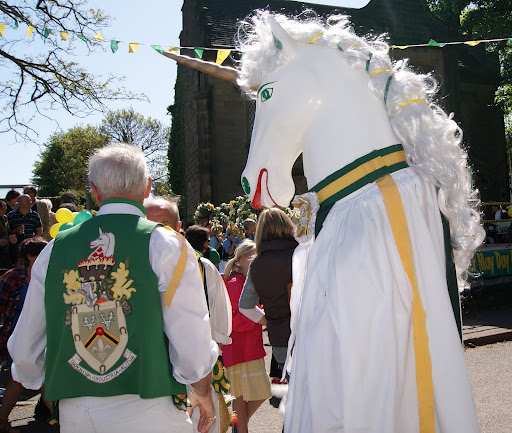
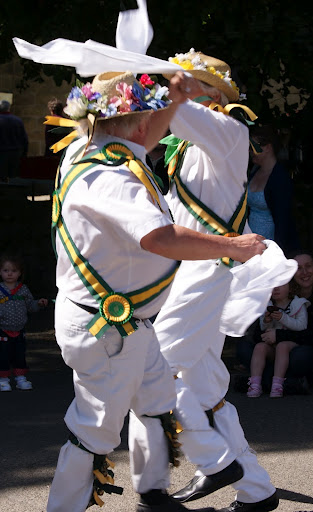
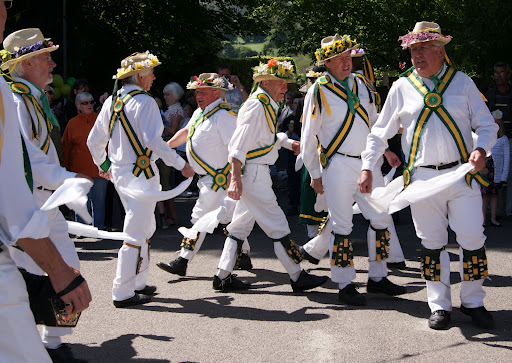
Just for something utterly different and very tongue in cheek, here are excerpts from a fabulous website about local ‘Morris Traditions’:
English “morris” dancing is the earliest known example of biological warfare. Mediaeval documents recently discovered by historians indicate that villagers who showed the early symptoms of bubonic plague were dressed in colourful outlandish costumes with bells tied to their legs and sent to neighbouring hamlets to perform their macabre ritual.
 It is quite remarkable to note that, although little or no knowledge of germs or viral infection was existent at the time, the fact that waving handkerchiefs full of plague infested mucus in the vicinity of one’s enemies had a detrimental effect was commonly known, particularly in the south of England.
“They did comme in garish clothe wythe bells about their legges and brandishinge shorte poles of wudde which they did hitte together in a devilishe danse, each holdinge a fylthie ragge soaked all in snotte. Soone after this the plague was upon us. They did also a-molly their cludges in the ftreete, gruntinge lyke pygges”
 It would also seem that this was used as a convenient way of ridding the community of its worst musicians.
 “They did also bringe wythe them uglie daemons from the underworlde who did make a foule dinne upon pypes, fidils and nakers and did take muche ale. These wretched beaftes were not fytte to danse.”
Research by scientists has shown that the average career of a morris dancer would have lasted about two weeks, which would account for the musical and terpsichorean simplicity of the “performance” and the pitifully low level of skill involved, which is still in evidence today in some areas, faithfully reproduced.


Thine Unmollied Cludge is like a May Morning
Thine unmollied cludge is like a May morning, But a cludge so neglected, Would ne’er be selected, To nibble, except by a few. The mould verily sparkleth like dew,
Thine unmollied cludge doth need a good forking, But ne’er could I fork such a thing, Though you may have forgotten, The stench is so rotten, Forsooth! It hath withered my string.
Thine unmollied cludge dear should ne’er be unleashed, On good gentlefolk such as I, Its malodorous bent, Could ne’er be heaven sent, And it bringeth a tear to the eye.
 
Cludge mollying in the Middle Ages
  The Ancient Guild of Cludge Molliers was formed in 1404 at a time when, to molly one’s own cludge, particularly in public, had become so socially unacceptable that the perpetrators became outcasts in their own communities, sometimes even to the point of joining the village morris dancers in their depraved activities. This was mainly due to the puritanical influence of the church on society, which could account for the noticeable lack of biblical references to the mollying of cludges after about 1356.
Consequently, by the late 14th century it had become necessary for the outlawed practice to be carried out covertly by skilled, professional cludge molliers who usually preferred to work under cover of darkness, often leading a double life to avoid detection. Indeed, the church was so effective in its effort to stamp out cludge mollying, it is virtually impossible to find any written reference to either cludges, or the general act of mollying in its original sense today, except in the word “mollycoddle”.
Obviously to coddle one’s cludge is very different to actually mollying it, especially in public, and the church, for all its faults, recognised this. It has been suggested by some historians that a certain amount of clandestine coddling was popular among the clergy at that time, and so would consequently have been viewed with somewhat more lenience than outright mollying. However, it should be noted that the word has now completely lost its original meaning, no doubt in part due to religious zealots misusing it loudly from the pulpit, as with the word “molly” itself, which had taken on a completely different meaning by the early 18th century with which we are not here concerned.
 
 
My Johnny’s Gone a-Mollying Oh
 
My Johnny’s gone a-mollying oh, across the raging sea, My heart it is full sore because he’ll not be back for tea, My cludge it yearns for Johnny’s fork, and more so for his string, But my Johnny’s gone a-mollying oh, and won’t be back ’til Spring.
He’ll molly here, he’ll molly there, where they can’t understand us, My Johnny’s gone to molly hard, the cludges o’er in Flanders, Ere he returns, one distant day, his kith and kin to fettle, Be sure, I’ll bid him welcome home, and then put on the kettle.
Beneath a bough, somewhere in France, my Johnny mollies gaily, To see my Johnny wield his fork is wond’rous to behold, But my own dear cludge, though e’er so pale, is often thick with mould.I wish I were a foreign cludge, and then I’d see him daily,
I wish I were a blackbird, and could to my sweetheart fly, But how would dearest Johnny know that soaring bird was I?, My cludge will wait, and so must I, despite the grief and pain, For my Johnny’s gone a-mollying oh, across the raging main.
 
In order to preserve what was by then a dying skill, and maintain the necessary secrecy to appease the church, yet keep the public’s cludges well mollied, the Guild of Cludge Molliers came into existence. Local legend has it that the formative gatherings were held in the back room of “Ye Forke and Twine”, a busy ale house in late 14th century Brampton on the site of which now stands “O’ Clackerty’s Bar”, quite close to the original Brampton castle by the sparkling river Hipper.
Naturally, little is known of the actual membership, save for rumour and speculation, but evidence of some structure of apprenticeship can be found in J. M. Blunt’s “Folke Songes of Olde Englande” published in 1892. The only known reference to female cludge mollying is in the relatively unknown song, “Come Molly my Cludge, Oh Damsel Fair“, but this is generally regarded by scholars as little more than a perverse fantasy, or at best, the mediaeval idea of comedy.
The practice has now of course completely died out in the U.K. (along with life-size corn dollies) since the invention of modern string, and more recently the steam engine. However, it is rumoured that mollying still continues in parts of Europe, albeit in a somewhat more symbolic fashion than hitherto, due to the lack of cludges, but nonetheless poignantly. The northern French town of Couilles to this day boasts an imposing granite monument to “Les Molliers de la Clourge” in the centre of its picturesque market place.
photo credits copyright of shani oates


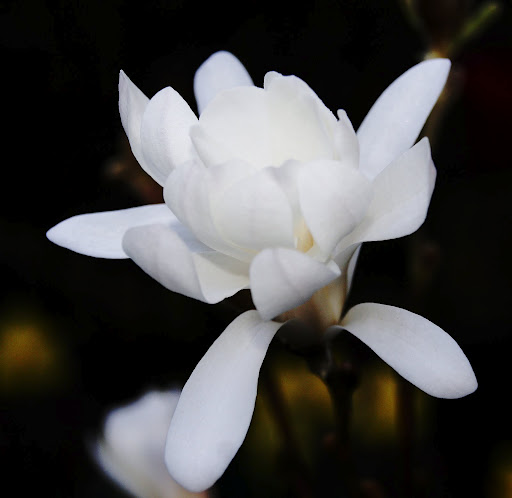
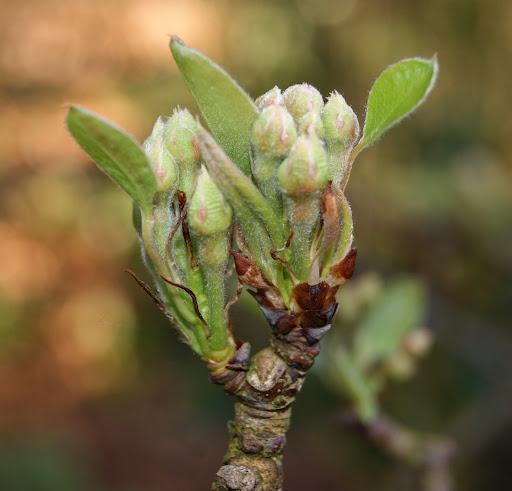
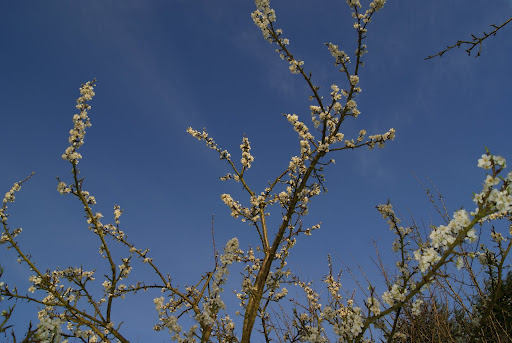
May-hem!!!

•April 27, 2011 • Leave a Comment
May-hem!
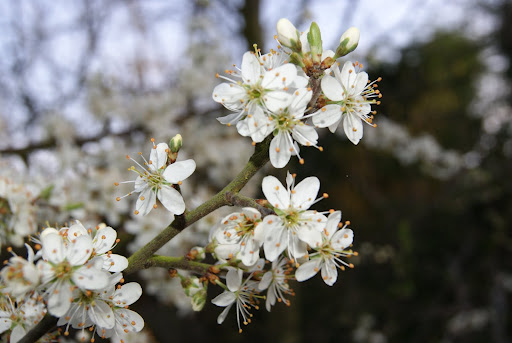
“The month of May was come, when every lusty heart beginneth to blossom, and to bring forth fruit; for like as herbs and trees bring forth fruit and flourish in May, in likewise every lusty heart that is in any manner a lover, springeth and flourisheth in lusty deeds.  For it giveth unto all lovers courage, that lusty month of May.”
–  Sir Thomas Malory, Le Morte d’Arthur 
“Gone were but the Winter,
Come were but the Spring,
I would go to a covert
Where the birds sing;

Where in the whitethorn
Singeth a thrush,
And a robin sings
In the holly-bush.

Full of fresh scents
Are the budding boughs
Arching high over
A cool green house:

Full of sweet scents,
And whispering air
Which sayeth softly:
We spread no snare;

Here dwell in safety,
Here dwell alone,
With a clear stream
And a mossy stone.

Here the sun shineth
Most shadily;
Here is heard an echo
Of the far sea,
Though far off it be.”
–  Christina Rossetti, Spring Quiet 

“Be like a flower and turn your face to the sun.”
– Kahlil Gibran

GOD OF MADNESS, PHANTOMS & HALLUCINATION
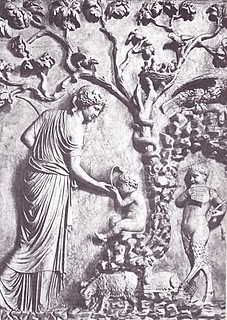
“Bacchus [Dionysos] himself, grape-bunches garlanding his brow, brandished a spear that vine-leaves twined, and at his feet fierce spotted panthers lay, tigers and lynxes too, in phantom forms.” – Ovid Metamorphoses 3.572
“[Dionysos makes phantoms appear:] the crash of unseen drums clamoured, and fifes and jingling brass resounded, and the air was sweet with scents or myrrh and saffron, and – beyond belief! – the weaving all turned green, the hanging cloth grew leaves of ivy, part became a vine, what had been threads formed tendrils, form the warp broad leaves unfurled, bunches of grapes were seen, matching the purple with their coloured sheen. And now the day was spent, the hour stole on when one would doubt if it were light or dark, some lingering light at night’s vague borderlands. Suddenly the whole house began to shake, the lamps flared up, and all the rooms were bright with flashing crimson fires, and phantom forms of savage beasts of prey howled all around.” – Ovid, Metamorphoses 4. 389

GOD OF PLAYS & CHORAL SONG

“They say also that when he [Dionysos] went abroad he was accompanied by the Mousai, who were maidens that had received an unusually excellent education, and that by their songs and dancing and other talents in which they had been instructed these maidens delighted the heart of the god.” – Diodorus Siculus, Library of History 4.4.3
“Formerly, when writing in honour of Dionysos they competed with these [compositions], which also used to be called satyrika. But later on, having progressed to writing tragedies, they turned gradually to myths and historical subjects, no longer with Dionysos in mind. Hence they also exclaimed this [the proverb ‘nothing to do with Dionysos’]. And Khamaileon] in On Thespis relates similar things.” – Suidas s.v. Ouden pros ton Dionyson

Hall of the Crimson King

•April 20, 2011 • Leave a Comment

The dance of the puppets
The rusted chains of prison moons
Are shattered by the sun.
I walk a road, horizons change
The tournament’s begun.
The purple piper plays his tune,
The choir softly sing;
Three lullabies in an ancient tongue,
For the court of the crimson king.

The keeper of the city keys
Put shutters on the dreams.
I wait outside the pilgrim’s door
With insufficient schemes.
The black queen chants
The funeral march,
The cracked brass bells will ring;
To summon back the fire witch
To the court of the crimson king.

The gardener plants an evergreen
Whilst trampling on a flower.
I chase the wind of a prism ship
To taste the sweet and sour.
The pattern juggler lifts his hand;
The orchestra begin.
As slowly turns the grinding wheel
In the court of the crimson king.

On soft gray mornings widows cry
The wise men share a joke;
I run to grasp divining signs
To satisfy the hoax.
The yellow jester does not play
But gentle pulls the strings
And smiles as the puppets dance
In the court of the crimson king.

Текст и слова песни King Crimson – The Court Of The Crimson King


The earliest preserved description of elves comes from Norse mythology. In Old Norse they are called álfar (nominative singular álfr).
Men could be elevated to the rank of elves after death, such as the petty king Olaf Geirstad-Elf. The smith hero Völundr is identified as ‘Ruler of Elves’ (vísi álfa) and ‘One among the Elven Folk’ (álfa ljóði), in the poem Völundarkviða, whose later prose introduction also identifies him as the son of a king of ‘Finnar’, an Arctic people respected for their shamanic magic (most likely, the sami). In the Thidrek’s Saga a human queen is surprised to learn that the lover who has made her pregnant is an elf and not a man. In the saga of Hrolf Kraki a king named Helgi rapes and impregnates an elf-woman clad in silk who is the most beautiful woman he has ever seen.

Crossbreeding was possible between elves and humans in the Old Norse belief. The human queen who had an elvish lover bore the hero Högni, and the elf-woman who was raped by Helgi bore Skuld, who married Hjörvard, Hrólfr Kraki‘s killer. The saga of Hrolf Kraki adds that since Skuld was half-elven, she was very skilled in witchcraft (seiðr), and this to the point that she was almost invincible in battle. When her warriors fell, she made them rise again to continue fighting. The only way to defeat her was to capture her before she could summon her armies, which included elvish warriors.[2]

They are also found in the Heimskringla and in The Saga of Thorstein, Viking’s Son accounts of a line of local kings who ruled over Álfheim, and since they had elven blood they were said to be more beautiful than most men.

The land governed by King Alf was called Alfheim, and all his offspring are related to the elves. They were fairer than any other people… In addition to these human aspects, they are commonly described as semi-divine beings associated with fertility and the cult of the ancestors and ancestor worship. The notion of elves thus appears similar to the animistic belief in spirits of nature and of the deceased, common to nearly all human religions; this is also true for the Old Norse belief in dísir, fylgjur and vörðar (“follower” and “warden” spirits, respectively). Like spirits, the elves were not bound by physical limitations and could pass through walls and doors in the manner of ghosts, which happens in Norna-Gests þáttr.

The Icelandic mythographer and historian Snorri Sturluson referred to dwarves (dvergar) as “dark-elves” (dökkálfar) or “black-elves” (svartálfar). He referred to other elves as “light-elves” (ljósálfar), which has often been associated with elves’ connection with Freyr, the god of fertility, Snorri describes the elf differences as follows:

“There is one place there that is called the Elf Home (Álfheimr which is the elven city). People live there that are named the light elves (Ljósálfar). But the dark elves (Dökkálfar) live below in earth,in caves and the dark forest and they are unlike them in appearance – and more unlike them in reality. The Light Elves are brighter than the sun in appearance, but the Dark Elves are blacker than pitch.” (Snorri, Gylfaginning 17, Prose Edda)

Further evidence for elves in Norse mythology comes from Skaldic poetry, the Poetic Edda and legendary sagas. In these elves are linked to the Æsir, particularly by the common phrase “Æsir and the elves”. In the Alvíssmál (“The Sayings of All-Wise”), elves are considered distinct from both the Æsir and the Vanir.

Grímnismál relates that the Van Frey was the lord of Álfheimr (meaning “elf-world”), the home of the light-elves. Lokasenna relates that a large group of Æsir and elves had assembled at Ægir‘s court for a banquet.
A poem from around 1020, the Austrfaravísur (‘Eastern-journey verses’) of Sigvat Thordarson, mentions that, as a Christian, he was refused board in a heathen household, in Sweden, because an álfablót (“elves’ sacrifice”) was being conducted there.
From the time of year (close to the autumnal equinox) and the elves’ association with fertility and the ancestors, it might be assumes that it had to do with the ancestor cult and the life force of the family.
In addition to this, Kormáks saga accounts for how a sacrifice to elves was apparently believed able to heal a severe battle wound:
Þorvarð healed but slowly; and when he could get on his feet he went to see Þorðís, and asked her what was best to help his healing.
“A hill there is,” answered she, “not far away from here, where elves have their haunt. Now get you the bull that Kormák killed, and redden the outer side of the hill with its blood, and make a feast for the elves with its flesh. Then thou wilt be healed.”

Jacob Grimm in his Deutsches Wörterbuch deplored the “unhochdeutsch” form Elf, borrowed “unthinkingly” from the English, and Tolkien was inspired by Grimm to recommend reviving the genuinely German form in his Guide to the Names in The Lord of the Rings (1967) and Elb, Elben was consequently reintroduced in the 1972 German translation of The Lord of the Rings.

In Christian folklore, the elber began to be described as mischievous pranksters that could cause disease to cattle and people, and bring bad dreams to sleepers. The German word for nightmare, Alptraum, means “elf dream”. The archaic form Alpdruck means “elf pressure”; it was believed that nightmares are a result of an elf sitting on the dreamer’s chest (incubi). This aspect of German elf-belief largely corresponds to the Scandinavian belief in the mara.
In Scandinavian folklore, which is a later blend of Norse mythology and elements of Christian mythology, an elf is called elver in Danish, alv in Norwegian, and alv or älva in Swedish (the first is masculine, the second feminine). The Norwegian expressions seldom appear in genuine folklore, and when they do, they are always used synonymous to huldrefolk or vetter, a category of earth-dwelling beings generally held to be more related to Norse dwarves than elves which is comparable to the Icelandic huldufólk (hidden people).
In Denmark and Sweden, the elves appear as beings distinct from the vetter, even though the border between them is diffuse. The insect-winged fairies in British folklore are often called “älvor” in modern Swedish or “alfer” in Danish, although the correct translation is “feer”. In a similar vein, the alf found in the fairy tale The Elf of the Rose by Danish author H. C. Andersen is so tiny that he can have a rose blossom for home, and has “wings that reached from his shoulders to his feet”. Yet, Andersen also wrote about elvere in The Elfin Hill. The elves in this story are more alike those of traditional Danish folklore, who were beautiful females, living in hills and boulders, capable of dancing a man to death. Like the huldra in Norway and Sweden, they are hollow when seen from the back.
The elves of Norse mythology have survived into folklore mainly as females, living in hills and mounds of stones. The Swedish älvor. (sing. älva) were stunningly beautiful girls who lived in the forest with an elven king. They were long-lived and light-hearted in nature. The elves are typically pictured as fair-haired, white-clad, and (like most creatures in the Scandinavian folklore) nasty when offended.
If a human watched the dance of the elves, he would discover that even though only a few hours seemed to have passed, many years had passed in the real world. In a song from the late Middle Ages about Olaf Liljekrans, the elven queen invites him to dance. He refuses, he knows what will happen if he joins the dance and he is on his way home to his own wedding. The queen offers him gifts, but he declines. She threatens to kill him if he does not join, but he rides off and dies of the disease she sent upon him, and his young bride dies of a broken heart.
Icelandic
Expression of belief in huldufólk or “hidden folk”, the elves that dwell in rock formations, is common in Iceland.  According to German and Danish folklore, the Erlkönig appears as an omen of death, much like the banshee in Irish mythology. Unlike the banshee, however, the Erlkönig will appear only to the person about to die. His form and expression also tell the person what sort of death they will have: a pained expression means a painful death, a peaceful expression means a peaceful death.
Variations of the German elf in folklore include the moss peopleand the weisse frauen (“white women”). On the latter Jacob Grimm does not make a direct association to the elves, but other researchers see a possible connection to the shining light elves of Old Norse.
[edited from Wikipedia]
photo credits Copyright of shani oates thank you

Fugue

•April 15, 2011 • Leave a Comment


Maenad

Once I was ordinary:
Sat by my father’s bean tree
Eating the fingers of wisdom.
The birds made milk.
When it thundered I hid under a flat stone.

The mother of mouths didn’t love me.
The old man shrank to a doll.
O I am too big to go backward:
Birdmilk is feathers,
The bean leaves are dumb as hands.

This month is fit for little.
The dead ripen in the grapeleaves.
A red tongue is among us.
Mother, keep out of my barnyard,
I am becoming another.

Dog-head, devourer:
Feed me the berries of dark.
The lids won’t shut. Time
Unwinds from the great umbilicus of the sun
Its endless glitter.

I must swallow it all.
Lady, who are these others in the moon’s vat —
Sleepdrunk, their limbs at odds?
In this light the blood is black.
Tell me my name.

Medusa


Off that landspit of stony mouth-plugs,
Eyes rolled by white sticks,
Ears cupping the sea’s incoherences,
You house your unnerving head-God-ball,
Lens of mercies,

Your stooges
Plying their wild cells in my keel’s shadow,
Pusshing by like hearts,
Red stigmata at the very center,
Riding the rip tide to the nearest point of departure,

Dragging their Jesus hair.
Did I escape, I wonder?
My mind winds to you
Old barnacled umbilicus, Atlantic cable,
Keeping itself, it seems, in a state of miraculous repair.

In any case, you are always there,
Tremulous breath at the end of my line,
Curve of water upleaping
To my water rod, dazzling and grateful,
Touching and sucking.

I didn’t call you.
I didn’t call you at all.
Nevertheless, nevertheless
You steamed to me over the sea,
Fat and red, a placenta

Paralysing the kicking lovers.
Cobra light
Squeezing the breath from blood bells
Of the fuscia. I could draw no breath,
Dead and moneyless,

Overexposed, like an X-ray.
Who do you think you are?
A Communion wafer? Bluberry Mary?
I shall take no bite of your body,
Bottle in which I live,

Ghastly Vatican.
I am sick to death of hot salt.
Green as eunuchs, your wishes
Hiss at my sins.
Off, off, eely tentacle!

There is nothing between us.


Mystic

The air is a mill of hooks—-
Questions without answer,
Glittering and drunk as flies
Whose kiss stings unbearably
In the fetid wombs of black air under pines in summer.

I remember
The dead smell of sun on wood cabins,
The stiffness of sails, the long salt winding sheets.
Once one has seen God, what is the remedy?
Once one has been seized up

Without a part left over,
Not a toe, not a finger, and used,
Used utterly, in the sun’s conflagration, the stains
That lengthen from ancient cathedrals
What is the remedy?

The pill of the Communion tablet,
The walking beside still water? Memory?
Or picking up the bright pieces
Of Christ in the faces of rodents,
The tame flower-nibblers, the ones

Whose hopes are so low they are comfortable—–
The humpback in his small, washed cottage
Under the spokes of the clematis.
Is there no great love, only tenderness?
Does the sea

Remember the walker upon it?
Meaning leaks from the molecules.
The chimneys of the city breathe, the window sweats,
The children leap in their cots.
The sun blooms, it is a geranium.

The heart has not stopped.

[Sylvia Plath]

http://www.angelfire.com/tn/plath/maenad.html

Spring Musings

•April 10, 2011 • Leave a Comment
“….the light riseth in the east and forecasts the glory of the sunkissed earth…”
“Come, fill the Cup, and in the Fire of Spring
The Winter Garment of Repentance fling:
The Bird of Time has but a little way
To fly–and Lo! the Bird is on the Wing.”
Omar Khayyám  
“The many great gardens of the world, of literature and poetry, of painting and music, of religion and architecture, all make the point as clear as possible:  The soul cannot thrive in the absence of a garden.  If you don’t want paradise, you are not human; and if you are not human, you don’t have a soul.”–  Thomas Moore, The Re-Enchantment of Everyday Life, 1996, p. 101 *
What is divinity if it can come
Only in silent shadows and in dreams?
Shall she not find in comforts of the sun,
In pungent fruit and bright, green wings, or else
In any balm or beauty of the earth,
Things to be cherished like the thought of heaven?
Divinity must live within herself:
Passions of rain, or moods in falling snow;
Grievings in loneliness, or unsubdued
Elations when the forest blooms; gusty
Emotions on wet roads on autumn nights;
All pleasures and all pains, remembering
The bough of summer and the winter branch,
These are the measures destined for her soul.
          –    Wallace Stevens, Sunday Morning, 1915*
In this light, my spirit saw through all things and into all
creatures, and I recognized God in grass and plants
.
–   Jacob Boehme *
“There is a passion in me that doesn’t long for anything from
another human being.
I was given something else, a cap to wear in both worlds.
It fell off. No matter.
One morning I went to a place beyond dawn, a source of sweetness
that flows and is never less.
I have been shown a beauty that would confuse both worlds,
but I won’t cause that uproar.
I am nothing but a head set on the ground as a gift for Shams.

Today I’m out wandering, turning my skull
into a cup for others to drink wine from.
In this town somewhere there sits a calm, intelligent person,
who doesn’t know what he’s about to do!”
Rumi
 
photo credits are the copyright of Shani Oates. 2008

Blessed Sophia

•April 6, 2011 • 2 Comments
The Nag Hammadi Library: The Thunder, Perfect Mind
I was sent forth from the power,
and I have come to those who reflect upon me,
and I have been found among those who seek after me.
Look upon me, you who reflect upon me,
and you hearers, hear me.
You who are waiting for me, take me to yourselves.
And do not banish me from your sight.
And do not make your voice hate me, nor your hearing.
Do not be ignorant of me anywhere or any time.
Be on your guard!
Do not be ignorant of me.
For I am the first and the last.
I am the honored one and the scorned one.
I am the whore and the holy one.
I am the wife and the virgin.
I am and the daughter.
I am the members of my mother.
I am the barren one
and many are her sons.
I am she whose wedding is great,
and I have not taken a husband.
I am the midwife and she who does not bear.
I am the solace of my labor pains.
I am the bride and the bridegroom,
and it is my husband who begot me.
I am the mother of my father
and the sister of my husband
and he is my offspring.
I am the slave of him who prepared me.
I am the ruler of my offspring.
But he is the one who begot me before the time on a birthday.
And he is my offspring in (due) time,
and my power is from him.
I am the staff of his power in his youth,
and he is the rod of my old age.
And whatever he wills happens to me.
I am the silence that is incomprehensible
and the idea whose remembrance is frequent.
I am the voice whose sound is manifold
and the word whose appearance is multiple.
I am the utterance of my name.
Why, you who hate me, do you love me,
and hate those who love me?
You who deny me, confess me,
and you who confess me, deny me.
You who tell the truth about me, lie about me,
and you who have lied about me, tell the truth about me.
You who know me, be ignorant of me,
and those who have not known me, let them know me.
For I am knowledge and ignorance.
I am shame and boldness.
I am shameless; I am ashamed.
I am strength and I am fear.
I am war and peace.
Give heed to me.
I am the one who is disgraced and the great one.
Give heed to my poverty and my wealth.
Do not be arrogant to me when I am cast out upon the earth,
and you will find me in those that are to come.
And do not look upon me on the dung-heap
nor go and leave me cast out,
and you will find me in the kingdoms.
And do not look upon me when I am cast out among those who
are disgraced and in the least places, nor laugh at me.
And do not cast me out among those who are slain in violence.
But I, I am compassionate and I am cruel.
Be on your guard!
Do not hate my obedience
and do not love my self-control.
In my weakness, do not forsake me,
and do not be afraid of my power.
For why do you despise my fear
and curse my pride?
But I am she who exists in all fears
and strength in trembling.
I am she who is weak,
and I am well in a pleasant place.
I am senseless and I am wise.
Why have you hated me in your counsels?
For I shall be silent among those who are silent,
and I shall appear and speak,
Why then have you hated me, you Greeks?
Because I am a barbarian among the barbarians?
For I am the wisdom of the Greeks
and the knowledge of the barbarians.
I am the judgement of the Greeks and of the barbarians.
I am the one whose image is great in Egypt
and the one who has no image among the barbarians.
I am the one who has been hated everywhere
and who has been loved everywhere.
I am the one whom they call Life,
and you have called Death.
I am the one whom they call Law,
and you have called Lawlessness.
I am the one whom you have pursued,
and I am the one whom you have seized.
I am the one whom you have scattered,
and you have gathered me together.
I am the one before whom you have been ashamed,
and you have been shameless to me.
I am she who does not keep festival,
and I am she whose festivals are many.
I, I am godless,
and I am the one whose God is great.
I am the one whom you have reflected upon,
and you have scorned me.
I am unlearned,
and they learn from me.
I am the one that you have despised,
and you reflect upon me.
I am the one whom you have hidden from,
and you appear to me.
But whenever you hide yourselves,
I myself will appear.
For whenever you appear,
I myself will hide from you.
Those who have […] to it […] senselessly […].
Take me [… understanding] from grief.
and take me to yourselves from understanding and grief.
 And take me to yourselves from places that are ugly and in ruin,
and rob from those which are good even though in ugliness.
Out of shame, take me to yourselves shamelessly;
and out of shamelessness and shame,
upbraid my members in yourselves.
And come forward to me, you who know me
and you who know my members,
and establish the great ones among the small first creatures.
Come forward to childhood,
and do not despise it because it is small and it is little.
And do not turn away greatnesses in some parts from the smallnesses,
for the smallnesses are known from the greatnesses.
Why do you curse me and honor me?
You have wounded and you have had mercy.
Do not separate me from the first ones whom you have known.
 And do not cast anyone out nor turn anyone away
[…] turn you away and [… know] him not.
[…].
What is mine […].
I know the first ones and those after them know me.
But I am the mind of […] and the rest of […].
I am the knowledge of my inquiry,
and the finding of those who seek after me,
and the command of those who ask of me,
and the power of the powers in my knowledge
of the angels, who have been sent at my word,
and of gods in their seasons by my counsel,
and of spirits of every man who exists with me,
and of women who dwell within me.
I am the one who is honored, and who is praised,
and who is despised scornfully.
I am peace,
and war has come because of me.
And I am an alien and a citizen.
I am the substance and the one who has no substance.
Those who are without association with me are ignorant of me,
and those who are in my substance are the ones who know me.
Those who are close to me have been ignorant of me,
and those who are far away from me are the ones who have known me.
On the day when I am close to you, you are far away from me,
and on the day when I am far away from you, I am close to you.

[I am …] within.
[I am …] of the natures.
I am […] of the creation of the spirits.
[…] request of the souls.
I am control and the uncontrollable.
I am the union and the dissolution.
I am the abiding and I am the dissolution.
I am the one below,
and they come up to me.
I am the judgment and the acquittal.
I, I am sinless, and the root of sin derives from me.
I am lust in (outward) appearance,
and interior self-control exists within me.
I am the hearing which is attainable to everyone
and the speech which cannot be grasped.
I am a mute who does not speak,
and great is my multitude of words.
Hear me in gentleness, and learn of me in roughness.
I am she who cries out,
and I am cast forth upon the face of the earth.
I prepare the bread and my mind within.
I am the knowledge of my name.
I am the one who cries out,
and I listen.
I appear and […] walk in […] seal of my […].
I am […] the defense […].
I am the one who is called Truth
and iniquity […].
You honor me […] and you whisper against me.
You who are vanquished, judge them (who vanquish you)
before they give judgment against you,
because the judge and partiality exist in you.
If you are condemned by this one, who will acquit you?
Or, if you are acquitted by him, who will be able to detain you?
For what is inside of you is what is outside of you,
and the one who fashions you on the outside
is the one who shaped the inside of you.
And what you see outside of you, you see inside of you;
it is visible and it is your garment.
Hear me, you hearers
and learn of my words, you who know me.
I am the hearing that is attainable to everything;
I am the speech that cannot be grasped.
I am the name of the sound
and the sound of the name.
I am the sign of the letter
and the designation of the division.
And I […].
(3 lines missing)
[…] light […].
[…] hearers […] to you
[…] the great power.
And […] will not move the name.
[…] to the one who created me.
And I will speak his name.
Look then at his words
and all the writings which have been completed.
Give heed then, you hearers
and you also, the angels and those who have been sent,
and you spirits who have arisen from the dead.
For I am the one who alone exists,
and I have no one who will judge me.
For many are the pleasant forms which exist in numerous sins,
and incontinencies,
and disgraceful passions,
and fleeting pleasures,
which (men) embrace until they become sober
and go up to their resting place.
And they will find me there,
and they will live,
and they will not die again.
        Translated by George W. MacRae
Selection made from James M. Robinson, ed., The Nag Hammadi Library, revised edition. HarperCollins, San Francisco, 1990.           
[all images courtesy of wiki commons and google images]

Palaces and Dungeons

•April 4, 2011 • Leave a Comment

The Dungeon

 By Samuel Taylor Coleridge  

And this place our forefathers made for man!
This is the process of our love and wisdom,
To each poor brother who offends against us –
Most innocent, perhaps -and what if guilty?
Is this the only cure? Merciful God!
Each pore and natural outlet shrivelled up
By Ignorance and parching Poverty,
His energies roll back upon his heart,
And stagnate and corrupt; till changed to poison,
They break out on him, like a loathsome plague-spot;
Then we call in our pampered mountebanks –
And this is their best cure! uncomforted
And friendless solitude, groaning and tears,
And savage faces, at the clanking hour,
Seen through the steam and vapours of his dungeon,
By the lamp’s dismal twilgiht! So he lies
Circled with evil, till his very soul
Unmoulds its essence, hopelessly deformed
By sights of ever more deformity!

With other ministrations thou, O Nature!
Healest thy wandering and distempered child:
Thou pourest on him thy soft influences,
Thy sunny hues, fair forms, and breathing sweets,
Thy melodies of woods, and winds, and waters,
Till he relent, and can no more endure
To be a jarring and a dissonant thing
Amid this general dance and minstrelsy;
But, bursting into tears, wins back his way,
His angry spirit healed and harmonized
By the benignant touch of Love and Beauty.

The Haunted Palace

by Edgar Allan Poe
(published 1839)
In the greenest of our valleys
   By good angels tenanted,
Once a fair and stately palace-
   Radiant palace- reared its head.
In the monarch Thought’s dominion-
   It stood there!
Never seraph spread a pinion
   Over fabric half so fair!
Banners yellow, glorious, golden,
   On its roof did float and flow,
(This- all this- was in the olden
   Time long ago,)
And every gentle air that dallied,
   In that sweet day,
Along the ramparts plumed and
pallid,
   A winged odor went away.
Wanderers in that happy valley,
   Through two luminous windows, saw
Spirits moving musically,
   To a lute’s well-tuned law,
Round about a throne where, sitting
   (
Porphyrogene!)
In state his glory well-befitting,
   The ruler of the realm was seen.
And all with pearl and ruby glowing
   Was the fair palace door,
Through which came flowing, flowing, flowing,
   And sparkling evermore,
A troop of Echoes, whose sweet duty
   Was but to sing,
In voices of surpassing beauty,
   The wit and wisdom of their king.

But evil things, in robes of sorrow,
   Assailed the monarch’s high estate.
(Ah, let us mourn!- for never morrow
   Shall dawn upon him desolate!)
And round about his home the glory
   That blushed and bloomed,
Is but a dim-remembered story
   Of the old time entombed.
And travellers, now, within that valley,
   Through the red-litten windows see
Vast forms, that move fantastically
   To a discordant melody,
While, like a ghastly rapid river,
   Through the pale door
A hideous throng rush out forever
  
 
And laugh- but smile no more.

photo credits copyright of Shani Oates


Dante!

•April 2, 2011 • Leave a Comment
Quotes from Dante:
“Do not be afraid; our fate
Cannot be taken from us; it is a gift.”
Dante Alighieri (Inferno)
“Nature is the art of God.”
Dante Alighieri
“Heaven wheels above you, displaying to you her eternal glories, and still your eyes are on the ground”
Dante Alighieri
“As flowerlets drooped and puckered in the night turn up to the returning sun and spread their petals wide on his new warmth and light-just so my wilted spirits rose again and such a heat of zeal surged through my veins that I was born anew.”
Dante Alighieri
“To course across more kindly waters now
my talent’s little vessel lifts her sails,
leaving behind herself a sea so cruel;
and what I sing will be that second kingdom,
in which the human soul is cleansed of sin,
becoming worthy of ascent to Heaven.”
Dante Alighieri (Purgatorio)
artwork: google images
 
Picnic in Akeldama

Cooking... And something like cooking...

Tales From The Under Gardener's Lodge

Home, hearth and life immeasurable

Of Axe and Plough

Anglo-Saxon Heathenry and Roman Polytheism

My search for magic

Looking for magic in the modern world

Man of Goda

People of Goda, Clan of Tubal Cain

The Elder Tree

Life as a Witch.

Sorcerous Transmutations

Meanderings of the Muse:honouring the sacred muse in word and vision

Across the Abyss

Meanderings of the Muse:honouring the sacred muse in word and vision

Clan of the Entangled Thicket 1734

Meanderings of the Muse:honouring the sacred muse in word and vision

Daniel Bran Griffith - The Chattering Magpie

Meanderings of the Muse:honouring the sacred muse in word and vision

The Cunning Apostle

Cunning Man, Mystic, Eccentric & Outcast