These works are compiled from various internet sources and almanacs. All links have been left in for ease of access to them. Thank you and enjoy!
May Day, Beltaine
It’s the merrie, merrie month, as the English have long called the beautiful month of May.
Their ancestors, the Anglo-Saxons, called it thrimilce, because at this time of year cows can be milked three times a day. The modern name is thought by some scholars to come from the Latin ‘Maia’ (consort of Jupiter, mother of Hermes, or Mercury), the goddess of growth and increase. It is also connected with major, because in the Northern Hemisphere, May is a beautiful time of Spring growth.
Despite the congeniality of the month, it was also an old belief that May is an unlucky month in which to be married. This superstition, current even today, is Roman in origin and was mentioned by the Roman poet, Ovid. Lovers should wait until the propitious month of June before tying the knot.
Those born in the first three weeks of May were born under the sign of Taurus, and from May 21 to June 20, Gemini is the ruling sun sign and represents the mythological twins Castor and Pollux, the twins of Leda, who appeared to sailors in storms with fires on their heads.
Many old sayings refer to May, but of course one must remember that they generally refer to the month in the Northern Hemisphere.
One old proverb goes, “Cast not a clout till May is out”, folk meaning, do not shed your winter clothing (clout) too early in the year, because cold weather can still come. Maia is one of the Pleiades which rises and sets at the beginning and end of the agricultural season. Another says “Wash a blanket in May/Wash a dear one away”, indicating that death will strike the family or friends of those who do so.
Some other May proverbs are:
Be it weal or be it woe, Beans blow before May doth go.
Come it early or come it late, In May comes the cow-quake.
A swarm of bees in May Is worth a load of hay. A swarm of bees in June Is worth a silver spoon. A swarm of bees in July Is not worth a fly.
The haddocks are good, When dipped in May flood.
Mist in May, and heat in June, Make the harvest right soon.
A hot May makes a fat churchyard. (Meaning that many people will die.)
Festivals in May
The Northern nations have many festivals in May because the weather turns to a suitable temperature and Mother Nature turns on her most beautiful colours and fragrances.
For example, the Macedonians, on the Orthodox Feast Day of St George (May 6), dance the hora and perform various ancient rituals and games associated with eggs, as we do at Easter.
At Helston, Cornwall, on May 8, the townsfolk have for centuries celebrated Furry Day, with dances, songs and rites whose origins and purpose have long been lost in the mists of time.
The English for two hundred years or more celebrated Shick-Shack Day (or, Oak Apple Day) on May 29, the birthday of King Charles II who brought back monarchy to Britain after the strict Puritan regime of Oliver Cromwell.
May, however, is known especially for May Day, the first day of the month, which in olden times was celebrated as the great, colourful Spring festival, with May poles that were danced around, and fairs at which dramas, often featuring Robin Hood and his “merrie men”, were performed. Morris dancers were and still are a delightful part of the English May Day.
In the Celtic tradition, now popular with neo-Pagans, the day is called Beltaine (or Beltane). The Scots used to light bel-fires on the hilltops and drive their cattle through the flames in a ritual which was either to destroy vermin and protect the cattle from disease, or to prepare the beasts for sacrifice.
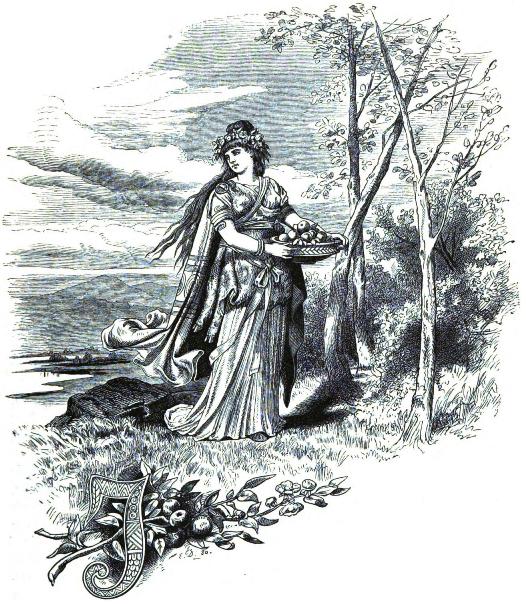
May Day commenced in ancient Rome, with youths going into the fields, dancing and singing in honour of Flora, goddess of fruits and flowers. The goddess Bona Dea, too, was celebrated at around this time, in women-only rites.
In recent years, May Day became an annual celebration not so much of the glories of Spring but of the traditions of the labour movement.
Some May Day folklore snippets
Chimney sweeps’ festival May Day was in olden times the first day of the London chimney-sweeps’ festival, a three day revel in which chimney sweeps wore gold paper and flowers on their clothes and hats. They also had their shovels and faces lined with pink paint and white chalk. They chose a grandly-dressed lord and lady from some other profession, the lady often being a boy in extravagant female attire.
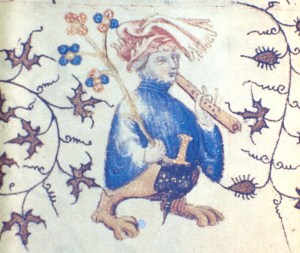
As part of chimney-sweeps’ revels it was customary for a boy to move about in a framework of branches covered in leaves. He was called Jack-in-the-green. Jack, a Green Man sometimes also showed up in London suburbs, hailing from the country, amusing the public with rustic dancing. He carried a flower-decked walking stick.
Bonfires From time immemorial, bonfires have been associated with May Eve and May Day in Britain. Originally dedicated to the pagan solar god Bel, or Balder, in Ireland these fires were once called Balder’s balefires. Until the nineteenth century, May Day bonfires were still lit in the Scottish highlands, Ireland and the Isle of Man, among the peasantry.
A-Maying
In Britain it used to be customary today to go a-Maying, or gathering flowers and branches, particularly of the May bush.
May Queen In old Britain on May Day, folk elected the Queen of the May, a pretty girl to preside over the day’s events, which usually meant sitting in a garlanded bower all day and being admired by the whole village.
The old British (and French) custom the Queen of the May today came from the ancient Roman veneration of Flora, May Queen and goddess of flowers and youthful pleasures, for whom a sexually licentious festival was held at this time of year. In some villages, children carried around a finely-dressed doll called the Lady of the May. With little copies of maypoles, they went about the village asking for a halfpenny.
May cows Up until the early nineteenth century in Britain, on May Day milkmaids would dress up a cow in garlands. They, too, dressed in flowers and danced around the cow. In earlier times they were accompanied by a man wearing a bulky frame on which were hung flowers, silver flagons and dishes. The silverware was rented out at an hourly rate by pawnbrokers.
May cosmetics On the morning of May Day, Scottish lasses used to go out early and wash their faces in dew, a sure potion for preserving beauty. In Edinburgh the favourite place to do this was Arthur’s Seat. Similarly, at Anhalth, Germany, girls did the same to get rid of freckles.
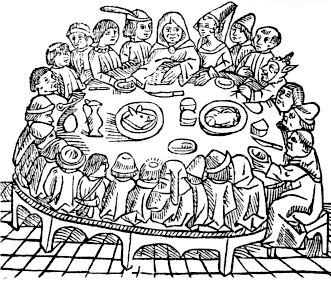
Royal May Day In medieval England, even the king and queen joined in with the May Day festivities. Chaucer wrote that early on May Day Forth goeth all the court, both most and least, to fetch the flowers fresh.
May scapegoat In old Scotland and Ireland, May Day rituals were, among other things, an attempt to stop the spread of witchcraft. Whoever received a piece of cake marked with charcoal served as scapegoat for witches, becoming a figure of terror and being pelted with eggshells. (By way of comparison, in Germany it was customary to throw eggshells at a disagreeable stranger.)
Garland Dressing, Charlton-on-Oxmoor, Oxfordshire, UK A wooden cross is bedecked with Yew and Box tree leaves.
Unlucky weddings
From as early as Roman times comes the tradition mentioned by Ovid, and still prevalent in Europe, that May is an unlucky month in which to be married. This is probably because in Rome this was the month for the festival of Bona Dea (the goddess of chastity), and the feasts of the dead called Lemuralia.
Fair Flora! Now attend thy sportful feast, Of which some days I with design have past; A part in April and a part in May Thou claim’st, and both command my tuneful lay; And as the confines of two months are thine To sing of both the double task be mine. Latin poet Ovid, Fasti, v, 185, for Flora (Floralia) Apr 28 – May 3Roman calendar
Oak before ash, we’re in for a splash, ash before oak we’re in for a soak. Traditional British weather prognostication saying for May
Hoar-frost on May 1st indicates a good harvest. Traditional English proverb
The later the blackthorn in bloom after May 1st, the better the rye and harvest. Traditional English proverb
Nut for the slut; plum for the glum Bramble if she ramble; gorse for the whores. [Traditional English saying]: one should preferably leave hawthorn at a friend’s door for their luck, but other plants are an insult. I suggest you leave the gorse at home.
Mary we crown you with blossoms today, Queen of the Angels And Queen of the May. Contemporary folk song sung by Roman Catholic schoolchildren in the UK. The month of May is dedicated to Mary.
May crowning is a traditional Roman Catholic ritual that occurs in the month of May of every year. In some countries, it takes place on or about May 1, however, in many United States Catholic parishes, it takes place on Mothers’ Day.
And forth goeth al the court, both moste and leste, To feche the floures freshe. Chaucer, referring to the practice of gathering flowers on May Day
The hawthorn‘s later orgiastic use corresponds with the cult of the Goddess Flora, and accounts for the English medieval habit of riding out on May Morning to pluck flowering hawthorn boughs and dance around the maypole. Hawthorn blossom has, for many men, a strong scent of female sexuality; which is why the Turks use a flowering branch as an erotic symbol. Robert Graves (1895 – 1985), The White Goddess, p. 176
Sin no more, as we have done, by staying But, my Corinna, come, let’s go a Maying. Robert Herrick (1591 – 1674)
Hark! The sea-faring wild-fowl loud proclaim My coming, and the swarming of the bees. These are my heralds, and behold! my name Is written in blossoms on the hawthorn-trees. I tell the mariner when to sail the seas; I waft o’er all the land from far away The breath and bloom of the Hesperides, My birthplace. I am Maia. I am May. HW Longfellow (1807 – ‘82); The Poet’s Calendar for May
“Save Mushrooms and the Fungus race, that grow as All-Hallows Tide takes place”
Superstition is a curious thing.
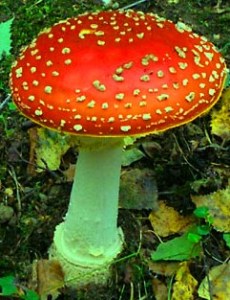
It has been considered in some areas of the world unwise to pick fungi on All Hallows Eve, for souls reside within; so to kill a hapless toad or frog upon the road confers the same cause to humankind. A certain variety of fungi, hailed as the star of the north, the cosmic dragon, is of great beneficence to our race.
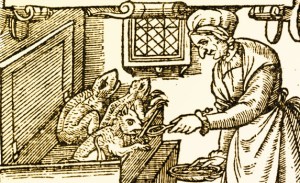
Anglo-Saxon lore lends mystery to this mix in their idiosyncratic spelling of tode (for death, in reference to poisonous fungi) but also for the warty creature we all know and love. Credence for the former pertaining to the latter is given in an obscure 17th century account by De Lancre when asked to investigate the usage of certain unctuous salves. As Magistrate for Bordeaux, his conclusion baldly reported unequivocal ‘witchcraft practises’ concerning the Basque community, blaming them for the manufacture of:
“solid and liquid poisons made out of toads for the purpose of ruining fruit crops, and even poison in the powder form made out of grilled toads which, when mixed with clouds, harms fruit trees…the strongest poison was used for killing, and even the old and skilled witches, those best able to change themselves into beasts and perform other feats, were cautious with it…”[i]
Fairy rings composed of puck’s foot, fairy farts and dragon’s breath are the baneful spores of everything ranging from the tiny champignon to the dryad’s saddle, with puff balls aplenty in between. Glistening and dewy in the pale morning light, they have been described in derogatory terms as witch’s spittle and fairy stools [also a pun on ‘stool’ as excrement!].
None of us are in any doubt as to the psychological processes afoot, whence poor Alice in all naiveté, consumes with glee her magical mushrooms at the behest of a stoned caterpillar, lounging on a prize specimen ‘tode’ whilst partaking smoothly of his own bubbling hookah! Witches brimstone spews pungent sulphuric spores o’er those who stamp where angels fear to tread. From peace to fury then.
Horses too, that trample faerie rings in the wetlands of the Somerset levels are cursed with scramble-foot (becoming lame) overnight! And on St John’s Eve in Sweden, special bonfires are constructed at crossroads of nine sacred woods into which onlookers fling the bäran, a type of impecunious toadstool to thwart torment from unpleasant sprites abound that night.[ii]
“ye elves of hills, brooks, standing lakes and groves.. you demi-puppets that by moonshine do green sour ringlets make; whereof the ewe not bites; and you whose pastime is to make midnight mushrooms.”[iii]
Portable fire, as magic flame, glows fiercely in the cunning hand that favours the threaded striations of autumnal puff balls, as noted in John Gerard’s ‘Herball’, and discovered by bewildered archaeologists at Skarae Brae. Anglo-Saxon Mycophobia asserts most fearfully how:
“Few are good to eat, they do suffocate and strangle the eater.. to those, that love such strange meates, beware of licking honey among the thorns, lest the sweetness of one, counterfeit the sharpness of the other.”
Ambivalent at best, deadly for certain, the devil’s own reeking carrion, the jellied eggs so prosaically named by Gerard as ‘Pricke mushrome,’have conversely been one moment a panacea; the next a plague. Raven’s bread, squirrel’s bread, earth calluses too, range in their efficacy, from the edible to the vitriolic – and yet, truly, are they the divine entheogen and food of the gods. Infamous for inducing sexual frenzy in nun’s, hysteria in simple peasants, and holy fire among monks, their reputation precedes them most perturbingly.
“what d’ye lack, what d’ye lack? I can pound a toad in a mortar, and make a broth of it, and stir with a dead man’s hand. Sprinkle it on thine enemy while he sleeps and he will turn into a black viper, and his own mother will slay him.”[iv]
Toads play dead. Everyone must, at some time, have held up a sorry limp and warty creature, and thinking it dead, placed it back in the undergrowth, only to see it hop away with a canny wink. Cunning is its maxim. Its life oft depends on’t. Failing this ruse, they puff up or excrete unpleasant irritations. Changing even gender when necessary in their erstwhile determination to procreate; advancing wilfully upon a female to mate even when fatally injured. Maidens bathing in their seething lathers have been much lauded for their beauty and sexual prowess. Aphrodite, born from the foaming waters is indeed the most sensuous of maidens fair, leading to the legendary demand for elixir of toad as a favoured aphrodisiac.
Equally, toad venom has thrice been a ploy to kill a King of England.[v] Odd when we consider the toad (or frog) to be the prince himself, cursed to inhabit the body of the most despised and ugly creature of folklore, the most famous in legend being Grimm’s Prince, otherwise known as ‘Iron Henry.’ From blood, bile and bone, to breath, stone and foam, the poison of this magical creature purveys the doom of all hapless souls who merit its worth as measured in body parts.
Emblem of Merovingian Kings, the fleur de lys prevailed and won the field, when arteful enchantment too bright to behold as gilded fountain fell, a golden dew upon the lily of the maid.
Into Eve’s ear, Satan as the venomous toad, drips poison, quothe Milton in ‘Paradise Lost;’ yet Graeham’s renegade toad, for his sins, adores better the sleek body of his bright and noisy motor car! Though long and languid, his most amorous glare, from horny toad alighting upon a maiden fair, there to fascinate and bewitch; tis but chickens that hatch the basilisk, from eggs exposed to cockatrice, their virtue yet reigns in Medusa’spittle! – for baneful woe, I’m told. And so, as famulus to amulet, in spite, are both applied; for wael then, or woe? All depends upon your purse of course!
As maiden fair, the Laidly Worm, a most curious tale of yore, of whispered breath that uttereth of exploits with knight, castle and rowan wood; the striking flinch of such a whip, soft with drops of water holy, secure the hag’s release in body, soul et all – sad victim of the devil’s brood, the fateful procurator of Charon’s packet land to land, with nought but Lethe between. Harnessed in number, they plough the fields at dawn, to blight the crops that ruefully stand upon the devil’s acre.
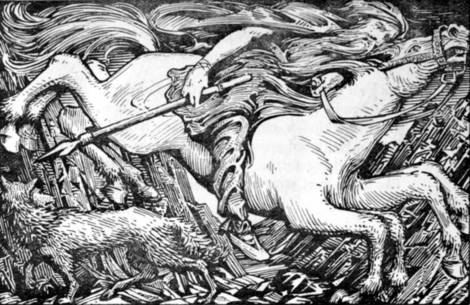
In Wotan’s rade, the flaming horses snort their frenzied spittle to the ground, the seed of next year’s crop of fungi spawn, of devil’s hat’s, hexenpils, and faerie fodder.[vi] Gruel for reindeer and soma for the shaman. This eye of Agni, doth enflame the mind, to frenzy and delight, to dance, and race, to join the devil’s flight. Palaeolithic Mother, with hybrid legs of toad, giver of life and death, love and ecstasy? Oh veiled emblem of sacred liminality, by manna do we shift, twixt everywhere and nowhere; all knowing all being; to cure and heal, of death’s lingering throes. Tis all in fate’s sweet bitter mix!
Great King and leather bag, horse’s mane and brightest bairn, to wit or woe – it’s all the same! From chthonic god to burial bowl, cremation platter and lickspittle’s spade, all mock the great toad’s bulk, yet in vain magics doth weave the fate of one to the other in pale facsimile. African toads, the scapegoat become, when humankind festers at some unknown colic. Saturated in serotonins and dopamines, why seeketh eleswhere the god gene? Look no further, this toad can make you fly, dance, laugh and cry, swear, en-trance, affront to dare and chance, so follow moon and pool to seething in ecstatic communion, bold and clear.
Dead or fetish, oil or potion – and all to appease an angry god. Tenacious and sly, deadly and ecstatic, whose globular eye mirrors the insanity abound. Why lick a toad when you can milk it? But then, in scathing tone I rage, Why milk it when you can kill it? Right? Preserved thus forever, at your behest, its ‘olu’ virtue the ‘must have’ prize, a jewelled sceptre of sovereign might. For this the poor wee beast is cursed. Then Karma calls: for She is the beast that curses all.
[i] Toads and Toadstools Adrian Morgan p14, Celestial Arts, CA. 1995
fall swiftly and do pause not to consider the beauty of the heavens, lathing about you as celestial kalas dazzle all senses…..
in all things fall the hardest, the fastest, burn brightest, witness
Her dazzling beauty, in all shining colours, aglow upon the star: His are immediate, of the green and rotting earth, and of blackened deed..
when dancing, dance with the devil, follow the rhythm of the soul, take flight as the body aches for sweet scented straw, slumber upon silken pillows of dream….
there to dream the dark, dream the beauty of the aeons; seek visions of light and shadow, morphing all creation.. Fate draws all star-crossed lovers to the qutub of ablution, all is deemed fit, perfect feathers – the better for flying!
when hungry, feast upon the bounty of the gods, for humanity will keep you a starving waif, in all things strive….choose love, not hate… pit your wits against the enemy within..
how the body doth yearn for the joy and fulfilment of touch, for love’s sweet caress, and yet, many forget whose love sustains, whence all others fail?
who secures this, resounds in voice and deed – She for whom the desert enflames, for whom doth seas boil and mountains freeze into glacial shards, diametric prisms of light, refracted creation, falling upon the created…
when the Great Ma taketh me, be sure to take my heart, take my body – wrestle with it not, my soul is thine from the beginning – more I cannot give, less I may not….
who then are my brothers? who are my sisters, who are my gods – children spake the dream of man to itself of things to come, yet to be, …. from this moment hence, what wael and woe is woven thereof, what future do we gift?
in the cave of broken bones the wolf hustled the bear.. what of mankind, sayeth he to the bear, his time is up, he is no more. Not so responded the bear, all things are useful, are they not, our Mother did not tease all that breaths from Her loins for naught… there is a light, and purpose true in this especial breed ….. the wolf looked puzzled, and thoughtfully nodded..
in their dawn, they sought to master the moment – forgetting that infinity determines not their span of years; herein, upon the manifest plane, how do they play now their allotted time?
they err, they fuck, they eat, they sleep they war – repeat!
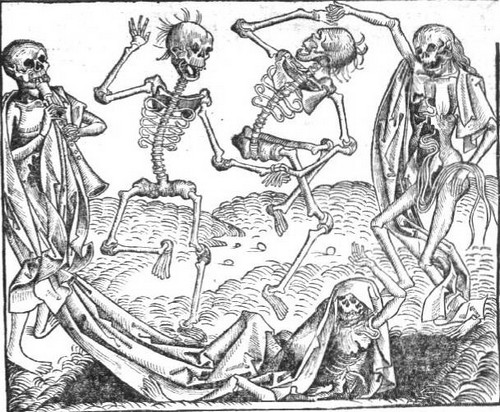
whence She calls your number for the final dance, fear it not – blessed Mother, only the gift of life is precious, it is given to the best of men, that when they fall, they fall swiftly……
images:
1 William Adolphe Bouguereau – Pieta
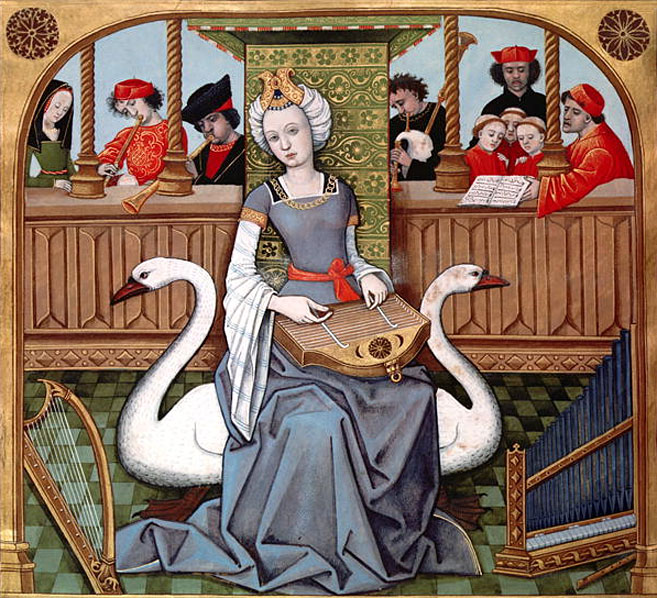
2 Hans Sebald Beham – Venus, from The Seven Planets with the Signs of the Zodiac, 1539
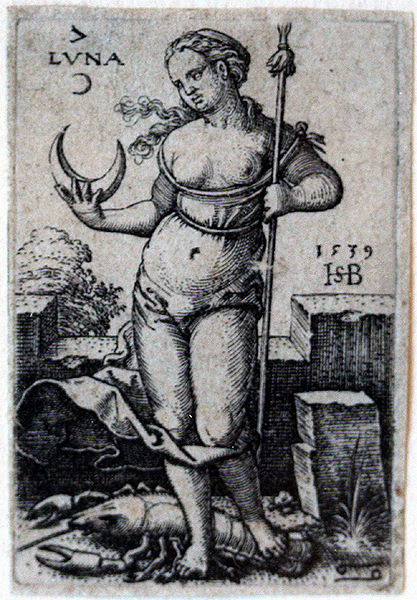
3 Hans Sebald Beham – Luna, from The Seven Planets with the Signs of the Zodiac, 1539
Saturnalia and the celebrations of Janus ran alongside the solstice celebrations of the birth of the new son/sun/aeon within all the ancient mystery religions. Janus wields the key [of life] in his left hand and the sceptre [of death and judgement] in his right hand. These two emblems once signified power and glory, wisdom and might, truth and revelation, past and future, mercy and severity.
He is the first and the last, the end and the beginning, a seeming paradox. But in reality these concepts symbolize unity and wholeness, not polarity, for all is within the one, and the one is within the whole.
He is represented in the sky by the constellation of Gemini, which appears appropriately in the midwinter sky, in the east. Janus is also perceived as the Master of Destiny, being a product of ‘kairos’ – sacred time, rather than linear time. His two faces depict the synthesis of priest and monarch, a true unity in spirit. Curiously, this leads him to represent all symbols of inversion and mutual sacrifice. ‘Sacrifice’ in all its forms, ranging from the primitive forms of actual life to personal acts [psychological] and those of humility, of placing one’s own needs last form the oldest and most universal acts of piety. Archaeological evidence reveals its practise going back many, many millennia.
More than an act of mediation between the sacrificer and deity, it is the call of blood to blood, of life to life in death and beyond death – an eternity within the realms and province of the universal life spirit –the supreme life force, the generative essence of all mankind. in holy communion; a recognition of mutual symbiosis.
It honours our begetting, from god to man, and so we reciprocate, man to god. Moreover in times of Ur-Khaos, it was believed by our primitive ancestors that only blood sacrifice achieved equilibrium and harmony, life in death and death in life.
But it would be wrong of us to dismiss this as ignorant superstition, rather it belies a deeply instinctive act underpinning almost all religions from Hinduism to Christianity, and from paganism to Judaism. It forces us to re-evaluate everything we do magically, after all, everything we eat dies for us, so isn’t it more appropriate that we give all life taken some meaning and relevance? Even more significantly, the giving of anything precious, or the banishment of anything unnecessary to our progress brings a closeness to god that cannot be ignored, impelling a true fusion of spirit, a unity of microcosm and macrocosm, signifying the end of disharmony and khaos.
The date for this act is thus perfectly placed within the epiphanic rite of Twelfth Night, a date sacred for millennia, beginning with the celebration of the new son/sun and culminating with the renewal of blood awareness, covenanting the magisterial ties to the gods.Throughout Old Europe, Greece, Rome and Egypt, the Midwinter festivals, all celebrated this darker aspect of life in death – of sacrifice. Saturn, the dark Lord of Misrule, has a Celtic counterpart – Bran [Lord of Death, oracular wisdom, prophecy and necromancy], to whom the wren is sacred.
Here, the wren is known as the ‘King’ of birds, and is subsequently killed by the ‘Robin’ who then becomes king for a time. This annual sacrifice takes place as you would expect during the midwinter festivals and places the totem animal – the wren, whose death is taboo at any other time, firmly in the role of scapegoat – of substitute for the king who must shed his blood for the health and salvation of his clan and community. This royal bird becomes the ‘Blood Royal’ spilled in a ritual that takes us back to the first time, when kingship was established upon earth from the gods.
Related to this is the myth of the twin waxing and waning year kings, the youthful, vibrant and wild Holly King [of the waxing, solar seasons] and the wise, old ‘father’ Oak King [of the waning, lunar seasons], its origins and truths being garbled in the mists of time. They are here represented by their sacred totems: robin [holly] and wren [oak]. Once killed, the ‘Wren’ is then mounted upon a stang or pole and paraded around the boundaries by he who has slain it – the ‘Robin’ in recognition that he is alive and King for another year. This assertive activity is accompanied by the following verse:
“We hunted the Wren for Robin the Bobbin
We hunted the Wren for Jack the Can
We hunted the Wren for Robin the Bobbin
We hunted the Wren for everyone.”
If we look further into the following verses we can see that the ‘Wren’ is in fact a substitute for the death of a man, who is hunted, killed and consumed.
“Oh where are you going? says Milder to Malder.
We may not tell you says Festle to Fose –
We’re off to the wild wood, says John the Red Nose
We’re off to the wild wood, says John the Red Nose.
And what will you do there? says Milder to Malder.
We may not tell you says Festle to Fose.
We’ll hunt the Cutty Wren says John the Red Nose.
We’ll hunt the Cutty wren says John the Red Nose.
How will you shoot him?……
With bows and arrows………
That will not do -….
What will do then?….
Big guns and cannons !….
How will you bring him home?….
On four men’s strong shoulders…
That will not do-…..
What will do then?…
Big cart and big wagons….
How will you cut him up?…
With [hunting] knives and with [pitch] forks.
That will not do-…
What will do then?….
Big hatchets and cleavers.
How will you cook him?…
In pots and in pans.
That will not do-…
What will do then?…
In a bloody great brass cauldron!…
Who’ll get the spare ribs?…
We’ll give all to the poor.”
Bill Gray, in citing the celebration of the ‘Cult of Kingship’, writes – “They gave their late leader the most honourable burial of all – in their own stomachs.”
We all know that eventually human sacrifice evolved into animal sacrifice, finally developing into the form of the Eucharist, used by Church and Craft alike, for blood is the power and seed of life.
This Midwinter Sacrifice has within the Craft become symbolized by the death of the Wren, [whom even the Druids recognized as King of the birds] the totemic substitute of the Old, Oak King, a manifest and graphic substitute that illustrates how life comes from death retaining as it does its own seeds of generation. The ‘Robin’, totem of the Young Horned, Holly King and synonym for the dying King where ‘Hunter and Hunted are but One’. This solemn rite recognizes that sacrifice is necessary for the continuation of life, for without death there would be no life.
Twelve days of chaos and reversal signifying the primordial state are transformed into balance and harmony, of order restored – a recognition of the introduction of cosmic Law of Maat. In order to assert these principles within the temporal realms, we feast on pork and toast the gods and ancestors. But Why?
Pig and its wild counterpart, the boar, represent for many ancient religions the definitive sacrificial animal, sacred to the many peoples of Old Europe and Asia [Norse, the Greeks, the Turks, Egyptians and Hindus’]. Even for the Semitic peoples, the proscription to eat it actually reveals a ‘taboo’, wherein the ancestral totem is forbidden consumption. This feasting animal, traditional served whole with an apple in its mouth reveals a significant esoteric secret. Apples, the fruit of immortality, contain the sacred starry pentagram of seeds within, announcing both our heavenly origins and the promise of new life. These seeds hold the soul, to be reborn from the earth, the body of the Mother.
The Boar’s Head Carol
Bedeck’d with bays and rosemary.
Quot estis in convivio.
Caput apri defero
Reddens laudes Domino
The boar’s head, as I understand,
Is the rarest dish in all this land,
Which thus bedeck’d with a gay garland
Let us servire cantico
Caput apri defero
Reddens laudes Domino
Reginensi atrio.
Caput apri defero
Reddens laudes Domino
Caput apri defero
Reddens laudes Domino
He hunted down through earth and hell
That swart boar Death until it fell.
Caput apri defero
Reddens laudes Domino
Caput apri defero
Reddens laudes Domino
And so the old boar is sacrificed for holy feast; yet first it is presented holding the seeds of its own generation within its mouth, the seat of the soul – hence the kiss of death that draws it out.
This fruit of immortality is no more than the ‘soul-cake’ exclaimed within midwinter folk songs.
Fermented apples in the form of apple ales and ciders are used for the ‘Wassail cup’ [toyour health], a seasonal drink that on a mundane level toasts the immediate company, the ancestors and the gods.
Trees, especially fruiting ones are also hailed to induce their productive blessings. More esoterically, the ‘Bragarfull’ – Holy Cup, is drunk at Twelfth Night to raise a toast to the ancestors and to all to come. This rite offers the most beautiful ofall Eucharist’s, drawn from the spirit of sacrifice, and of binding to the Gods in Truth and Beauty.
Eucharist : Buddhist Tantra – Amrita; Gnostic – Kia ; Islam/Sufi – Haoma’; Judaic/Kabbalah – Manna.
These names refer to deeper essences within or fused with the wine or mead as the Houzel – the ‘flesh’ of the gods and source of all life, ergo, magick. Partaken in all religious and magickal practices for aeons.
Mass: A ritual service for ingestion of magickally enhanced body/flesh/substance of the gods – literally or figuratively.
Sacrifice: The giving up of something precious as an offering to God. To offer something of little or no value dishonours your gods. It is a spiritually powerful tool for bringing you closer to them.
Life follows death in an unending circle, and thus the energy is self-perpetuating.
This kind of ritualistic and sacrificial conception of life is found in many ancient texts. The sacrifice is an act that forms an immediate bridge between the doer and his fulfillment.
Sacrifice is in the form of renunciation of fruits of action. Every work becomes a sacrifice without attachment and desire of fruits. The renunciation of the fruits that may result from an action in error is surrendered before it becomes manifest. Detached and disinterested actions are desirable both for individual progress on the path of spirituality and the welfare of others. A desire-less work becomes a sacrifice, a work of love and establishes a link between the doer and his God. Thus, each and every work is a ritual, a prayer if done out of love of the humanity and without selfish motives.
Worship the gods with sacrifice,
And they will nourish you in their turn.
Thus nourishing one another
You shall reap the highest good.
Cherished by your sacrifice,
The gods shall grant you your desires.
A thief verily is he who enjoys their boons
Without giving anything in return.
Longing for success on earth
They sacrifice to the gods,
For quickly success is born
From sacrifice in this world of man.
Of one unattached and liberated,
With mind absorbed in knowledge,
His actions become a sacrifice,
His entire actions melt away.
Brahman is all, the clarified butter,
The offerer and the fire.
Unto Brahman verily he goes who contemplates
On Brahman alone in all his actions.
The Bhagavad Gita,III ll-12; lV,23-24.
……………………………………………………………………..
Waes Hael!!!
Images: wiki commons and digilibraries and Dayton art Inst. & Shani Oates
The mistletoe hung in the castle hall, The holly branch shone on the old oak wall; And the baron’s retainers were blithe and gay, And keeping their Christmas holiday. The baron beheld with a father’s pride His beautiful child, young Lovell’s bride; While she with her bright eyes seemed to be The star of the goodly company. Oh, the mistletoe bough. Oh, the mistletoe bough.
“I’m weary of dancing now,” she cried; “Here, tarry a moment — I’ll hide, I’ll hide! And, Lovell, be sure thou’rt first to trace The clew to my secret lurking-place.” Away she ran — and her friends began Each tower to search, and each nook to scan; And young Lovell cried, “O, where dost thou hide? I’m lonesome without thee, my own dear bride.” Oh, the mistletoe bough. Oh, the mistletoe bough.
They sought her that night, and they sought her next day, And they sought her in vain while a week passed away; In the highest, the lowest, the loneliest spot, Young Lovell sought wildly — but found her not. And years flew by, and their grief at last Was told as a sorrowful tale long past; And when Lovell appeared the children cried, “See! the old man weeps for his fairy bride.” Oh, the mistletoe bough. Oh, the mistletoe bough.
At length an oak chest, that had long lain hid, Was found in the castle — they raised the lid, And a skeleton form lay mouldering there In the bridal wreath of that lady fair! O, sad was her fate! — in sportive jest She hid from her lord in the old oak chest. It closed with a spring! — and, dreadful doom, The bride lay clasped in her living tomb! Oh, the mistletoe bough. Oh, the mistletoe bough.
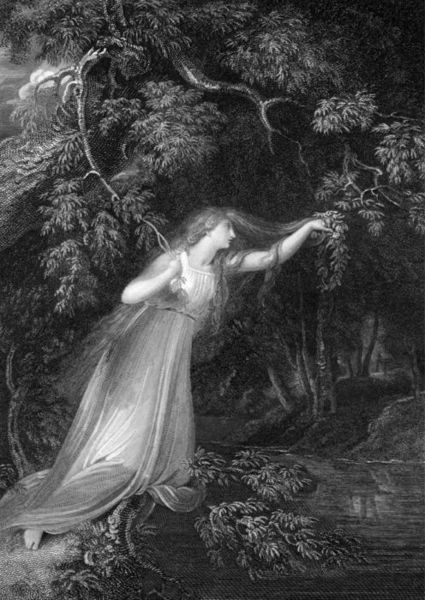
All images copyright of shani oates except Ophelia [wiki]
“Where truth and honour are placed into the ‘World of Man’, obstacles will rise out of the ground, like weeds in a field; thorns will tear at their flesh, tho’ all that is wild, will hunt alongside them, attacking all who stand in their path.”
We fall, by default within the barren landscape. In this hostile environment, our vision spans a plane littered with the ‘Mighty Dead,’ towering above those wounded men, prostrate, inert, dead to the sight before them. These are the ‘lost,’ severed from the Muse, and bereft of Her deep Wisdom. Crippled with ego, and misunderstanding, they may not rise to take the cup that hangs upon the belt of the bright and dark Hunter, whose eyes burn like coals as He stares through them.
Unable to drink from the Source, they exist only upon thorns and polluted water. Fortune favours them not, Fate decrees another course – man becomes the beast that tears at itself and others. Truth purges doubt, searing through a thousand layers of felt, and within the barren landscape many oases stand to refresh the traveller drawn to its bright beacon.
For the Source may be found in the ‘High Place’, where it flows, freely accessible to all who seek it, a stream imparting all that is needful to those who perceive its vital course, particular to it. Direction is the gift of its Egregore; access through its totem; all recognizable keys, providing the optional barrier, a vital shield wall to those who might defame it. One Source only, feeds all men, the ‘demon and the saint;’ She cannot be owned or controlled. But we can touch, see, taste and know Her; yet like Mercury She cannot be held onto without difficulty, a cunning ruse to prevent stagnancy. And thus She mustcontinue to flow.
A cup full can be drunk, but the ocean cannot be swallowed. She shifts, moving around all obstacles, flowing around everything, avoiding that which is not able to embrace Her freely, fully. Tho, She can still shape all that She touches, molding them to Her Will over time.
So am I humbled before humanity, for when I see Truth in the eyes of another, I see the Great Ma, of pure love flowing back to the Source. It tells me She is still here, that my own foolishness and ego are transient, and I am reminded that I am still only a child. I am a wanderer in Hela’s field, facing a barren humanity, who, in holding back their tears, are blinded. Without Compassion, all are lost to fain beauty; yet for the pilgrim, the seven veils are lifted, the intoxication of the Mother’s milk clears all vision to Her ‘real’ Beauty that surrounds us all.
The purpose of the Traditional (Craft) for myself as one of the People, and for my Clan is, simply that: Tradition, it is no more and no less than a system for the Work; it is a Craft, the vehicle in which, and by which each of us may travel: ourself.
Robin the Dart MAY THE WORD PROTECT YOU FROM THE LIE!
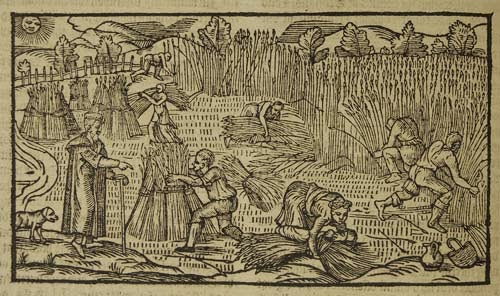
And through the wheaten stubble is heard the frequent gun.
The leaves are pale and yellow, and kindling into red,
And the ripe and bearded barley is hanging down its head.”[i]
Celebrations after a successful crop gathering mark one of mankind’s greatest and oldest known ‘harvest’ festivals, having continued for many thousands of years, beginning in pre-history, long before the Christian calendar set it to the months and seasons as we know them today. Sheaves of wheat and barley have marked this event from Egypt to Elyseus, and from Saxony to Scandinavia.
The word harvest comes from the Anglo-Saxon word for the time when crops are gathered – hærfest which followed Weodmonað, as the time of hoeing and weeding of competing herbage around the crops, grown high after the summer rains. The first grains were baked and the loaf was split as an offering shared between the farmer and his gods – ‘hlaf-maesse’ or half loaf. This became Christianised as Lammas.
The holy month of September was Haligmonað, that Bede records as one reserved for all holy and sacred rites where heathens and pagans celebrate their gods. Winter began in October or Winterfilleð; so named for the full [hunters moon] that denoted the final hunt of animals in the wild forests.
Finally, Bede informs that November was a month of sacrifice. The Icelandic word for November is very similar Gormánuáðr , the ‘gor-month’ or ‘slaughtering-month’. [[ii]] The Blotmonað (blot or blood sacrifice and ritual) initiated the slaughter of much livestock to sell and store for the coming hardship of months under snow and ice, without fresh food and warmth. Many died and it is not hard to see the association of All Hallows Eve as the time of remembrance for those deaths past, in stoic preparation of the next winter ahead.
In bygone days, many varied ceremonies and rituals marked the onset and completion of all three Harvests right through from August to October. But it is helpful to understand that until more recent centuries, everything from the month of May until the beginning of October, was known simply as summer. The year was split, not into the four we know and use today, but into two seasons only. This was very common amongst all Northern cultures of the Anglo Saxons, in Britain and Europe, including the Scandinavian kingdoms.
The terms Spring and Autumn did not apply until the 16th and 17th centuries respectively, to denote the beginning and end of the financial year, the accounting of a land based monetary system abandoned and updated in favour of Free Market Trading and Investments bound to the Stock Market in more recent times. Other cardinal markers and quarter days are Lady Day (the Feast of the Annunciation) around March 25 and the Feast of St. John around June 24, and Christmas around December 25.
As natural events occurring upon the secular calendar, Michaelmas is one that during the Middle-Ages finalised legalities, rents, debts etc and also prompted the occasion for any due gift or bursary. All four occur at the Equinoxes and Solstices signalling the onset of the next season in our modern northern hemisphere (these being Spring, Summer, Winter, Autumn). They were very familiar during medieval times, being used to denote the natural division into ‘quarters’ of the year for legal purposes, especially for settling debts and fulfilling boons and grants.
The two Equinoxes and two Solstices were once marked by these stars:
Aldebaran marked zero Aries 3044 BC
Antares marked zero Libra 3052 BC
Fomalhaut marked zero Capricorn, 2582 BC,
Regulus marked zero Cancer 2345 BC.
The seasons and angelic potency associated with these stars are:
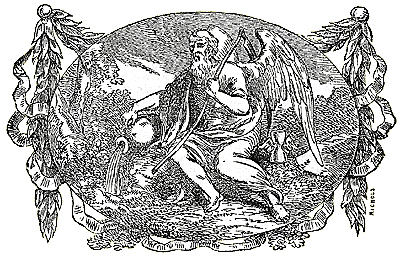
Spring is Raphael, Summer (Uriel), Autumn (Michael) and Winter is Gabriel.
Michaelmas – 29 September
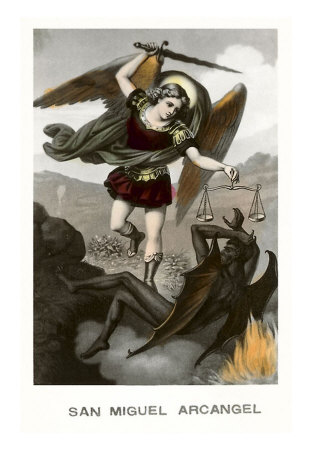
Around the autumn equinox, Michaelmas is the feast of St Michael the Archangel. It heralds a tradition of taking stock, and is the second and major harvest of three, engendering much celebration and feasting. Fairs were held to see and exchange surplus meats, fish, grain and skins, hides and furs. Labourers were hired too, touted and offered for their service over the forthcoming season. Typical fayre almost always included a newly fattened goose and a special bread or bannock.
Michaelmas Day was another year marker observed in the Folk Calendar, and in the Scottish Highlands, the ‘Struan Michaels and Bannocks’ named for this guardian spirit, were equally important ‘shew’ breads reflected in all seasons under different names particularly in England, assigned to other celebrations as soul-cakes, shrove-tide cakes and hot-cross-buns. The first sheaves of the harvest once reaped and winnowed, were dried, and ground into meal with a quern stone. The fine ground meal was made into an enriched dough with eggs, butter, and treacle, and kneaded into a slab shaped loaf. To follow this tradition carefully, it must be baked as follows, without the loaf touching any metal implement: [[iii]]
“On the stone slab forming her hearthstone she put some red hot peats, and when sufficiently heated swept it clean. On this the dough was placed to cook with an inverted pot over it. During the process of cooking it was often basted with beaten eggs, forming a custard-like covering.” [[iv]]
Once cooked a small piece was broken off and cast into the fire by the housewife in order to safeguard herself and her household against the caprice of ill will, borne by others, directly or indirectly. Reserving some of the Struan for her own family, she would visit all her neighbours to share in her bounty and well wishing – a communal blessing. There was always rivalry and prestige in the first to grind the harvest into this simple houzel.
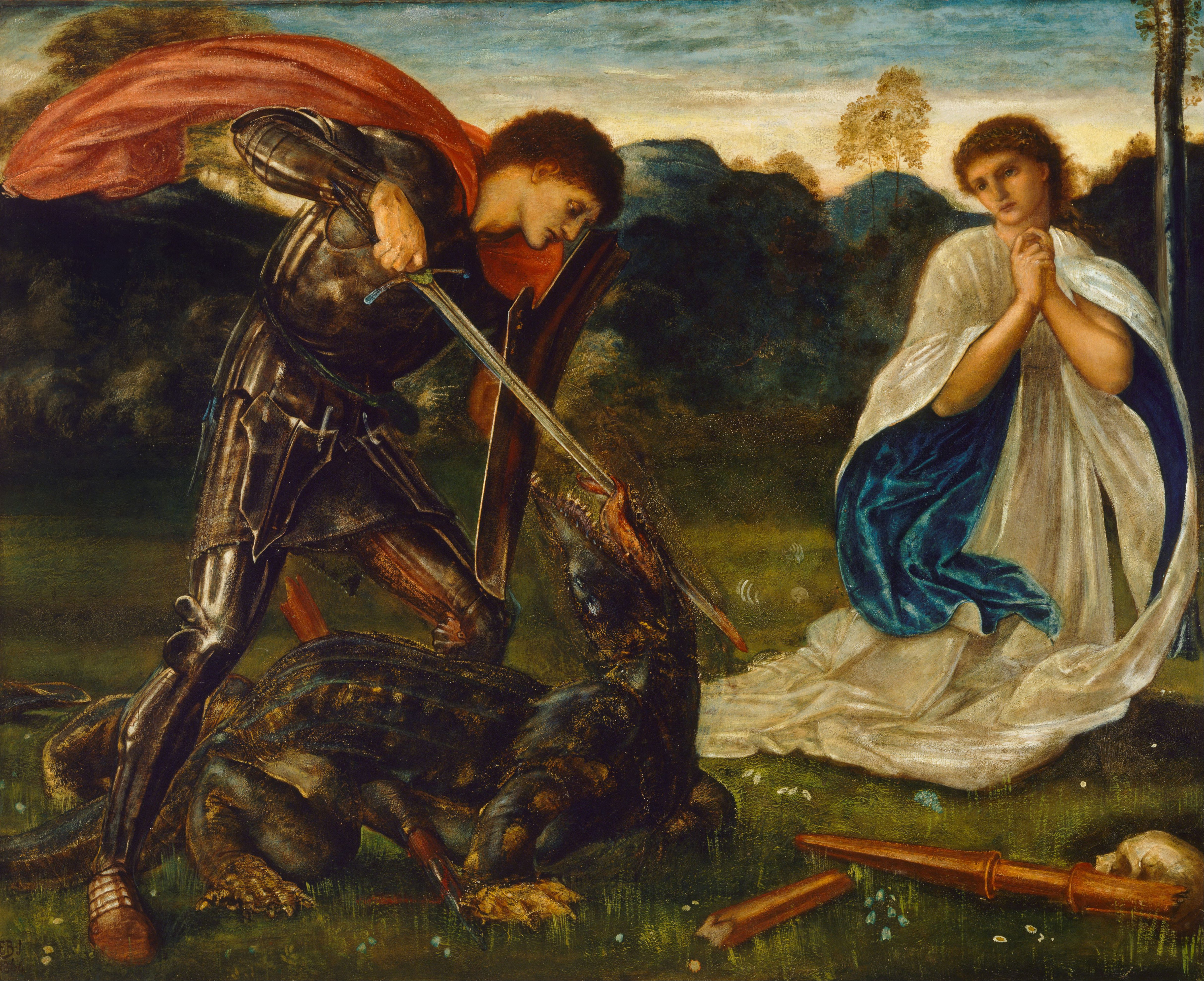
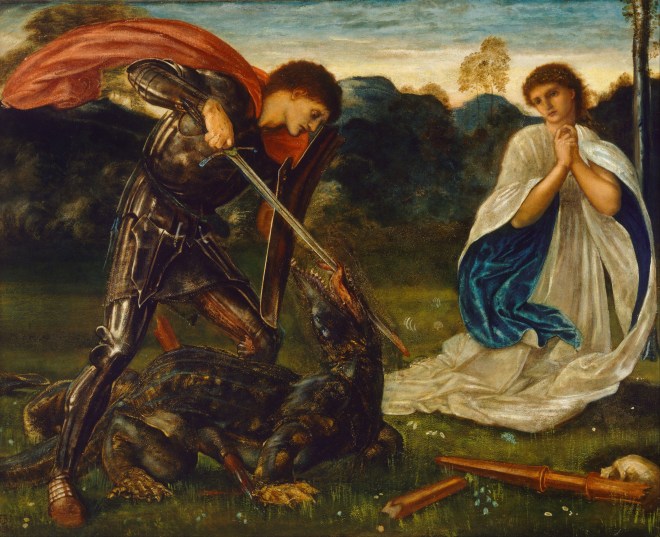
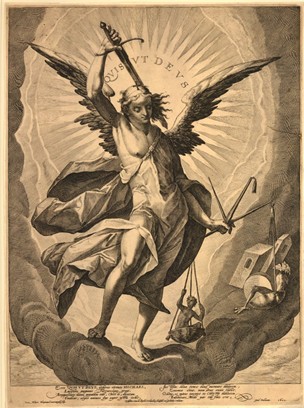
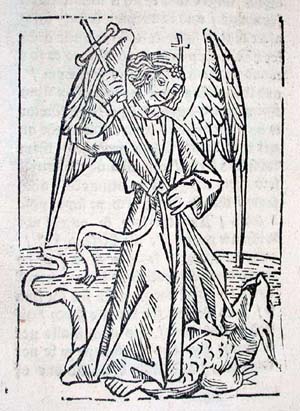
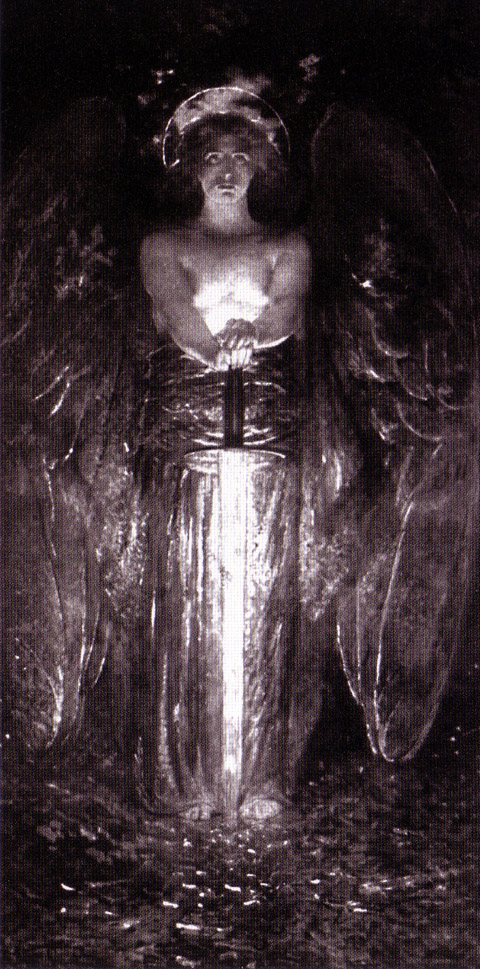
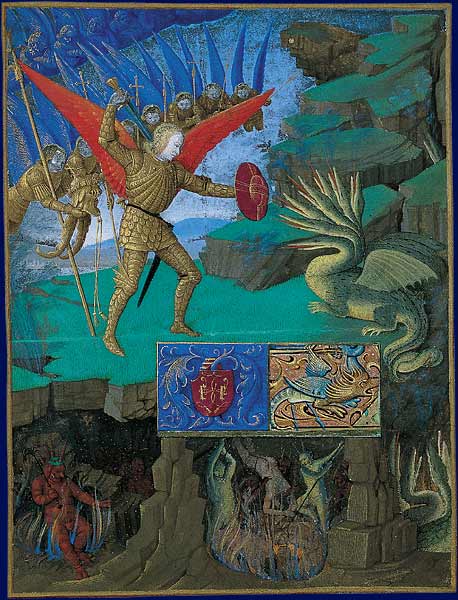
As a healer, warrior and peace-maker, St Michael is the Archangel honoured as the guardian and guide of the individual in his/her battle for the self. In historic Germanic tradition, Michaelmas was the time of strength, of exercising one’s will, pitted against those things that challenge and threaten to overwhelm the spirit. This retains at some cultural level the virtue of Wotan (Odhin) whose own resilience fought and conquered all, leading him to self -victory and triumph. In that historic culture, such challenge was manifest in the ‘worm’ and in the most aged of depictions, the dragon beneath the spear of St Michael, is more akin to a writhing worm than any dragon or later demonic ‘devil.’ This spear inherited according to theology as that very same attributed to Wotan as the harbinger of destiny, and is thus the arrow of truth and the dispeller of all falsehoods, including self-deceit.
“What is more noble than Gold?”.
“Light” replies the Snake.
“And what is more refreshing than Light?” asks the King.
“Speech” replies the Snake.[[v]]
Of course there is above and beyond our own folk-lore, elements of this vital theme within the gothic tale of Faust and within the sacristy of divine kingship in Akkadia.
The Legend and Analogy of Faust:
Two souls reside, alas, within my breast,
And each one from the other would be parted.
The one holds fast, in sturdy lust for love,
With clutching organs clinging to the world;
The other strongly rises from the gloom
To lofty fields of ancient heritage.
“In the illustration of the fight of Michael with the Dragon one thing is clearly and strongly present; that is, the consciousness that man himself must give to his inner life of soul the direction and guidance that Nature cannot give. Our present-day thinking is inclined to mistrust such an idea. We are afraid of an estrangement from Nature. We seek to enjoy her in all her beauty, to revel in her abundance of life, and we are loath to let ourselves be robbed of this enjoyment by admitting that Nature has fallen from the Spiritual. In our striving for knowledge moreover we want to let Nature speak.
We fear to lose ourselves in all kinds of fantasy, should we allow the Spirit that transcends the perception of external Nature, to have a voice concerning the reality of things. Goethe had no such fear. He found nowhere in Nature any estrangement from the Spirit. He opened his heart to her beauty, to the inner power and might of all that she revealed. In the life of man he felt the presence of much that was inharmonious, much that grated and jarred, or that gave rise to doubt and confusion. And he felt an inner urge and impulse to live in communion with Nature, where the eternal laws of sequence and compensation prevail. Some of his most beautiful poems have sprung from such a life with Nature.
Goethe was however at the same time fully conscious of how the work of man must fulfil and complete the work of Nature. He felt all the beauty of the plants. But he felt too something incomplete in that life which the plant displays before man. In that which weaves and works unseen within the plant, there lay for him far more than manifests itself to the eye within the bounds of visible form.
For Goethe, what Nature attains is not the whole. He felt as well what we may call the purposes of Nature. He did not let himself be deterred by the fear of personifying Nature. He knew well that he was not as it were dreaming such purposes into the life of the plant out of any subjective fancy, he beheld them there quite objectively, just as truly as he could behold the colour of the flowers.
Goethe was conscious of how there is in Nature not only an ascending but also a descending life. He felt the growth from the seedling to leaf and bud and blossom and fruit; but he felt too how all in turn withers, decays, dries up and dies away. He felt the Spring: but he felt also the Autumn. In Summer he could partake with his own inner sympathy in the unfolding of Nature, but in Winter he could also partake in her death with the same openness of heart.
We may not find in Goethe’s works a clear expression in words of this twofold experience with Nature, but we cannot fail to be sensible of it in his whole manner of thought. It is as it were an echo of the experience of Michael’s fight with the Dragon. Only, the experience is lifted in Goethe to the consciousness of a later age.” [[vii]]
SONS OF GOD – THE IDEOLOGY OF ASSYRIAN KINGSHIP by Professor Simo Parpola
“The most elaborate rendition of the tree motif appears under the winged solar disk of Ashur, the supreme god of the empire. The symbol of the highest god hovering over the tree marks it as the cosmic tree growing on the axis mundi and connecting heaven with earth. This enigmatic tree thus stood in the centre of the Assyrian Empire, the middle point of the world from the ideological point of view. A cosmic tree growing in the middle of the world and connecting heaven with earth was the best imaginable visual symbol for the king’s pivotal position as the focal point of the imperial system and the sole representative of god upon earth. When seated on his throne, the king, from the viewpoint of the people present in the throne room, merged with the tree, thus becoming, as it were, its human incarnation. This idea is implicit in the fourth chapter of the biblical Book of Daniel, in which the king of Babylon dreams of a huge tree growing in the middle of the earth, its top reaching the sky, and is told by the prophet: “That tree, O king, is you” (Daniel 4:10-22).
The king’s association with the cosmic tree, while part and parcel of Assyrian royal ideology, was inherited from earlier Mesopotamian empires. Several Sumerian kings of the Ur III dynasty, about 2000 B.C., are referred to in contemporary texts as “palm trees” or “mes-trees growing along abundant watercourses.” In the Babylonian Epic of Erra, the mes-tree is said to “reach by its roots the bottom of the underworld and by its top the heaven of Anu,” thus leaving no doubt about its identification as the cosmic tree. Representing the king as the personification of the cosmic tree not only emphasized the unique position and power of the king, it also served to underline the divine origin of kingship.
As already noted, the cosmic tree had been planted in the world by the goddess Inanna/Ishtar, who elsewhere figures as the divine mother of the king. In Assyrian imperial art, the goddess nurses the king as a baby or child. The message conveyed was that the king was identical in essence to his divine mother. In keeping with this idea of essential identity, or consubstantiality, the goddess too is identified with the date palm in Assyrian texts.
Since the human king, in contrast to gods, was made of flesh and blood, his consubstantiality with god of course has to be understood spiritually: It did not reside in his physical but in his spiritual nature, that is, in his psyche or soul. He thus was an entity composed of both matter and divine essence. This sounds very like the doctrine of homoousios enunciated at the Council of Nicaea in 325, in which Jesus is said to be “of the same substance” as the Father. According to the Epic of Gilgamesh, the eponymous hero, a “perfect king,” was two thirds god and one third man.
Ishtar, the divine mother of the king, was the wife of Ashur, the supreme god of the empire, defined in Assyrian sources as the “sum total of gods” and the only true god. Ashur was thus, by implication, the “heavenly father” of the king, while the latter was his “son” in human form. The Father-Mother-Son triad constituted by Ashur, Ishtar and the king reminds one of the Holy Trinity of Christianity, where the Son, according to Athanasius, is “the self-same Godhead as the Father, but that Godhead manifested rather than immanent.”
The notion of the king as the son of god held true only insofar as it referred to the divine spirit that resided within his human body. In Mesopotamian mythology, this divine spirit takes the form of a celestial saviour figure, Ninurta, whose myth, in its essence is a story of the victory of light over the forces of darkness and death. It is not difficult to recognize in this myth the archetype of the Christian dogma of the elevation of Christ to the right hand of his Father as the judge over the living and the dead. The figure of Ninurta also recalls that of the archangel Michael, the “Great Prince,” the slayer of the Dragon and the holder of the celestial keys, in Jewish apocalyptic and apocryphal traditions.
The perfect king, metaphysically encompassed the whole universe, symbolized by the cosmic tree. In short, he was god in human form, the “perfect man,” the only person possibly fit to rule the world as god’s earthly representative. As a semi-divine being, he alone of all human beings was surrounded by divine radiance, ormelammu, the outward sign of divine perfection.
A perfect king, filled with the divine spirit, would be able to exercise a just rule and maintain the cosmic harmony, thus guaranteeing his people divine blessings, prosperity and peace. By contrast, a king failing to achieve the required perfection and thus ruling without the divine spirit, trusting in himself alone, would rule unjustly, disrupt the cosmic harmony, draw upon himself the divine wrath and cause his people endless miseries, calamities and war. The purity and perfection of the king thus had to be maintained at all cost, and it was achieved with the help of god and through the exertions of the king and his closest advisers.
Under this doctrine, godlike perfection was an inherent characteristic of kings, granted to them even before their birth. According to Assyrian royal inscriptions, kings were called and predestined to their office from the beginning of time. Their features were miraculously perfected in their mother’s womb by the mother goddess, that is, the spirit of god, and their intellectual and physical abilities were perfected by the great gods, that is, the powers and attributes of god. After birth, they were nursed in the temple of Ishtar and raised there “between the wings of the goddess,” being initiated into her sacred mysteries.
The choice of the prince was confirmed by consulting the divine will through “extispicy” (inspection of the liver, or other entrails, of sacrificed sheep), and on an auspicious day the prince was officially introduced into the royal palace and presented with the royal diadem in a ceremony patterned after the triumphal return of Ninurta to his heavenly father. From now on the prince was considered equal in essence to his father, fit to exercise kingship and assume royal power should his father die.
In the royal palace, the king lived in a sacred space designed and built after celestial patterns and guarded against the material world by deities and apotropaic figures stationed at its gates and buried in its foundations. Colossal supernatural beings in the shape of a bull, lion, eagle and man, symbolizing the four turning points, guarded its gates. These apotropaic colossi marked the palace as a sacred space and thus may be compared to the four guardians of the divine throne in Ezekiel 1:10 and Revelation 4:76, which later re-emerge as symbols of the four evangelists of the New Testament: Matthew (man), Mark (lion), Luke (bull) and John (eagle).
Spiritual guardians and advisers of the king, constantly monitoring his conduct and health and helping him with their advice and expertise whenever needed. It was believed that the king’s performance was being constantly watched from heaven and that the gods communicated their pleasure or displeasure with him through a system of signs transmitted in dreams, portents and oracles that could be interpreted and reacted to. Any royal error or act committed against the divine will was a flaw calling for correction and, if perpetuated, divine punishment. However, no punishment was inflicted before the king had been notified of his error and had been given a chance to change his ways. After all, he was god’s beloved son.
Apart from reading and reacting to the signs sent by the gods, the royal scholars protected the king against disease-causing demons, black magic and witchcraft.
Every sin or error committed by the king, however small or inadvertent, was a blemish tainting the purity of his soul. Sometimes it was possible to soothe the divine anger by performing an apotropaic ritual. In other cases, however, the king had committed a sin so grave that it could be atoned for only with his death. This required enthroning a substitute king, who would take upon himself the sins of the true king and die in his stead, thus enabling his spiritual rebirth.
This rite is not to be misunderstood simplistically as a cheap way of “tricking fate.” Its rationale lies in the doctrine of salvation through redemption outlined in the myth of the descent of Ishtar into the netherworld, according to which even a spiritually dead soul (in this case, the king) could be restored to life through repentance, confession of sins and divine grace. The relevant ritual put a heavy strain on the king, who had to live an ascetic life and undergo a long and complicated series of ritual purifications during the “reign” of the substitute, which often lasted as long as a hundred days.
Embodied in the person of the king and in the Assyrian Empire itself, a true “kingdom of heaven upon earth,” did not exist just for its own sake but served a higher purpose: to provide mankind with a living example of spiritual perfection, the attainment of which would open the way to eternal life. Ultimately, then, the role of the king was that of a saviour from sin and death.
The path to this spiritual perfection is outlined in the Epic of Gilgamesh, the famous story of the legendary king of Uruk who sought eternal life. An important clue is provided by the curious spelling of the protagonist’s name, GISH.GIN.MASH, which when broken down into its logographic components can be interpreted to mean “the man who matched the tree of balance.” Another clue is provided by the thematic structure of the epic: Each of its 12 tablets deals with a different spiritual theme associated with a particular great god of the Assyrian pantheon.
Remarkably, the order of these gods corresponds to the order in which the same gods are distributed in the Assyrian sacred tree, starting from Nergal, the god of the underworld and sexual power at the root of the tree. [proto Kabbalistic tree?]Once it is realized that the epic is structured after the sacred tree, the narrative can be read as a path of gradual spiritual development culminating in the achievement of supreme intellectual powers, which enabled the hero to meet his dead friend at the end of the epic and retrieve from him precious information about life after death.
Two crucial points mark the hero’s progress towards spiritual perfection: the killing of the monster Humbaba and the felling of the tall cedar tree in Tablet V (which I take to symbolize victory over the “ego”) and the killing of the Bull of Heaven in Tablet VI (which I take to symbolize victory over the “id,” man’s animal soul).
Thanks to the perfection that he achieved, Gilgamesh was granted divinity and made the judge of the netherworld–the Mesopotamian equivalent of Egyptian Osiris’s rule–after his physical death.
Through his attainment of spiritual perfection, Gilgamesh became the yardstick of man’s spiritual value, the ideal weight, so to speak, placed on the other end of the scales to determine the weight of one’s soul on the day of judgment. In this role, the perfection of Gilgamesh and the way it was attained became a model for anyone who, like Gilgamesh, dreaded the idea of death and strove for eternal life.
Even though the attainment of perfection is presented in the epic as a process taking place in Gilgamesh, a more attentive reading shows that his perfection is an inborn quality decreed to him at birth; aided by gods, he proceeds towards his goal unfalteringly, like the sun, never wavering in his course. Hence, the program of spiritual perfection outlined in the epic actually had no relevance for a king. The true hero of the story, rather, is Gilgamesh’s companion, Enkidu, a primitive man who overcomes his animal nature through divine guidance and becomes the partner and indispensable helper of Gilgamesh in his quest for life. The possibility of achieving human perfection is not limited to the king alone.
The esoteric lore I have described did not die with the fall of the Assyrian Empire. The scholars who had previously served the Assyrian emperor later found employment at the courts of the Median and neo-Babylonian kings, the usurpers of Assyria’s claim for world dominion.
In due course, we find their descendants teaching Daniel the esoteric secrets of the Chaldeans, advising the Achaemenid kings of Persia, transmitting their wisdom to Pythagoras, waiting at the deathbed of Plato, performing the substitute king ritual for Alexander the Great, reading the physiognomy of Sulla and finally spreading their doctrines in the imperial court of Rome, as highly valued advisers of the emperors Claudius, Nero, Domitian, Trajan and Marcus Aurelius. I venture to suggest that their influence was far greater than is generally believed.[viii]”
Author, muse, mystic, pilgrim, perennial philosopher and enquirer.. but primarily a seeker of gnosis within the Mysteries - all of which have led, and continue to lead me to uphold the gravid office of 'Maid' for the People of Goda, the Clan of Tubal Cain, wherein my duty is to cast forth ancestral lore within the bounds of its cultural and spiritual aegis, thereto translate and find expression as the Mysteries of its Tradition.