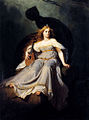
My Beloved, is Beyond Death, Beyond, Death is my Beloved

•October 19, 2013 • 1 Comment

Image

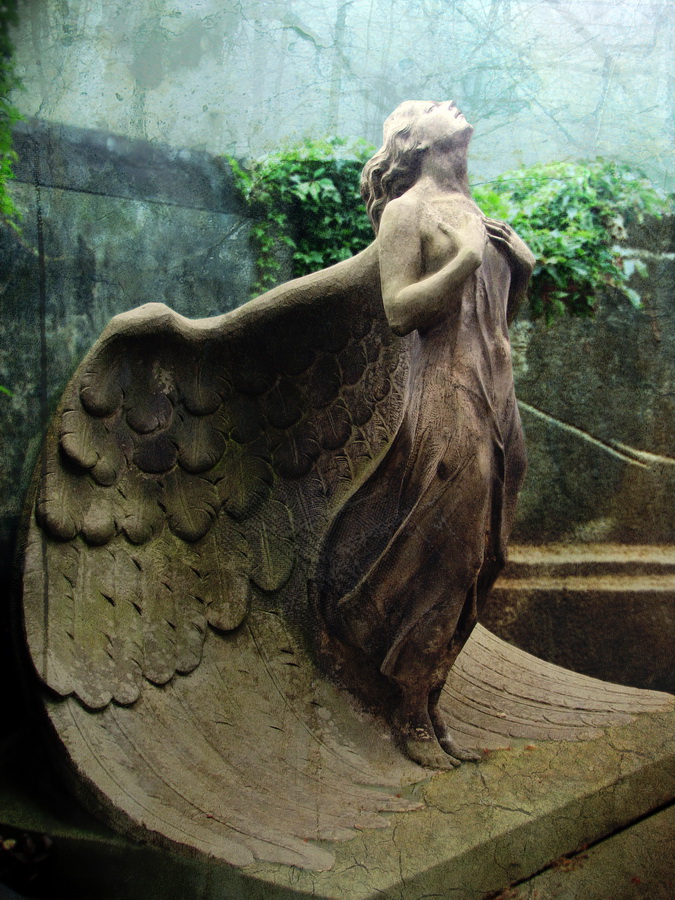
From_Warsaw_Graveyard_by_marzenaabl


Die Before You Die


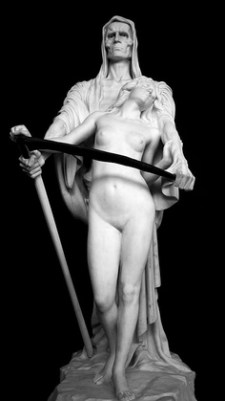
Ironic, but one of the most intimate acts

of our body is

death.


Image


So beautiful appeared my death – knowing who then I would kiss,

I died a thousand ti mes before I died.


“Die before you die,” said the Prophet Muhammad.


 Have wings that feared ever touched the Sun?


I was born when all I once feared – I could love.


In My Soul

In my soul there is a temple, a shrine, a mosque, a church

where I kneel.

Prayer should bring us to an altar where no walls or names exist.

Is there not a region of love where the sovereignty is  illumined nothing,

where ecstasy gets poured into itself and becomes lost,

where the wing is fully alive but has no mind or  body?


In my soul there is a temple, a shrine, a mosque, a church

that dissolve, that  dissolve in God.

 Image

Barcelona’s Poblenou Cemetery.


{poetry by Sufi Mystic – Rabia al Basri}

sandalphon

•October 15, 2013 • Leave a Comment

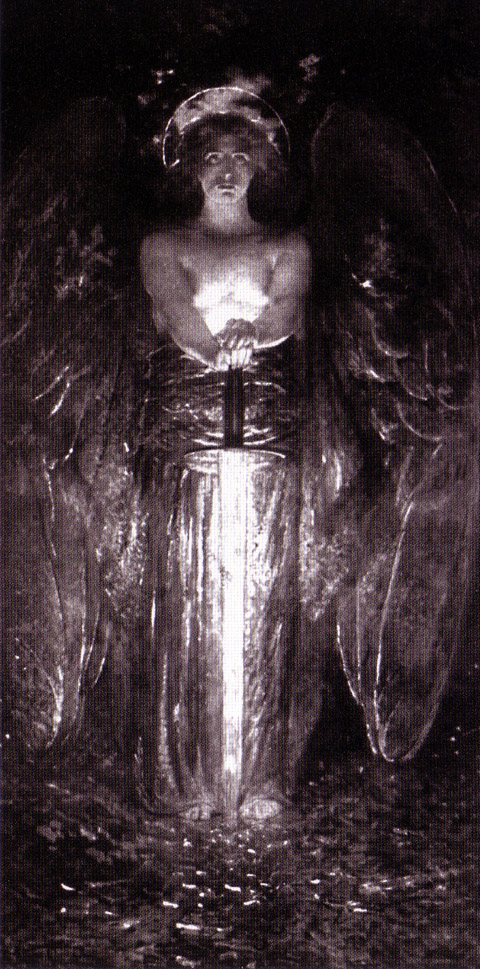
SANDALPHON

                   Blessed Sophia

             Have you read in the Talmud of old,

                       In the Legends the Rabbins have told

                      Of the limitless realms of the air,—


                   Have you read it.—the marvellous story

                    Of Sandalphon, the Angel of Glory,

                      Sandalphon, the Angel of Prayer?

Image


                   How, erect, at the outermost gates

                    Of the City Celestial he waits,

                      With his feet on the ladder of light,

                    That, crowded with angels unnumbered,

                    By Jacob was seen as he slumbered

                      Alone in the desert at night?


The Four Winds


The Angels of Wind and of Fire,

                    Chant only one hymn, and expire

                      With the song’s irresistible stress;

                    Expire in their rapture and wonder,

                    As harp-strings are broken asunder

                      By music they throb to express.


                    But serene in the rapturous throng,

                    Unmoved by the rush of the song,

Blessed Sophia


                      With eyes unimpassioned and slow,

                    Among the dead angels, the deathless

                    Sandalphon stands listening breathless

                      To sounds that ascend from below;—


Musing the Muse


From the spirits on earth that adore,

                    From the souls that entreat and implore

                      In the fervor and passion of prayer;

                    From the hearts that are broken with losses,

                    And weary with dragging the crosses

                      Too heavy for mortals to bear.

 virgo images (1)


And he gathers the prayers as he stands,

                    And they change into flowers in his hands,

                      Into garlands of purple and red;

                    And beneath the great arch of the portal,

                    Through the streets of the City Immortal

                      Is wafted the fragrance they shed.


The Four Winds


It is but a legend, I know,—

                    A fable, a phantom, a show,

                      Of the ancient Rabbinical lore;

                    Yet the old mediaeval tradition,

                    The beautiful, strange superstition

                      But haunts me and holds me the more.

the_angel_with_the_flaming_sword-large

When I look from my window at night,

                    And the welkin above is all white,

                      All throbbing and panting with stars,

                    Among them majestic is standing

                    Sandalphon the angel, expanding

                      His pinions in nebulous bars.

                      And the legend, I feel, is a part

                    Of the hunger and thirst of the heart,

                      The frenzy and fire of the brain,

                    That grasps at the fruitage forbidden,

                    The golden pomegranates of Eden –

                                                                             To quiet its fever and pain.

 IMAG0002_COVER (4)

[poem by walter von der vogelweide] 

Virgo – the Harvest Queen of the Elusian Mysteries

•September 29, 2013 • Leave a Comment

Фрина_на_празднике_Посейдона_в_Элевзине_1889 spica

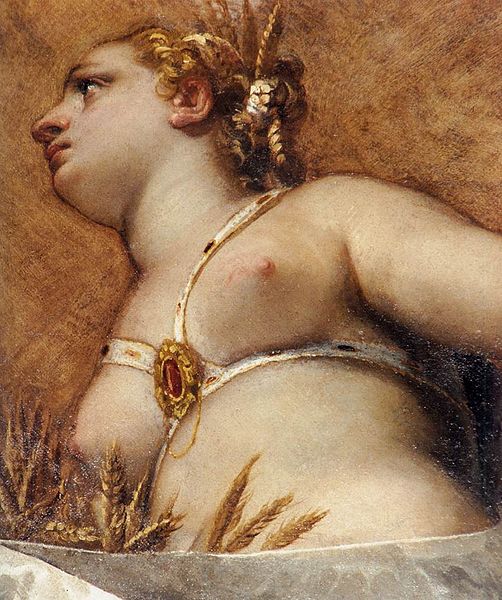
Virgo/Spica  – Spica (α Vir, α Virginis, Alpha Virginis, pronounced /ˈspaɪkə/) is the brightest star in the constellation Virgo.
virgo images (1)

Another early medieval name for her is linked to the first harvests of fruit {hence she is sometimes seen with a cornucopia}

Genrich_Ippolitovich_Semiradsky_-_Roma,_1889 elusinian mysteries

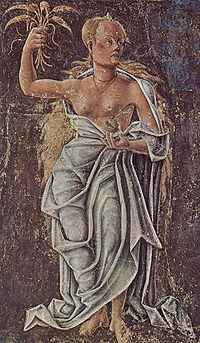
Spica is derived from the Latin word for ‘ear,’ referring to an ‘ear of wheat’ or grain. Hence her strong ties with agriculture and Harvest-time. Similar to Ceres, especially within Greece and Rome she was though admired as the beautiful Astraea; yet who was also the very personification of Justice. This links strongly with the psychopompic Persephone and Isis in Egypt. Alluringly, in ancient China, Spica, the star of Spring was known as – ‘The Horn.’
freya-from-the-sky

One of her many Arabic names is Azimech, the Solitary One, that may indicate her singular luminosity. Fomalhaut is however, the most solitary autumnal star. It is even possible this star inspired Hipparchus with the necessary data that enabled him to understand and plot the precession of the equinoxes. A Theban temple, dated c 3200 BC, dedicated to Menat (an early form of Hathor) suggests her worship is very ancient indeed.

images courtesy of wikicommons. text adapted from wiki

Ceres – meter antaia

•August 13, 2013 • Leave a Comment

v  Ovid, Metamorphoses 5. 341 ff:  (trans. Melville) (Roman epic C1st B.C. to C1st A.D.)

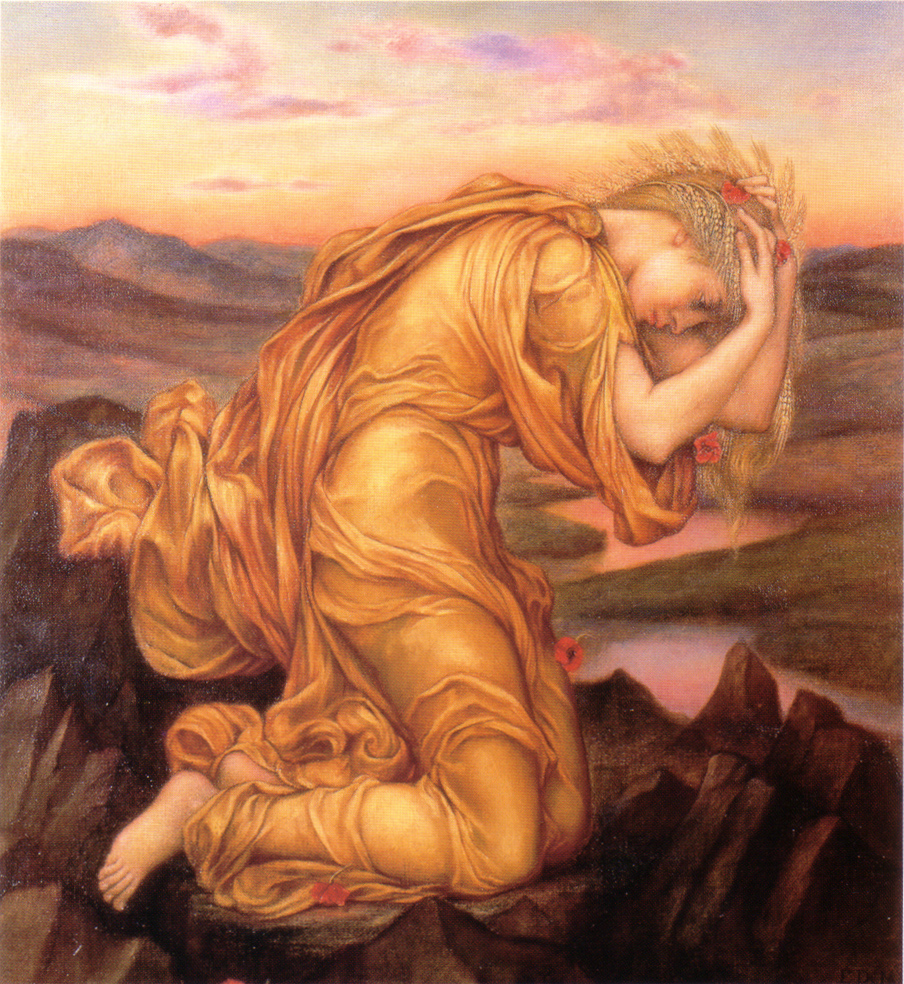
“Ceres first turned the earth with the curved plough; she first gave corn and crops to bless the land; she first gave laws; all things are Ceres’ gift. Of Ceres I************ must sing. Oh that my song may hymn the goddess’ praise as she deserves; a goddess who deserved high hymns of praise.”

Image

v  Greek Lyric V Scolia, Fragment 885:  (trans. Campbell) (Greek lyric B.C.)

“I sing of the mother of Ploutos***** , Demeter Olympia, in the garland-wearing season, and of you, Persephone, child of Zeus: greetings, both! Tend the city well.”

Sender of Prophetic Visions

Hekate and her priestesses were known for their powers of divining and foretelling the future. As a goddess of the crossroads she looks in three directions simultaneously. Seeing the past, the future that will come about if one maintains their current course, and the future that might be if they turn to a different path.

This unique wisdom is Hekate’s special gift, and is one she passes on to her followers in form of prophetic visions of the future, whispered secrets of the present, and visitations by the spirits of those long past. She is our link to the psychic world, the archetypal shaman, every individual’s possibility as a magician, seer, healer, and medium.

A device known as “Hekate’s Circle” was used for divining. It was a golden sphere with a sapphire hidden at its center. Twirling with an ox-hide thong, it was said to provide the means to reveal the future, presumably in a manner similar to that of a pendulum.

Image

As Antaia, the Sender Of Nocturnal Visions, she was both the bringer of visions and madness, and in this aspect she had a son called Museus – The Muse Man. She grants us insights which are not those of the rational mind, but rather the stuff of the deep unconscious, such as the inspirations of artists, poets, and visionaries.

In King Lear, Shakespeare attributes dreams to: “The mysteries of Hekate and the night” as she has long been associated with interpreting dreams. Unfortunately, her visions can be more than a person can bear, resulting in nightmares, terrors, and insanity.

Her power is like that of a poison such as belladonna. In lower quantities it can intoxicate or release one from pain or inhibitions, while in higher doses it destroys.

http://home.comcast.net/~subrosa_florens/witch/index.html

Image

v Orphic Hymn 41 to Demeter :

“To Meter Antaia*  Basileia Antaia , of celebrated name, from whom both men and Gods immortal came; who widely wandering once, oppressed with grief, in Eleusis’ valleys foundest relief, discovering Persephone thy daughter pure in dread Aides**, dismal and obscure. A sacred youth while through the earth you stray, Dysaulos*** , attending leader of the way; the holy marriage Khthonios**** Zeus relating, while oppressed with grief you rove. Come, much invoked, and to these rites inclined, thy mystic suppliant bless, with favouring mind.”

Image

v Callimachus, Hymn 6 to Demeter – A hymn for the Thesmophoria festival of Athens: (trans. Mair) (Greek poet C3rd B.C.)

 “As the Basket comes, greet it, ye women, saying ‘Demeter, greatly hail! Lady of much bounty, of many measures of corn.’ As the Basket comes, from the ground shall ye behold it, ye uninitiated, and gaze not from the roof or from aloft–child nor wife nor maid hath shed her hair****** –neither then nor when we spit from parched mouths fasting*******. Hesperos *******from the clouds marks the time of its coming: Hesperos, who alone persuaded Demeter to drink, what time she pursued the unknown tracks of her stolen daughter, Persephone.

Lady, how were thy feet able to carry thee unto the West, unto the Melanoi (Black Men) and where the golden apples are? Thou didst not drink nor dist thou eat during that time nor didst thou wash. Thrice didst thou cross Akheloios with his silver eddies, and as often didst thou pass over each of the ever-flowing rivers, and thrice didst thou seat thee on the ground beside the fountain Kallikhoros********* parched and without drinking, and didst not eat nor wash.

Nay, nay, let us not speak of that which brought the tear to Deo! Better to tell how she gave cities pleasing ordinances; better to tell how she was the first to cut straw and holy sheaves of corn-ears and put in oxen to tread them, what time Triptolemos was taught the good craft . . .

O Demeter, never may that man be my friend who is hateful to thee, nor ever may he share party-wall with me; ill neighbours I abhor.

Sing, ye maidens, and ye mothers, say with them : ‘Damater, greatly hail! Lady of much bounty, of many measures of corn.’ And as the four white-haired horses convey the Basket, so unto us will the great goddess of wide dominion come brining white spring and white harvest and winter and autumn, and keep us to another year. And as un-sandalled and with hair unbound we walk the city, so shall we have foot and head unharmed for ever. And as the van-bearers bear vans**********  full of gold, so may we get gold unstinted. Far as the City Chambers let the uninitiated follow, but the initiated even unto the very shrine of the goddess–as many as are under sixty years. But show that are heavy and she that stretches her hand to Eileithyia*********** and she that is in pain–sufficient it is that they go so far as their knees are able. And to them Deo shall give all things to overflowing, even as if they came unto her temple.

Hail, goddess, and save this people in harmony and in prosperity, and in the fields bring us all pleasant things! Feed our kine, bring us flocks, bring us the corn-ear, bring us harvest! And nurse peace, that he who sows may also reap. Be gracious, O thrice-prayed for, great Queen of goddesses!”

Notes:

*Meter Antaia = Cerulean Queen/Demeter/Ceres

** Aides = Hades

***Dysaulos = Iakkhos

**** Khthonios Zeus = Hades

***** Ploutos = Pluto

****** the locks were dedicated at puberty

*******  the Nesteia, the second day of the Thesmophoria, a day of fasting

******** the evening star Venus

*********(Callichorus) [i.e. the well at Eleusis]

********** skull-shaped baskets, sued for offering first-fruits to the gods

*********** goddess of childbirth

************ the Mousa/Muse Kalliope

http://www.theoi.com/Olympios/Demeter.html


all images on wikicommons/demeter

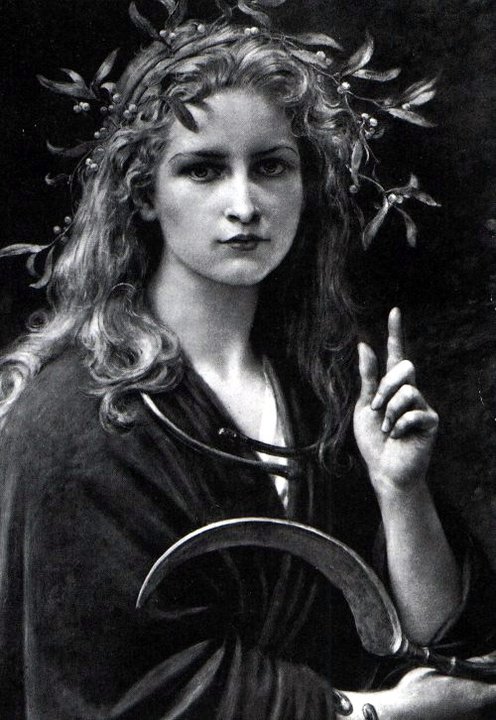
the scythe

•August 2, 2013 • 2 Comments

IMAG0348-1-2

The Scythe

End of the day at the end of the harvest
With the sun goin down
End of the row with last one behind us
and the last sheaf is bound

Yet over and over, before sleep takes my eyes
Over and over, I see the flash of the scythe – comin down

Light up a candle to see in the old way
With the sun goin down
Don’t quite understand how it burns up a whole day
Without making a sound

In some flinch of your shoulder, 
some look in your eye
I see the fear of disorder,
the fear of the scythe – comin down

Sharp is the blade that can cut through the twilight
With the sun going down
It cuts through the days and the change in our own life
Til your last comes around

Everything changes, everything dies
In a teary reflection, I see the glint of the scythe..

283988_2216865708995_5851248_n


Copyright of GAIA CONSORT THE SCYTHE


The House that Jack Built

•June 30, 2013 • 1 Comment

This is the taper that lights the way

This is the cloak that covers the stone

That sharpens the knife

Martin,_John_-_The_Deluge_-_1834

That binds the staff

That’s owned by the Maid

 Who tends the fire

George_Frederick_Watts_The_All_Pervading_250

That boils the pot

That scalds the sword

That fashions the bridge

 the_angel_with_the_flaming_sword-large

That crosses the ditch

 That compasses the hand

That knocks the door

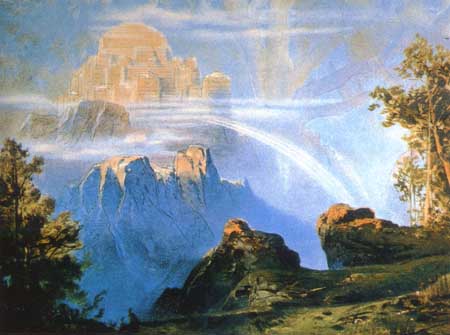
 Walhalla_(1896)_by_Max_Brückner

That fetches the watch

That releases the man

That turns the mill

cittadelsole

That grinds the corn

That makes the cake

That feeds the hound

Image result for guardian at the gate


That guards the gate

That hides the maze

That’s worth a light

487601_10151071065646375_1548586032_n

And into the castle that jack built


[Mythopoetic Riddle – Robert Cochrane. Images various – wiki commons]

Invictus

•June 23, 2013 • Leave a Comment

‘Soul’ Invictus


Out of the night that covers me,
Black as the pit from pole to pole,
I thank whatever gods may be
For my unconquerable soul.

In the fell clutch of circumstance
I have not winced nor cried aloud.
Under the bludgeonings of chance
My head is bloody, but unbowed.

Beyond this place of wrath and tears
Looms but the Horror of the shade,
And yet the menace of the years
Finds and shall find me unafraid.

It matters not how strait the gate,
How charged with punishments the scroll,
I am the master of my fate:
I am the captain of my soul.

Poem: William Ernest Henley (1849–1903)

Images: Blake & Boheme

Swan Maiden

•June 15, 2013 • Leave a Comment


Image


“In the shade now tall forms are advancing,
And their wan hands like snowflakes in the moonlight are gleaming;
They beckon, they whisper, ‘Oh! strong armed in valor,
The pale guests await thee – mead foams in Valhalla.'”

– Finn’s Saga


[image:Jenny Nyström (1854-1946)

Cain, A Mystery!

•May 27, 2013 • Leave a Comment

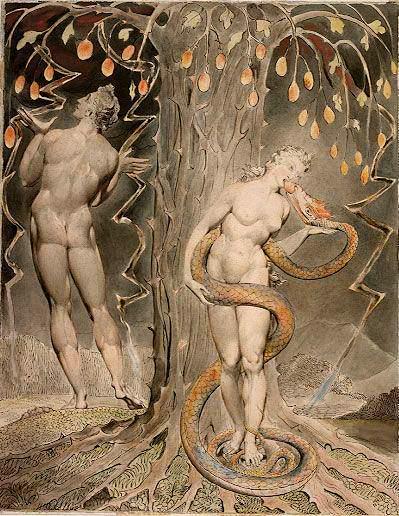
William Blake Eve Tempted by the Serpent


CAIN, A MYSTERY

“All nature is but art, unknown to thee;
All chance, direction which thou canst not see;  
All discord, harmony not understood;
All partial evil, universal good;
And, spite of pride, in erring reason’s spite,
One truth is clear: whatever is, is right.”

“Where then shall hope and fear their objects find ?

Must dull suspense corrupt the stagnant mind ?
Must helpless man, in ignorance sedate,
Roll darkling down the torrent of his fate ?
Must no dislike alarm, no wishes rise,
No cries invoke the mercies of the skies ?
Inquirer, cease; petitions yet remain
Which heaven may hear ; nor deem religion vain.
Still raise for good the supplicating voice,
But leave to heaven the measure and the choice ;
Safe in his power, whose eyes discern afar
The secret ambush of a specious prayer.
Implore his aid ; in his decisions rest ;
Secure, whate’er he gives, he gives the best.
Yet, when the sense of sacred presence fires,
And strong devotion to the skies aspires ;
Pour forth thy fervor for a healthful mind,
Obedient passions, and a will resigned ;
For love, which scarce collective man can fill ;
For patience, sovereign o’er transmuted ill ;
For faith, that, panting for a happier seat,
Counts death kind nature’s signal for retreat :
These goods for man the laws of heaven ordain ;
These goods he grants, who grants the means to gain ;
With these, celestial wisdom calms the mind,
And makes the happiness she does not find.

CAIN.

“Thou speak’st to me of things which long have swum
In visions through my thought; I never could
Reconcile what I saw with what I heard.
My father and my mother talk to me
Of serpents, and of fruits and trees: I see
The gates of what they call their Paradise
Guarded by fiery-sworded cherubim,
Which shut them out, and me: I feel the weight
Of daily toil, and constant thought: I look
Around a world where I seem nothing, with
Thoughts which arise within me, as if they
Could master all things: but I thought alone
This misery was mine. My father is
Tamed down ; my mother has forgot the mind
Which made her thirst for knowledge at the risk
Of an eternal curse; my brother is
A watching shepherd boy, who offers up
The firstlings of the flock to him who bids
The earth yield nothing to us without sweat:
My sister Zillah sings an earlier hymn
Than the birds’ matins; and my Adah, my
Own and beloved, she too understands not
The mind which overwhelms me: never till
Now met I aught to sympathize with me.
‘T is well 1 rather would consort with spirits.

compassion

LUCIFER.

“And hadst thou not been fit by thine own soul
For such companionship, I would not now
Have stood before thee as I am : a serpent
Had been enough to charm ye, as before.
I tempt none,
Save with the truth : was not the tree, the tree
Of knowledge? And was not the tree of life
Still fruitful’? Bid her pluck them not?
Did / plant things prohibited within
The reach of beings innocent, and curious
By their own innocence ? I would have made ye
Gods ; and even He, who thrust ye forth, so thrust ye
Because ” ye should not eat the fruits of life,
And become gods as we.” Were those his words?
Then who was the demon?
He who would not let ye live, or he who would
Have made ye live forever in the joy
And power of knowledge 1?
One is your’s already,
The other may be still.
By being yourselves, in your resistance.
Nothing can quench the mind, if the mind will be itself
And centre of surrounding things ’tis made
To sway.

CAIN.

They say the serpent was a spirit.

492940527_b1eed0027d_z


LUCIFER.

Who Saith that ? It is not written so on high :
The proud One will not so far falsify,
Though man’s vast fears and little vanity
Would make him cast upon the spiritual nature
His own low failing. The snake was the snake
No more ; and yet not less than those he tempted,
In nature being earth also more in wisdom.,
Since he could overcome them, and foreknew
The knowledge fatal to their narrow joys.
Think’st thou I ‘d take the shape of things that die”?

CAIN.

But the thing had a demon ?

LUCIFER.

He but woke one In those he spake to with his forky tongue.
I tell thee that the serpent was no more
Than a mere serpent : ask the cherubim
Who guard the tempting tree. When thousand ages
Have roll’d o’er your dead ashes, and your seed’s,
The seed of the then world may thus array
Their earliest fault in fable, and attribute
To me a shape I scorn, as I scorn all
That bows to him, who made things but to bend
Before his sullen, sole eternity ;
But we, who see the truth, must speak it. Thy
Fond parents listen’d to a creeping thing, and heart to look on.

CAIN.
Be it proved.

LUCIFER.

Dar’st thou to look on Death”?

CAIN.

I knew not that, yet thought it, since I heard
Of death: although I know not what it is,
Yet it seems horrible. I have look’d out
In the vast desolate night in search of him ;
And when 1 saw gigantic shadows in
The umbrage of the walls of Eden, chequer’d
By the far-flashing of the cherubs’ swords,
I watch’d for what I thought his coming ; for
With fear rose longing in my heart to know
What ‘t was which shook us all but nothing came.
And then I turn’d my weary eyes from off
Our native and forbidden Paradise,
Up to the lights above us, in the azure,
Which are so beautiful: shall they too die?

LUCIFER.

Perhaps but long outlive both thine and thee.

CAIN.

“I ‘m glad of that; I would not have them die,
They are so lovely. What is death “? I fear,
I feel, it is a dreadful thing ; but what,
I cannot compass: ’tis denounced against us,
Both them who sinn’d and sinn’d not, as an ill
What ill?”

LUCIFER.

To be resolved into the earth.

CAIN.
But shall I know it ?

LUCIFER.

“And I, who know all things, fear nothing ; see
What is true knowledge.”

Tamerlane


CAIN.

Wilt thou teach me all?

LUCIFER.

Aye, upon one condition.

CAIN.

Name it!
I never as yet have bow’d unto my father’s God,
Although my brother Abel oft implores
That I would join with him in sacrifice:
Why should I bow to thee?

LUCIFER.

Hast thou ne’er bow’d
To him?

All we love in our children and each other,
But lead them and ourselves through many years
Of sin and pain or few, but still of sorrow,
Intercheck’d with an instant of brief pleasure,
To Death the unknown! Methinks the tree of knowledge
Hath not fulfill’d its promise: if they sinn’d,
At least they ought to have known all things that are
Of knowledge and the mystery of death.
What do they know 1 ? that they are miserable.
What need of snakes and fruits to teach us that  ?

LUCIFER.

But if that high thought were
Link’d to a servile mass of matter, and,
Knowing such things, aspiring to such things,
And science still beyond them, were chain’d down
To the most gross and petty paltry wants,
All foul and fulsome, arid the very best
Of thine enjoyments a sweet degradation,
A most enervating and filthy cheat,
To lure thee on to the renewal of
Fresh souls and bodies, all foredoom’d to be
As frail, and few so happy

CAIN.

Spirit !

I know nought of death, save as a dreadful thing
Of which I have heard my parents speak, as of
A hideous heritage I owe to them
No less than life; a heritage not happy,
If I may judge till now. But, spirit! if
It be as thou hast said, (and I within
Feel the prophetic torture of its truth,)
Here let me die: for to give birth to those
Who can but suffer many years, and die,
Methinks is merely propagating death,
And multiplying murder.

ADAH.

Oh, my mother ! thou
Hast pluck’d a fruit more fatal to thine offspring
Than to thyself; thou at the least hast past
Thy youth in Paradise, in innocent
And happy intercourse with happy spirits ;
But we, thy children, ignorant of Eden,
Are girt about by demons, who assume
The words of God, and tempt us with our own
Dissatisfied and curious thoughts as thou
Wert work’d on by the snake, in thy most flush’d
And heedless, harmless wantonness of bliss.
I cannot answer this immortal thing
Which stands before me; I cannot abhor him ;
I look upon him with a pleasing fear,
And yet I fly not from him : in his eye
There is a fastening attraction which
Fixes my fluttering eyes on his ; my heart
Beats quick; he awes me, and yet draws me near,
Nearer and nearer: Cain, Cain save me from him !

250967_10150925903986497_2136475423_n

CAIN.

My little Enoch ! and his lisping sister !
Could I but deem them happy, I would half

Forget but it can never be forgotten

Through thrice a thousand generations ! never
Shall men love the remembrance of the man
Who sow’d the seed of evil and mankind
In the same hour ! They pluck’d the tree of science
And sin and, not content with their own sorrow,
Begot me thee and all the few that are,
And all the unnumber’d and innumerable
Multitudes, millions, myriads, which may be.
To inherit agonies accumulated
By ages! and 1 must be sire of such things !
Thy beauty and thy love my love and joy,
The rapturous moment and the placid hour,

All we love in our children and each other,
But lead them and ourselves through many years
Of sin and pain or few, but still of sorrow,
Intercheck’d with an instant of brief pleasure,
To Death the unknown! Methinks the tree of knowledge
Hath not fulfill’d its promise: if they sinn’d,
At least they ought to have known all things that are
Of knowledge and the mystery of death.
What do they know ? that they are miserable.
What need of snakes and fruits to teach us that ?

Palaces and Dungeons


CAIN.

Oh, thou beautiful
And unimaginable ether ! and
Ye multiplying masses of increased
And still increasing lights ! what are ye? what
Is this blue wilderness of interminable
Air, where ye roll along, as I have seen
The leaves along the limpid streams of Eden 1
Is your course measured for ye  or do ye
Sweep on in your unbounded revelry
Through an aerial universe of endless
Expansion, at which my soul aches to think,
Intoxicated with eternity ?
Oh God ! Oh Gods ! or whatsoe’er ye are !
How beautiful ye are ! how beautiful
Your works, or accidents, or whatsoe’er
They may be ! Let me die, as atoms die,
(If that they die) or know ye in your might
And knowledge ! My thoughts are not in this hour
Unworthy what I see, though my dust is;
Spirit! let me expire, or see them nearer.

LUCIFER.

First-born of the first man !
Thy present state of sin and thou art evil,
Of sorrow and thou sufferest, arc both Eden
Inferior as thy petty feelings and
Thy pettier portion of the immortal part
Of high intelligence and earthly strength.
What ye in common have with what they had
Is life, and what ye shall have death; the rest
Of your poor attributes is such as suits
Reptiles engender’d out of the subsiding
Slime of a mighty universe, crush’d into
A scarcely yet shaped planet, peopled with
Things whose enjoyment was to be in blindness
A Paradise of Ignorance, from which
Knowledge was barr’d as poison. But behold
What these superior beings are or were ;
Or, if it irk thee, turn thee back and till
The Earth, thy task I’ll waft thee therein safety.
In all its innocence compared to what
Thou shortly raay’st be; and that state again,
In its redoubled wretchedness, a Paradise
To what thy sons’ sons’ sons, accumulating
In generations like to dust, (which they
In fact but add to,) shall endure and do.
Now let us back to Earth !”

tumblr_m4g1rkj1AN1qiuhqdo1_500

CAIN.

And wherefore didst thou
Lead me here only to inform me this?

LUCIFER.

Was not thy quest for knowledge?
The road to happiness.
Thou hast it.

CAIN.

Yes: as being

LUCIFER.

If truth be so,

CAIN.
Then my father’s God did well
When he prohibited the fatal tree.

LUCIFER.
But had done better in not planting it.
But ignorance of evil doth not save
From evil ; it must still roll on the same,
A part of all things.

CAIN.

Not of all things. No:
I ’11 not believe it for I thirst for good.

LUCIFER.

And who and what doth not! Who covets evil
For its own bitter sake? None nothing! ’tis
The leaven of all life, and lifelessness.

LUCIFER.
Approach the things of Earth most beautiful,
And judge their beauty near.
I have done this
The loveliest thing I know is loveliest nearest.
Then there must be delusion. What is that.
Which being nearest to thine eyes is still
More beautiful than beauteous things remote 

May-hem!!!

CAIN.

My sister Adah. All the stars of heaven,
The deep blue noon of night, lit by an orb
Which looks a spirit, or a spirit’s world
The hues of twilight the sun’s gorgeous coming
His setting indescribable, which fills
My eyes with pleasant tears as I behold
Him sink, and feel my heart float softly with him
Along that western paradise of clouds
The forest shade the green bough the bird’s voice
The vesper bird’s, which seems to sing of love,
And mingles with the song of cherubim,
As the day closes over Eden’s walls ;
All these are nothing, to my eyes and heart,
Like Adah’s face: I turn from Earth and Heaven
To gaze on it.”

LUCIFER.

‘T is frail as fair mortality,
In the first dawn and bloom of young creation
And earliest embraces of Earth’s parents,
Can make its offspring; still it is delusion.

Phanes - the Lightbringer


LUCIFER.

It may be that thine own shall be for me.
But if thou dost possess a beautiful
Being beyond all beauty in thine eyes,
Why art thou wretched  ?

CAIN.

Why do I exist .Why art thou wretched; why are all things so?

Ev’n he who made us must be, as the maker
Of things unhappy ! To produce destruction
Can surely never be the task of joy,
And yet my sire says he’s omnipotent :
Then why is evil he being good  ? I ask’d
This question of my father; and he said,
Because this evil only was the path
To good. Strange good, that must arise from out
Its deadly opposite. I lately saw
A lamb stung by a reptile; the poor suckling
Lay foaming on the earth, beneath the vain
And piteous bleating of its restless dam;
My father pluck’d some herbs, and laid them to

The wound; and by degrees the helpless wretch
Resumed its careless life, and rose to drain
The mother’s milk, who o’er it tremulous
Stood licking its reviving limbs with joy.
Behold, my son ! said Adam, how from evil
Springs good !

LUCIFER.

What didst thou answer I

CAIN.

Nothing; for He is my father:
but I thought, that ‘t were
A better portion for the animal
Never to have been stung at all, than to
Purchase renewal of its little life
With agonies unutterable, though
Dispell’d by antidotes.

CAIN.

And if I have thought why recall a thought that
(he pauses, agitated) Spirit !

Here we are, in thy world; speak not of mine.
Thou hast shown me wonders ; thou hast shown me those
Mighty pre-adamites who walk’d the earth
Of which ours is the wreck; thou hast pointed out
Myriads of starry worlds, of which our own
Is the dim and remote companion, in
Infinity of life : thou hast shewn me shadows
Of that existence with the dreaded name
Which my sire brought us death; thou hast shewn me much
But not all : show me where Jehovah dwells,
In his especial Paradise or thine:
Where is it ?

Palaces and Dungeons

LUCIFER.

Thy human mind hath scarcely grasp to gather
The little I have shown thee into calm
And clear thought ; and thou wouldst go on aspiring
To the great double Mysteries ! the two Principles !
And gaze upon them on their secret thrones !
Dust ! limit thy ambition ; for to see
Either of these, would be for thee to perish !

CAIN.
And let me perish, so I see them !

LUCIFER.

There The son of her who snatch’d the apple spake !
But thou wouldst only perish, and not see them ;
That sight is for the other state.

CAIN.

“Then my father’s God did well
When he prohibited the fatal tree.

LUCIFER

But had done better in not planting it.
But ignorance of evil doth not save
From evil; it must still roll on the same,
A part of all things.

CAIN.

Not of all things. No :
I ’11 not believe it for I thirst for good.

LUCIFER.

And who and what doth not! Who covets evil
For its own bitter sake? None nothing! ’tis
The leaven of all life, and lifelessness.

CAIN.

Of death?

LUCIFER.

That is the prelude.
LUCIFER.

And now I will convey thee to thy world,
Where thou shalt multiply the race of Adam,
Eat, drink, toil, tremble, laugh, weep, sleep, and die.

CAIN.

And to what end have I beheld these things
Which thou hast shown me?

LUCIFER.

Didst thou not require Knowledge! And have I not, in what I show’d,
Taught thee to know thyself?

CAIN.
Alas ! I seem Nothing.

Floralia


LUCIFER.

And this should be the human sum
Of knowledge, to know mortal nature’s nothingness;
Bequeath that science to thy children, and
‘T will spare them many tortures.

CAIN.

Haughty spirit!

Thou speak’st it proudly; but thyself, though proud,
Hast a superior.

KUBLA KHAN

LUCIFER.

No ! By heaven, which He
Holds, and the abyss, and the immensity
Of worlds, and life, which I hold with him No!
I have a victor true; but no superior.
Homage he has from all but none from me;
I battle it against him, as I battled

In highest heaven. Through all eternity,
And the unfathomable gulphs of Hades,
And the interminable realms of space,
And the infinity of endless ages,
All, all, will I dispute! And world by world,
And star by star and universe by universe
Shall tremble in the balance, till the great
Conflict shall cease, if ever it shall cease,
Which it ne’er shall, till he or I be quench’d !
And what can quench our immortality,
Or mutual and irrevocable hate?
He as a conqueror will call the conquer’d
Evil ; but what will be the good he gives I
Were I the victor, his works would be deem’d
The only evil ones. And you, ye new
And scarce-born mortals, what have been his gifts
To you already in your little world?

CAIN.
But few; and some of those but bitter.

LUCIFER.

Back
With me, then, to thine Earth, and try the rest
Of his celestial boons to ye and yours.
Evil and good are things in their own essence,
And not made good or evil by the giver;
But if he gives you good so call him; if
Evil springs from him, do not name it mine,
Till ye know better its true fount : and judge
Not by words, though of spirits, but the fruits
Of your existence, such as it must be,
One good gift has the fatal apple given
Your reason: let it not be over-sway ‘d
By tyrannous threats to force you into faith
‘Gainst all external sense and inward feeling:
Think and endure, and form an inner world
In your own bosom where the outward fails;
So shall you nearer be the spiritual
Nature, and war triumphant with your own.
Yes death, too, is amongst the debts we owe her.

Dante!

Cain ! that proud spirit, who withdrew thee hence,
Hath sadden’d thine still deeper. I had hoped
The promis’d wonders which thou hast beheld,
Visions, thou say’st, of past and present worlds,
Would have composed thy mind into the calm
Of a contented knowledge; but I see
Thy guide hath done thee evil : still I thank him,
And can forgive him all, that he so soon
Hath given thee back to us.

CAIN.

The mind then hath capacity of time,
And measures it by that which it beholds,
Pleasing, or painful ; little or almighty.
I had beheld the immemorial works
Of endless beings ; skirr’d extinguish’d worlds ;
And, gazing on eternity, methought
I had borrow’d more by a few drops of ages
From its immensity; but now I feel
My littleness again. Well said the spirit,
That I was nothing !

CAIN.

But why war?

LUCIFER.

“You have forgotten the denunciation
Which drove your race from Eden war with all things,
And death to all things, and disease to most things,
And pangs, and bitterness: these were the fruits
Of the forbidden tree.”

CAIN.

“Alas ! the hopeless wretches !
They too must share my sire’s fate, like his sons ;
Like them, too, without the so dear-bought knowledge !
It was a lying tree for we know nothing.
At least it promised knowledge at the price
Of death but knowledge still : but what knows man I ?”

Heaven and Hell


LUCIFER.

It may be death leads to the highest knowledge;
And being of all things, the sole thing certain,
At least leads to the surest science therefore
The tree was true, though deadly.

ABEL.
Where hast thou been “?

CAIN.
I know not.

ABEL.

Nor what thou hast seen ?

CAIN.

The dead,

The immortal, the unbounded, the omnipotent,
The over-powering mysteries of space
The innumerable worlds that were and are
A whirlwind of such overwhelming things,
Suns, moons, and earths, upon their loud-voiced spheres
Singing in thunder round me, as have made me
Unfit for mortal converse: leave me, Abel.

ABEL.

Thine eyes are flashing with unnatural light
Thy cheek is flushed with an unnatural hue
Thy words are fraught with an unnatural sound
What may this mean?

CAIN.

It means, pray thee, leave me.

ABEL.
Not till we have pray’d and sacrificed together.

CAIN.

Abel, I pray thee, sacrifice alone
Jehovah loves thee well.

ABEL.
Both well, I hope.

CAIN.

But thee the better: I care not for that;
Thou art filter for his worship than I am :
Revere him, then but let it be alone
At least, without me.

ABEL.

Brother, I should ill
Deserve the name of our great father’s son,
If as my elder I revered thee not,
And in the worship of our God call’d not
On thee to join me, and precede me in
Our priesthood ’tis thy place.

CAIN.

But I have ne’er asserted it.


Phanes - the Lightbringer

ABEL.

The more my grief; I pray thee
To do so now: thy soul seems labouring in
Some strong delusion; it will calm thee,

CAIN.

No; Nothing can calm me more. Calm ! say I?
Never knew I what calm was in the soul, although
I have seen the elements still’d. My Abel, leave me !
Or let me leave thee to thy pious purpose.

ABEL.

Neither ; we must perform our task together.
Spurn me not.

CAIN.

If it must be so well, then,

What shall I do ?

ABEL.

Choose one of those two altars.

CAIN.

Choose for me: they to me are so much turf
And stone.

ABEL.

Choose thou!

CAIN.

I have chosen.

ABEL.

‘T is the highest,

And suits thee, as the elder. Now prepare
Thine offerings.

CAIN.
Where are thine?

ABEL.

Behold them here
The firstlings of the flock, and fat thereof
A shepherd’s humble offering.

CAIN.

I have no flocks;
I am a tiller of the ground, and must
Yield what it yieldeth to my toil its fruit:

He gathers fruits. Behold them in their various bloom and ripeness.
They dress their altars and kindle a flame upon them.

760px-Blackface_ram_portrait


ABEL.

My brother, as the elder, offer first
Thy prayer and thanksgiving with sacrifice.

CAIN.

No I am new to this; lead thou the way,
And I will follow as I may.
Oh ! thou dead and everlasting witness ! whose unsinking
Blood darkens the earth and heaven ! what thou now art,
I know not ! but if thou see’st what / am,
I think thou wilt forgive him, whom his God
Can ne’er forgive, nor his own soul. Farewell !
I must not, dare not, touch what I have made thee.
I who sprung from the same womb with thee, drained
The same breast, clasp’d thee often to my own,
In fondness brotherly and boyish, I
Can never meet thee more, nor even dare
To do that for thee, which thou should’st have done
For me compose thy limbs into their grave
The first grave yet dug for mortality.
But who hath dug that grave ? Oh, Earth ! oh, Earth !
For all the fruits thou hast render’d to me, I
Give thee back this. Now for the wilderness.

The Four Winds

Adapted and annotated from the complete text of Lord Byron’s ‘Cain.’ [http://archive.org/stream/lordbyronscainmy00byrouoft/lordbyronscainmy00byrouoft_djvu.txt]


…………..this woman’s work

•April 19, 2013 • Leave a Comment

selected lines edited from my first published collection of work 1999 –  2006 :

‘Tubelos Green Fire’


The Mythos of the ‘People of Goda’, of the ‘Clan of Tubal Cain’ reveals an archaic spiritual heritage – of the ‘Sangraal’ Mysteries, of sacred priest kings, the serpent or ‘Dragon line of divine Kingship’… a symbience evolved from enigmatic benefactors of our kind. It is this ancestral legacy that we celebrate honour and revere within our rites and ceremonies. Traditional Craft draws heavily from the knowledge and wisdom imparted by these otherworld avatars, allowing us to fully explore the darker, deeper (hidden, secret) aspects of magical experience on the souls’ journey to gnosis. Robert Cochrane freely embraced ‘Luciferian’ gnosis within the philosophy taught and practiced within his own 60s group before a tragic and early death left much of his insightful legacy undeveloped.

His research and understanding of the ‘left hand path’ (Vama Marg) lives on in the current group – ‘The Clan of Tubal Cain’, by virtue of the ‘Rites of Transmission’, a direct inheritance, awarded and experienced through disciplined and sacred rites of kingship and kinship. The ‘sinister’ (Latin for) left-hand (as opposed to dexter for right-hand) path contains none of the modern connotations now sadly associated with this term. Traditional forms of Craft are still practised today in considerable variance. We may easily recognise many ancient pagan elements and themes, which, despite the Reformation have survived. Neo-Pagans, Wiccans and Traditionalists, have revived various ancient classical/hermetic practices.  According to the late Sybil Leek, witches were:

“women who have unusual powers of both Good and Evil, who manipulate supernatural forces, including invocation of spirit” (sorcery); put succinctly – witches work magic.

Image

How then may we differentiate a pagan from a witch?  A dictionary is not particularly helpful; the generic term – pagan (a country dweller/simple rustic), is a bit of a misnomer. Many city dwellers, often of high status, practising a variety of religions and philosophies such as Neo-Platonism were also classed as ‘pagans.’ In other words, anyone who remained outside the sophisticated state religion of Christianity was considered a pagan. By the early 6th -10th century Christians, ‘pagan’ was used indiscriminately to describe anyone – Monist or Polytheist! Professor Ronald Hutton affirms that:

“By assuming that Witchcraft and Paganism were formally the same phenomenon, they are mixing two utterly different concepts and placing themselves in a certain amount of difficulty.”

 Witchcraft thrived as a malefic practice within paganism before, during and after Christianity, in the West at least. Within the Russell Hope-Robins Encyclopaedia we read how:

“Before 1350, witchcraft primarily meant sorcery, a survival of common superstitions – pagan only insofar as the beliefs antedated Christianity, never pagan in the sense of an organized survival of opposition to Christianity or of some pre-Christian religion.”

The Encyclopaedia further emphasises that sorcery and magic are archaic, world-wide practises, indulged by young and old alike for self gratification in contra-distinction to the self- development praxes adopted by Neo-pagans. Throughout history, all pagans have shared an observation of witches as malignant forces; beings who cursed and hexed freely, revelling in malicious torments, worshipping a ‘Queen’ of the Underworld. Witches were presented as rulers of darkness whose hags, crones and remote virgins presented the very antithesis of their own worship of a more ‘benign’ pantheon of gods and goddesses. Boundaries merge with each generation of seekers and workers of the Mysteries.

Image

Myth preserves the magic of creation, of life and the mystery of death. Over time the Craft has been the natural repository of myth, knowledge and magical practice as these things have declined from use within society, either through suppression, ignorance or ambivalence. Sadly, much of it only exists in fragmentary forms, such as folklore and superstition. Myth celebrates cyclical time; against this, annual celebrations of recurrence, suspended in the dreamtime of the eternal present preserve indelibly the relationship between man, his environment, and the Universe.

Within the Old Testament lies an oft misquoted and misunderstood phrase from the prophet Isaiah concerning the fall of a corrupt King of Babylon:

“How you are fallen from Heaven, day star, son of the Dawn” (Hel-el-ben Shahar).

Hundreds of years later, when compiling theological instruction, 4th century Latin scribes working for the venerable Church fathers (Augustine and Jerome etc), interpreted this title, ‘Son of the Morning Star’ (Venus) as ‘Light-bearer’ or ‘Lucifer,’ bearer of the emerald crown. This jewel of illumination placed within the horned cleft, the seat of wisdom, becomes the sacred ‘mound’ of divinity Herself. Symbolic of the magical voice, the ‘qoul’ or ‘call’ refers to the womb, or (Latin form) uterus, meaning utterer – the word or logos was the ‘serpent,’ the holy spirit that created life.

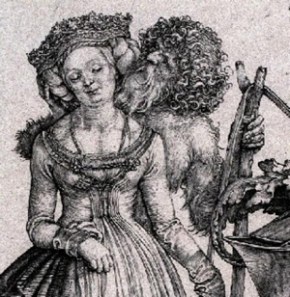
Centuries later, Gnostic inheritors of such wisdoms, the Cathars became subject to accusations of heresy (meaning free choice) for their unorthodox practices and associations. Personal attainment had been replaced by the transference of grace via a priest, strictly controlled and monitored by Ecclesiastical authorities. The ‘Goat of Mendes’ became synonymous with the Devil and his alleged feasts. 
Image

Metaphysically, the letter, Q (khu), developed from this profound and complex Venus symbol representing Q ‘ayin-Queen. It denotes the ultimate Q ‘ayin’ship of Venus, Isis, Lilith, Kali, Nin-khursag – all ‘black but beautiful’, the original gene source and mother of mankind. The Hermetic symbol for the all Seeing Eye replaces the cross within the circle, with a dot, (the central ‘nux’, the point of focus and energy). Thus it becomes the ‘Eye of Ra’, kamakala of Indian mystics, central point of all creation within the totality of sacred space, the seed within the womb, and the fire or generative spirit within the working circle. Q’ayin also means kenning or knowing, an attribute gifted to man in the form of smith-craft, a pre-requisite skill of the first priest kings. An artificer of metals was a true ruler, a Q’ayin.

Robert Cochrane understood that sigils and symbols have universal significance, and this expression within the Craft supports the Mysteries stimulating magical comprehension.

 “Symbols contain the seeds of their own revelation, the virtue (power) of which changes with each group/era using it.” (Robert Cochrane).

Robert Cochrane also expressed the Mysteries as a means by which man may perceive his own inherent divinity. He postulated that students of the Mysteries are seekers of truth and wisdom where magic is a by product, a secondary device of little real consequence. For him, the Craft was a:


“Mystical religion, a revealed philosophy, with strong affinities to many Christian beliefs. The Faith is concerned only with truth; that brings man into closer contact with the Gods and himself – the realisation of truth as opposed to illusion – fulfilled only by service.”

 Image

He even described himself as a member of the ‘People’, not a witch and certainly not pagan. This is fairly typical of many within the Traditional Craft who understand that it is not a remnant of a fertility religion, therefore it does not practise seasonal rites per-se or nature worship; it is a priesthood of the ancient Mystery Schools. Virtue is passed from male to female in accordance with ancient law and rites of transmission. All Mystery teachings agree that within the Universe, many life-forms and intelligences exist outside the confines of matter, co-existing independently.

Through the rite of the Old Covenant, the Magister acts as the ‘son’ of the Morning Star, aligning himself to the potencies of Lucifer as the Young Horned King, thereby assuming himself ‘Herald’ of the Old Horned King. In this capacity, he holds the ‘tribal’ symbols of that authority as visual and spiritual potencies, asserting charge of matters temporal and cosmological to all descendants bound under its Law. Prevalent throughout the ancient world, the ‘Old Covenant’ evokes a sacred compact, eloquently described as that which:

“binds its people within a kinship bestowed by divine Grace through time, beyond manifest form as a cohesive unit for its survival and continuity, rather than its dissemination and diaspora.”

For many schooled in modernity, this represents abhorrence, contrasting as it does with Wiccan and Neo-pagan independent and autonomous practices. Yet it is thus designed to eliminate or reduce factionalising corruptions and all the ensuing decimation that follows.

Cochrane instructed Joe Wilson that ‘Faith’ too is the Mother of all Gods, that Christianity is part only of an even more ancient faith, that the ‘People’ are the direct descendants of those ancient priests and priestesses of their Mysteries. It could not be more lucid – Goda/Godi represents the priesthood, the Chieftains, the leaders of his Clan, and not the Goddess of it. Robert Cochrane states that the Clan of Tubal Cain is of the ‘Order of the Sun’, yet its people are children of the Moon, whose women hold the key to these Mysteries, advising all to seek supernatural manifestations of her in all her guises; this was axiomatic to his ethos- she is the presiding genius. Immanent and transcendent, this deity is not pantheistic but panentheistic.

He cautions Bill Gray in another letter not to underestimate any form of the Goddess, and to read the Golden Ass; above all, to understand the epiphanic, theurgical renditions rather than the frenetic, shamanistic, bacchanalian revelry, and the myths of the dark and light twins of the east, in particular, of Egypt and Persia. Eclectically, he speaks of the Shekinah, of Babylon and of Gilgamesh, also of Christ and of Thor. He believed emphatically that everything was linked symbolically with higher spiritual principles above and beyond the banal, the mundane and the obvious. Everywhere He sought Her manifestations, in caves, woodlands, myth and poetry; anywhere local myth, lore or legend recorded Her myriad guises. 

Image

She rises from the milky waters of the cosmic ocean, radiant and beautiful; and like Aphrodite, She is a goddess of not only beauty, devotion and creation but most interestingly, wisdom; ultimately representing divine Love, Grace and Communion. One of three consorts to the Divine King, who severally embody the creative qualities of Will, Act and Energy; consequently the Universal Mother became referred to as the ‘Three Queens.’ This phrase was often used, coincidently, by Cochrane when referring to the Goddess in one of Her numerous triune forms. Together they command the three planes of the three worlds. Goda therefore, as one facet of the Queen of Elfame is simply another representative of the Tutelary Goddess of Tubal Cain aspected in earthly form, anthropomorphic and accessible, a familiar of the faerie denizens.

Finally, in a letter to Norman Gills, Cochrane mentions the Alba (White/Pale) Guiden, a harsh mistress, a dark Muse whose third face is Terrible. This dark Goddess is the enigmatic Pale-faced Lady in White, the beautiful and multi-faceted cosmic jewel and the pearl of wisdom.

A tenuous thread binds the Mysteries of ancient wisdom to Christian Medieval Europe, into the flowering of the Literary Renaissance. This domain of 12th century poets exalted the use of metaphor and allegory that prevailed esoteric erotica conjunct with orthodox medieval media.  Within the Gnostic Cult of the Black Virgin in Medieval Southern France, she is sometimes referred to as ‘The Notre Dame de Lumiere.’ She is suggested by Peter Redgrove  to be coterminous with the Black Goddess, Mary Lucifer the light giver – the Magdalene. Her symbol, the Rose, flower of Venus, exemplifies sacred/secret love, though it also represents esoteric wisdom within female mysteries, both carnal and religious. ‘Sub-rosa’ information was thus ‘revealed’ only to initiates seeking enlightenment and gnosis through those mysteries.

 Redgrove poetically reveals esoteric machinations disguised within the genre known as ‘Courtly Love’; he describes how sexual energy radiated from the eyes of the beloved, fusing into the lover’s subtle bodies, illuminating and elevating the spirit. Remembering how eyes are windows to the soul, this emanation of ‘light’, the soul’s ‘psyche’ power is further explained as follows:

“the invisible thus becomes sensible by the operation of spirits dependent upon the physiological workings of the body”

Image

Such intellectual foreplay induced radiating kalas erupting in miasmic waves of orgasmic pneuma, somatic secret-ions absorbed and transformed in acts of communion. Redgrove expresses this Dark Goddess force as the:

 “black light flexing as the loa, spinning her web around all within her grasp, she is the light of revelation within the darkness.”

These powerfully evocative words suggest that she is cast in the role of ‘Fate’ whose ‘maithunic’ alchemical processes were actuated by women operating under the traditional role of hierodule or sexual initiatrix.  The Black Virgin was ever a symbol of the soul, a gateway into the supra-conscious or nodal crossroads of the senses. As whore and shadow goddess she leads the mysteries of death and rebirth, revealing Her heretical knowledge of female menstruation and Kundalini magic; Her serpent wisdom, explored in dream scapes where revelatory experiences are to be marveled  Redgrove upholds the Black Goddess as primal woman, a primal Goddess, a Queen of Enchantments, of dark magics and all things occult.

Her hidden radiance the inspiration of poets and kings. Further, he posits this Black Goddess as cognate with the Holy Spirit, Wisdom – the Shulamite lover of Solomon:

It was I who covered the earth like a mist, Alone I made a circuit of the sky and traversed the depths of the abyss……..whoever feeds on me will be hungry for more, and whoever drinks from me will thirst for more….…” .

Habitually expressed as a succubus, she haunts the nocturnal dreamscapes – the realms of Hekate, the sender of dreams. All aspects of the Goddess are explained by Redgrove as psycho-erotic, as multi-faceted, at once subliminal and physical.

Her Lunar ophidian current offering magical renewal is germane to the Draconian Cult. Furthermore Grant  reveals Nyx/Nox as key to the Abyss, guardian of the first Gate within Daath, the bridge between mind and body, the place of trance-formation and the place where Gnosis is achieved. This bridge when activated by (Tantric) Yogic practices, stimulates and sensitizes the skin, organs and olfactory units, emitting Kalas of black light, by which all other lights are illuminated. Hekate is the ultimate sexual Initiatrix, the shroud of mystery and knowing, she is Lady Wisdom, Star Maiden and gateway to other worlds. Redgrove names Her the –

 ‘Aimah Elohim Shekinah.’ 

Image

Ultimately linked to the Dark Moon, Hekate was ever a Goddess of the soul’s illumination before this. Time and destiny are within her dominion; many of Her epithets reveal her numerous roles and forms – Wise One, Queen of Shades, Mistress of Initiation, Gatekeeper, Psychopomp and Shining One.  To mystics, the Dark Night is the depth of love (Eros) and light (Phanes).

Hekate stands at the crossroads of our unconscious looking forwards and backwards into our lives, fulfilling a paradox of criteria, of healing, of destruction, of wisdom, of lunacy and of life and death. Here in this mental labyrinth, we face our demons, our negative subversions, here She strips us of our illusions, eliminating all those facets that deny our wholeness, loving Her is loving yourself; the revelation of true Gnosis is the realization of the inherent divinity of oneself.  Though no definitive form of Hekate exists, spatial representations of Her reflect only the needs of the moment. She remains the Ultimate Dark Goddess, the primal serpent of cosmic illumination, a role She shares with Lucifer the light-bringer, together the twin beings of Phosphorous, the torchbearers of true Gnosis.

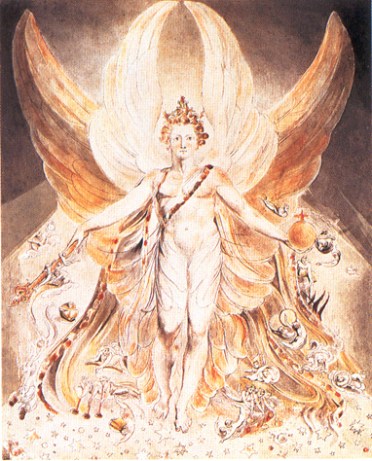
Ovid (43BCE-18CE) records how ‘Matuta’ became a common name for ‘Leukothea,’ meaning firstly, to set on fire or ‘to light’, and secondly to ‘glean’. This quality links her to the star ‘Spica’ (Virgo and Ishtar), fertility goddesses of grain and generation. So again, a virgin gives birth to a son, Lucifer, who assumes the title of the sun – ‘Like the Sun’ – ‘Likened to God’ – or ‘He who is as God’ .. all ambiguous epithets for a 4th century Church Father seeking to present the Truth of Lucifer as the false and deceiving light.

However, Leland connects ‘Leukothea’ (the pale-one) to Venus as ‘Morning Star,’ and as Mother of the ‘Light of the Day’. Moreover, he shares this belief with that of the Etruscans who understood Mater Matuta, the Mother of the Dawn (light) to be none other than Venus as the Morning Star. Tertullian also records a possible early form of this name found in the Etruscan Venus – ‘Murtia’.  In fact, all fertility gods are sons/lovers of the all mother – Alma Mater. His lightening seed falls to earth to penetrate and fertilize Her; He rises from his mother the seed and progeny of Himself, the Shining One of the Morning Star. In relating the Cedar Myths  it is revealed how the Moon Goddess, named ‘Lebannah’ (Levanah) has an epithet – ‘She that is White’ (the Pale-faced-One) linking her again to the ‘Shekinah,’ the bride of God.

Homer (c850BCE) too records in his epic, the ‘Iliad’, references to ‘Eosphorus’ as the light of dawn.  Neither of these authors intended us to assume this implied Venus or the Morning Star. Again, this is an invalid mis-representation suffered by so many translations of classical texts. ‘Hesperus’, similarly, is an epithet symbolising the simple qualities of the evening/night, wherein all light falls in to the western skies – Hesperides, the etymological root of west, despair and desperate. Star of the Morning (sun) is not the same as Morning Star (Venus). In fact, a common appellation of Saturn was ‘Star of the Sun’, the Sun at midnight, with both being named ‘Shamash.’ 
Image

Ishtar, as a divine goddess manifested her qualities within a whole plethora of symbols, ranging from the planet Venus (with whom her main corpus of attributes were identified), but also in the Moon, stars, Heavens etc., down to a related set of earthly simulacra. Described in cuneiform as ‘ilu’, this concept encompassed all that she was and was represented by, yet remained separate from her. By means of the ‘ilu’, she could be approached, propitiated and venerated, utilizing their collective ‘power’ for divination and acts of magic.

Throughout the biblical world, both Sun and Moon are cosmologically represented by the union of divine couples: Anath & Baal, Artemis and Apollo, Ishtar and Tammuz, Solomon and the Shekinah, even El and Asherah. Cedar poles dedicated to Asherah were erected within the oak groves of El. Asherah/ Ishtar/Anath were all Queens of Heaven, the stars, the earth and the Seas, encompassing all earthly and celestial phenomena except the Sun, which was reserved wholly for the son of El. She was awarded many epithets relating to her roles as ‘Stella Matutina’, ‘Stella Maris’ et cetera, all symbolising the power of manifest light, His light expressed though Her.

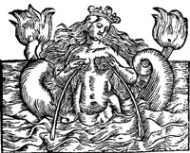
As far-reaching as India, within the Shakti cult, Hindu legends tell of ‘Shri Andal,’ beatific devotee of Krishna (8th avatar of Vishnu). This flower-garlanded nature sprite, and muse of poetry, renowned for her plaintive singing, beseeches her absent lover for re-union. ‘Shri Andal’ achieves rapture through divine love (bhakti) after joining in the ecstatic dancing of the Gopis (who were also milkmaids). She is in fact a manifest incarnation of the Goda Devi, ‘Mahalakshmi,’ Goddess of Fecundity and Abundance (now sadly reduced to material wealth and financial prosperity). It is tempting to speculate a connection between the Goda Devi and Godiva, however tenuous, and yet Leland’s criteria for forming an authentic link are worth considering.Astonishingly, ‘Mahalakshmi’ is the spouse and consort of none other than Vishnu, a watery, redeemer God who was part fish, a correlate of the Irish Sea God, Manannan, and Enki, the Sumerian manifest saviour of mankind (whose spouse was also the Great Queen and Mother of the Gods). So delighted was Vishnu with Goda Devi, that he named her the ‘Ruler’ of the entire Universe! 
Image

Like Orpheus, they too have the gift of making music so beautiful, all who hear it fall under an enchanted sleep. Aoife is herself punished for this deed, becoming the possession of Manannan in the form of his ‘crane-bag’, his treasure house of magic! An alternative account matches the beautiful Aoife against Iuchra as rivals in love. Aoife becomes bewitched and is placed in service to Manannan. After her death, the legendary crane-bag is made from her skin. Placed within the seas, it is only revealed at high-tide. Both versions remain true to the fundamental premise of a centralised female figure with transformative powers, somehow confined in service to or in possession of a dominant male deity, who considers her powers as hereditary virtues of mankind, dispensed and revealed only to worthy (male) heroes.

As mythologies evolved, precedence became awarded to day and light; all things synonymous with the dark night became exiled to the chthonic (from ‘khthonios’ – in or of the earth, i.e. fertility, childbirth, abundance, crops, fate and death) realms of the underworld, the astral regions and dreamscapes, the inner psyche. In effect, Hekate developed as the Guardian of these dark and lonely places and of their inherent occult Mysteries. Dark acts of sexual mystery; Kundalini, prophecy, inspiration and divination all came within her gift. Creatures of the Night – Owls, dogs and horses became her totems, as did all creatures of the aquatic underworld – snakes, serpents, spiders, toads and frogs. As Mistress of Trance-formation, her divine light of gnosis is secreted by her chthonic powers of life and death; her all-devouring sexuality leads her victims in a mantic embrace of regeneration. Her legendary priestesses moved the dying through an ecstatic death by their orgasmic convulsions.

Water and all tides are governed by this celestial body; it waxes and wanes, having two vital modes. When waning, it is perceived as ‘lame’, its incapacity apparent. Yet, this dark mode conceals mysteries attributed to it. Since ancient times the moon has more generally been considered as ‘male’ (especially the lame smith, Cain – hence, the appellation of ‘man in the moon’); its dark and light qualities are aspected in Wagner’s opera as the old (unseen) king and the younger (visible) king who must become ‘whole’ viz, healed and renewed, to full strength in order to yield the oceans into fruition, to inspire truth and vision, to think and know ‘Truth.’ This wise head, whose face we see in the moon is none other than that (significant) head carried by Grail maidens upon the platter in the Grail Romance – ‘Peredur.’ In Wolfram’s version of the Grail, he writes of the Fisher King – “at the time of the change of the Moon, his pain is great…”

Image


Gawain’s love, more for himself than for his Lady, facilitates his denial and rejection of her gifts, offered for his salvation. Although the deceit he pays for is clearly his own, he denies responsibility for it. His failure to recognise her value and worth as an earthly manifestation of Sophia starkly contradicts the blazing pentangle of the five knightly virtues upon his shield, which when yielded, induce completion – perfection. For him, Eros (Love) and Psyche (Soul) fail to unite. His eternal reminder of this regret is symbolised in the acceptance of the green girdle, worn in the fullest sense of penitence, as a talisman into which it is hoped that all the grace and wisdom of ‘woman’ will be imparted.

Within Hindu mythology, both male and female gods wear belts/cords denoting sacrifice, puberty, manhood, initiation and protection, fertility respectively. Cords also represent reality, passion and inertia, all fundamental qualities of matter . Exploring these concepts further, Campbell interprets the symbolism of these bindings as representative of the threshold or sun-door, indicating the wearer is at once in time and eternity.

Lady Bertilak’s gift of a girdle/cord becomes significant in this understanding; its relevance no mere enchantment. Moreover, it is green, the fairy hue of both Green Knight and his Mistress (Fate) and therefore represents his initiatory powers of death/eternity and Her protective powers of life/time. Girdles are of course strong literary devices, indicative of magical dominion and the binding love/eroticism of the Goddess.

The Prophet John, conveyor of the ‘Word’, metaphorically ‘loses his head’ (the transient ability to prophecie) at the Winter Solstice, and is the significantly older, waning Oak King/Wild Woodwose/Green Knight, to Jesus, who as the waxing, Holly King and more youthful Gawain (as the ‘hawk of May’), takes the mantle until he metaphorically ‘concedes’ it in turn at the Summer Solstice. Importantly, the message is of life triumphant, and of the indestructibility of the dual forces of nature in opposition but which remain in harmony – those of renewal of life from its decay! This cyclical premise is represented in classical myth as the (waning) black sun of Dionysus (or Osiris-the ‘Green One’), birthed anew as the radiant (waxing) Apollo (or Horus) – Tanist twins of the axial ‘Mother’ or ‘Lady Alchymia.’

Trees as the ‘prima materia’ represent life and time and the gift of  ‘Mother’ (earth) providing arboreal clues in the fifth tapestry that suggest the Maiden’s significant role: ‘Mary’ clothed in red as the Goddess of Love and Death – the heavenly Queen of sophianic wisdom. She sits by the apple tree under which the Unicorn is captured, evocative of the Apple groves and nuptial floor of sacred coupling within the ‘Hieros Gamos,’ particularly of Eastern myth. Apples also signify immortality, and of all the stages of life, love and death through the divine feminine that achieve it.

Interestingly, within the Garden of Hesperides, a serpent (child of Typhon), guards the fabled sacred apples, assisted by a triad of radiant beings, the daughters of Nyx/Nox. Wise retainer of mysteries and secrets, this multi-lingual serpent was able to impart knowledge in rituals where these shining maidens would dispense the golden apples, treasured gifts of immortality and wisdom, timed to coincide with Venus the Evening Star as it rose to the setting of the Sun. These fruits are in all probability, those favoured for their wisdom symbolism – the Pomegranate!

Image


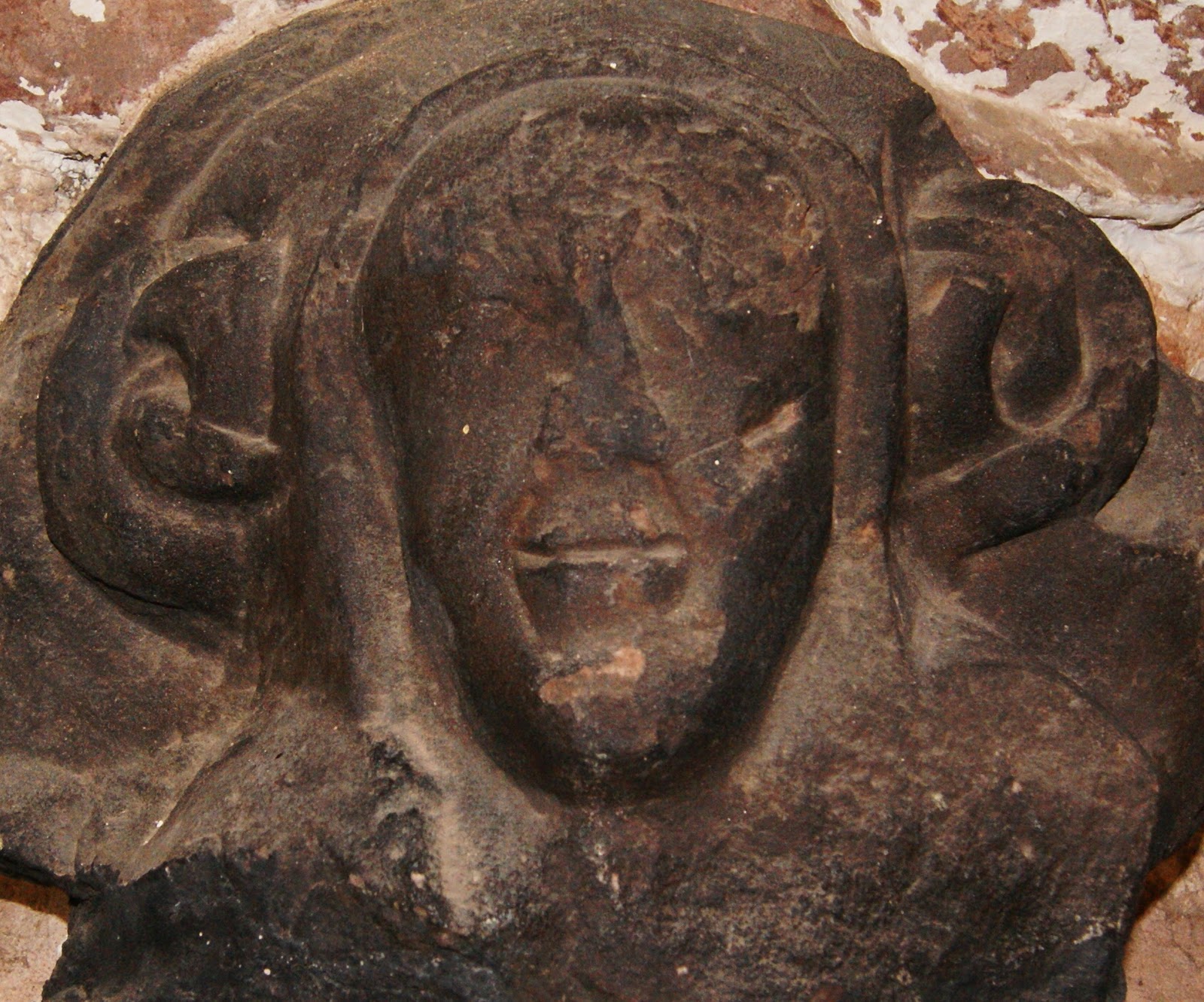
Hildegard of Bingin, medieval nun, Christian mystic and confidante to the Pope, faithfully recorded her numerous experiences wherein she offers the word – ‘viriditas’ (greenness) to explain ‘the word made flesh’, the evocative manifestation of spirit into matter.This single word inculcates for her this state of Kenoma, where the ineffable becomes tangible. It is noteworthy that during her lifetime, carved, foliate heads adorned many churches and cathedrals throughout Europe. The verdant effulgence viridios/viridius  signifies a deified masculine spirit worshipped in ancient Britain.

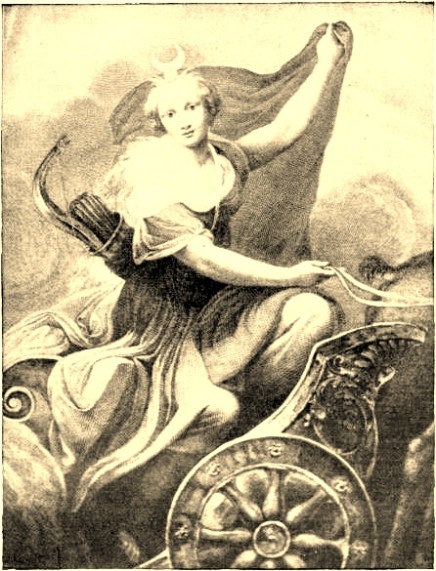
Although the Hunt is usually peopled by the dead, witches’ testimonies in Europe during the 16th  and 17th  centuries presumes their belief as co-riders of the divine huntress Diana, the direct equivalent of Holda, Hekate and  Hela.  Revellers in the 13th century were described by Etienne de Bourbon as the ‘bona res’ – bringers of the ‘good things.’ Mortal and supernatural followers of Diana, Herodias/Abundia were popular in medieval myth and were associated initially with the faerie folk, who though fickle, would distribute and share gifts of abundance and wealth among those they had taken a shine too (or who had propitiated such acts).

A humorous poem written by Alexander Montgomery in the 17th century lampoons the ‘Faery Rade’ at All Hallows, and although the descriptions are clearly of faerie folk, witchery is explicit. This theme especially may have been compounded by alleged activities of witches themselves. In later, more enlightened times, beguiling principles of the Wild Hunt are once again expressed through poetic metaphor, intimating the modalities of astral travelling, spirit flight, mystical visioning and initiatory experiences.

Folklore, however retains legends of those who have died violent or early deaths whose traumatized souls then become the furious hosts within the Wild Huntsman supernatural train. The first full description of a procession of such ghosts was written by a Parisian priest in January of 1092 (recorded in the ‘Ordericus Vitalis’) who saw a swarming crowd led by an extraordinary and menacing figure armed with a club, followed by specters that wailed and moaned over their sins. Following this was a seething mass of corpse-bearers laden with some fifty coffins upon their backs. Women on horseback, seated on saddles with glowing nails stuck into them hastened them ever onward. 
Image

European accounts of the ‘Hunt’ primarily involved spectral forms of such discarnate souls, moaning and bewailing their fate. Many elaborate themes developed from these early reports into fantastic and often gruesome tales of masked and zoomorphic figures terrorizing the countryside. Sometimes it was claimed the Devil lead them, hunting for lost souls; though in Devon, the hounds themselves were thought to be souls of un-baptized children.

Many lurid tales were expounded by monks and clerics intent on feeding the natural fears and superstitions of the peasantry, exhorting real scare tactics with tales of horror and diabolism suggestive of the Witches Sabbat. Again folklore and history merge to support an underlying myth of mystical origin. In fact the late Gerald Gardner suggested how he believed where witches following in the wake of witch-craze hysteria could easily have capitalized upon earlier folkloric legends by riding and guising to Sabbats.

Deep brooding silences recorded as following the maniacal ravings of the ‘Bacchae’ and the ‘Maenads’ can be clinically identified as parallel to those of ‘Amanita’ consumption. Intense excitement is followed by delirium, hallucinations, animation, and finally a deep introspective depression. One scholar explained this profound moment as the zenith, the flight of spirit, held in rapt concordic silence, wherein one is closest to God. Well known within occult practice, is the pain and sadness experienced as withdrawal from esoteric, transpersonal identity with deity. On a more mundane level, these periods of rest and activity reflect archaic agricultural cycles of the ancient Middle East. Another myth of Lucifer, as Son of the Morning Star explains how his semen is sprinkled upon the ground each morning in the form of dew.

Ancient images of this divine shaman of the woods can be traced as far afield as Hatra in Mesopotamia and pre-Christian ‘Baalbek’; carved in stone, they present a stoic testament to their timelessness. Wildman and giant (Grigori?), his death inducing stasis engenders gnosis of the Horned Master. Tendrils whisper prophecy and wisdom. Only if we listen with the ‘true ear of the heart,’ will such secrets quicken the soul to graceful union within the ‘Ultimate Creatrix’ – a ‘Unio Mystica.’

Image

Various themes pay homage to the Dark Mother (Nox) and the Light Son (Lux). Furthermore, they reveal the true sacrifice of our Creator and our individual part in the anarchic process of redemption. Simplistically, myth and ritual combine to inculcate an awareness where Earth is the Mother and the Hero who must ‘enter’ Her, both physically and symbolically as son/child and lover. Her compassion alerts him to a conscious breakthrough, pushing him into a wider cosmos, to the stars themselves, back to the source.

Indeed, we are truly all ‘stars’ and children of the Earth; our initiator is the son and child of the earth. Cochrane’s gnostic principles adhere to this holism; spirit and matter are merely transformative stages in our magickal egress; they are not and should not be perceived as conditions of enmity…

 ‘En-aat-em-a-shu-t-em-neter’ (there is no part of me that is not of god’s essence).

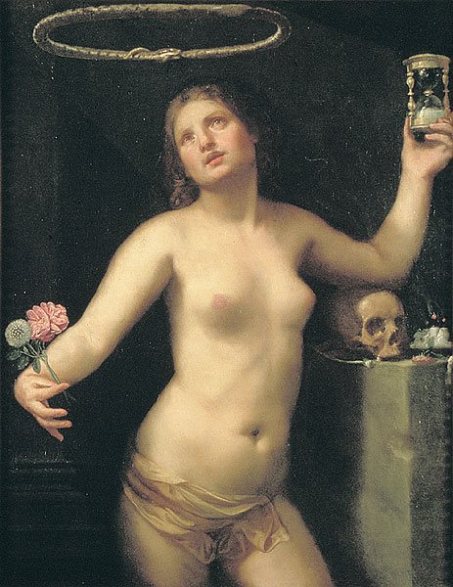
There are two things that we as human beings encompass; one is a material body and the other is a spirit, the spark of divinity that animates it. The body dies, decays and ceases to be, whilst the spirit alone lives on. Generation continues to perpetuate the species and provide further vehicles for this spark to incarnate and fulfil its purpose, to find its way home.

Initiation duplicates the first magics, when ‘Gods loved Man,’ but the golden spark has become corrupted by the dross of a material existence, each disillusioned soul sinking deeper and deeper into the mire. Faith alone can restore this. My sentiments will no doubt regrettably cause offence to some and to those I reserve the caveat that each of us is entitled to express what is really only our own opinion, and so on that premise, I offer my own small voice in a sterile wilderness.
Image

Hopefully not all of my words will fall on deaf ears. They are my own, though they clearly reflect those of my spiritual ancestor, Robert Cochrane. As seer, poet, mystic and gnostic founder of ‘The Clan of Tubal Cain’, created from within his ‘family line,’ referred to by him somewhat enigmatically as ‘The People of Goda’, Cochrane said:
“The genuine witch is a mystic at heart. Much of the teaching of witchcraft is subtle and bound within poetical concept rather than hard logic.”

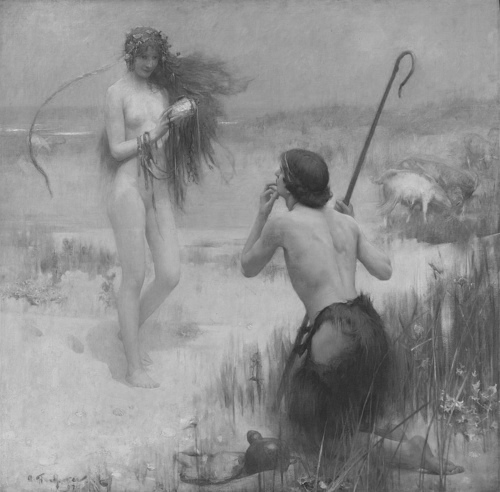
The great God Pan (Cain, the All-Father) is not dead, how could he be?, for in a truly pantheistic way, the virtue of grace is everywhere, in everything, in everyone; we have only to open our eyes, our hearts and minds to see Truth, Love and Beauty – the absolute Trinity. From the uniquely naïve (in the sense of being open and unsophisticated) perspective of a child, pantheism is simply Monism.

“All is One and One is All, and ever more will be so.

Image


my thanks and credits for all images used referenced throughout this blog

all photos are my own.

 
Picnic in Akeldama

Cooking... And something like cooking...

Tales From The Under Gardener's Lodge

Home, hearth and life immeasurable

Of Axe and Plough

Anglo-Saxon Heathenry and Roman Polytheism

My search for magic

Looking for magic in the modern world

Man of Goda

People of Goda, Clan of Tubal Cain

The Elder Tree

Life as a Witch.

Sorcerous Transmutations

Meanderings of the Muse:honouring the sacred muse in word and vision

Across the Abyss

Meanderings of the Muse:honouring the sacred muse in word and vision

Clan of the Entangled Thicket 1734

Meanderings of the Muse:honouring the sacred muse in word and vision

Daniel Bran Griffith - The Chattering Magpie

Meanderings of the Muse:honouring the sacred muse in word and vision

The Cunning Apostle

Cunning Man, Mystic, Eccentric & Outcast