The Poisoned Chalice

•March 18, 2013 • 4 Comments

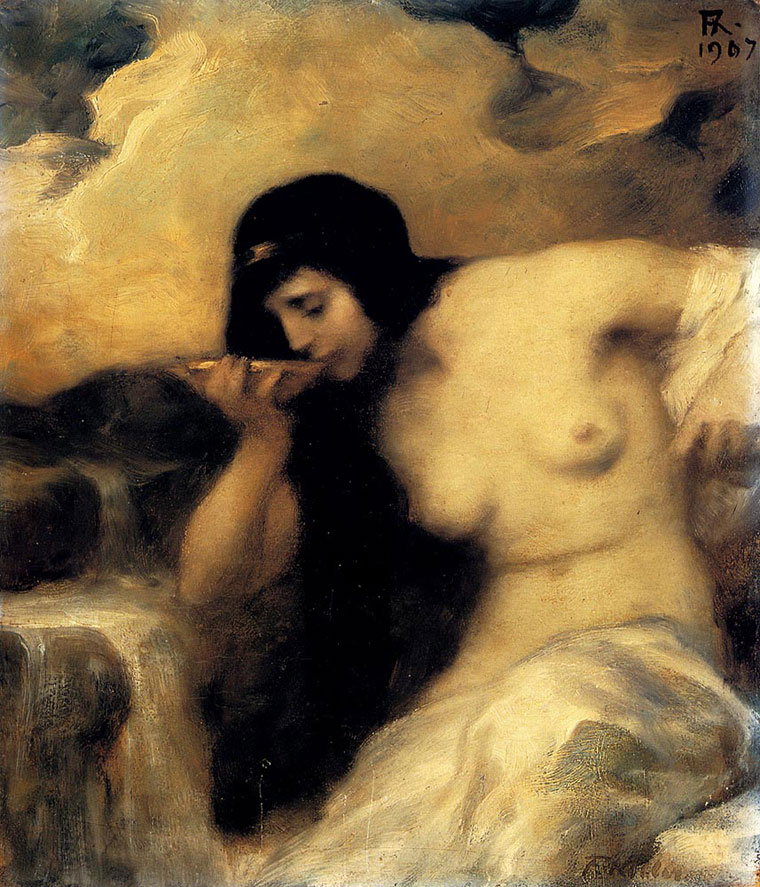
Keller-Nymph-Drinking

MYSTIC VERSE

Yet there is some light even in darkened eyes:
To those who have fallen hither
There is a certain power remaining
To the celestial sphere recalling them,
When, from mortal waves emerging,
Rejoicing, they enter on the sacred path
Leading to the regal, parental abode.
Happy he who, the voracious bark of hyle escaping
And from earthly bonds released,
With joyful and enlightened mind
To Deity directs his hasty flight.

[Synesius.]


SONY DSC

THE GOOD CITIZEN

Selected extracts, abridged from the Crito of Plato [translated by Thomas Taylor] A discourse between Socrates and his faithful friend, on the eve of his fateful demise at the hand of his detractors.

“But why, my dear Crito,”answered Socrates, “should we care about the opinion of the many? Good men, and they are the only people who are worth considering, will think of these things truly as they happened.”

Crito urges the great importance of the view of the many, as shown by the fate of Socrates himself, but is told that the many can do neither great good nor great evil, since they cannot make a man wise or foolish.

“I beseech you therefore, Socrates, to be persuaded by me, and to do as I say.”

“Dear Crito,’ answers Socrates, ‘your zeal is invaluable, if a right one; but if wrong, the greater the zeal, the greater the evil; and therefore we ought to consider whether these things shall be done or not.”

He goes on to say that he has always been guided by reason, and cannot now discard the reasons he has given before, since he still honours and reveres the principles he formerly honoured; and unless better principles can be found, he is certain not to agree with Crito, however frightening the power of the multitude may appear to be. The fairest way of considering the question will be to continue the discussion about the opinions of men, some of which are to be regarded and others disregarded.

Crito agrees that the opinions of the wise are to be valued, but not those of the unwise. Socrates then asks whether in questions as to what is just and unjust, fair and foul, good and evil, the opinion of the many ought to be feared and followed or that of the one wise man who is worthy of all reverence and honour, in deserting whom we should harm that principle within us which is superior to the body and which is improved by justice and injured by injustice. For if an incurably corrupted body makes life unbearable, by so much the more will life become valueless if that higher principle, far more to be honoured than body, becomes depraved.

Even though someone say ‘The many can kill us’ the argument holds.

Crito agrees and admits that their own long-held conviction still remains true,that it is not simply life, but a good life, which is of the greatest value, the good life being a just and honourable life. On these two statements the argument is to be based.

“Let us consider the matter together,’ says Socrates, ‘and do you either refute me if you can, and I will be convinced; or else cease, my dear friend, from repeating to me that I ought to escape… [the judgements against me]

Hope in the prison of despaiar by evelyn de morgan

1. The first question asked is whether wrong-doing is always evil and dishonourable, is injustice always an evil and dishonour to him who acts unjustly? The answer is ‘Yes’; for even when injured we must not injure in return, though this is not the opinion of the many.
2. The next question is, ought a man to do what he admits to be right, or ought he to betray the right? Crito says that a man ought to do what he thinks right.

“But if this is true, what is the application?’ says Socrates. ‘In leaving do I injure any? or rather, do I not wrong those whom I ought least to wrong: do I not desert principles which were acknowledged by us to be just? What do you say?”

“I cannot answer your question, Socrates, for I do not understand it,” answers Crito.

Socrates then relates an imaginary conversation between himself and the Athenian laws. ‘What are you about, Socrates?’ they would say. ‘Are you going by an act of yours to overturn us the laws, and the whole state, as far as you are able? No state, they say, can subsist in which the decisions of the law are set aside and overthrown by individuals.

“And suppose”, says Socrates, “that I say Yes, but the state has injured me and given me an unjust sentence.”

Socrates, as assenting to the laws like his forefathers, must be like them the child and servant of the laws and not on an equal footing with them*, and therefore has not the right to destroy the laws because they are going to destroy him, any more than a child has the right to strike or revile his father.

The law says “Has a philosopher like you, failed to discover that our country is more to be valued and higher and holier than any ancestor?’Her punishments are to be endured in silence. If she leads us to battle, it is right that we should follow, and none should leave the post, whether military or civil, to which the laws have appointed him. If he may do no violence to his father or mother, much less may he do violence to his country.”

Crito assents to what the laws have said.

Next, Socrates is reminded that if, after receiving all the benefit from the law and protection his city and country provided for him, he decided that he had, on coming of age, disliked them, he could have left Athens without interference from the laws; but the very fact of his staying in the city, once he had understood the way in which justice and order are maintained and administered, implies a contract that he will obey the law. Socrates, if disobedient, does a threefold wrong, firstly in disobeying his parent, secondly because he has been educated under the laws, and thirdly because he has implicitly agreed to obey the laws, yet being given the choice of obeying the laws or confuting them, he does neither.

“And now answer this very question,’ say the laws, ‘Are we right in saying you agreed to be governed according to us in deed and not only in word?”
“How shall we answer that, Crito?’ says Socrates. ‘Must we not agree?”
“We must agree, Socrates,” answers Crito.

The laws, bring forward another argument, asking what good an escape will do to himself or his friends. Will he tell them, as he has told the Athenians, that virtue, justice, institutions, and laws should have the first attention among men? If he goes to Crito’s friends in Thessaly, where there is great disorder and license, can he be sure that no one will remind him that in his old age he has broken the most sacred laws from an unworthy desire for a few more years of life? If Socrates flatters and entertains the people of Thessaly in order to hear only good of himself,though they still may speak evil behind his back, how will he spend his life? simply in eating and drinking and flattery. And what will become of his fine discourses about virtue?

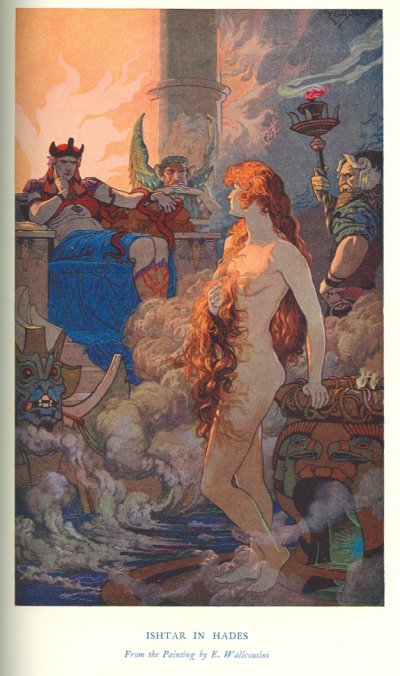
“Listen, then, Socrates, to us who have brought you up,” say the laws, in a last appeal. ‘Think not of your life and children first, and of justice afterwards, but of just first, that you may be justified before the princes of Hades. For neither will you nor anything that belongs to you be happier or holier in this life or happier in another, if you do as Crito bids. Now you depart in innocence, a sufferer and not a doer of evil; a victim not of the laws, but of men. But if you go forth, returning evil for evil and injury for injury, breaking the covenants and agreements which you have made with us, and wronging those whom you ought least to wrong, that is to say, yourself, your friends, your country, and us, we shall be angry with you while you live, and our brethren, the laws in Hades, will not revive you with good will; for they will know that you have done your best to destroy us. Listen, then, to us and not to Crito.”

SONY DSC

Socrates responds:

“This is the voice, Crito, which I seem to hear murmuring in my ears, like the sound of the flute in the ears of the mystic; that voice, I say, is humming in my ears, and prevents me from hearing any other. And I know that anything more which you will say will be in vain…. let me follow the intimations of the will of God.”

………………………………..
 

image057_s


A PRAYER

O Lord, Thou art single and the oversoul, the indwelling spirit and the Ancient One; Thou are identical with truth and self-effulgent, infinite and the first; Thou art eternal, imperishable and of the nature of bliss everlasting and untainted; Thou art perfect, without a second, free from appellations and immortal.

O Lord, Thou art the truthful vows, and the means of attaining unto Thee is the way of truth; Thou are the true existing entity in the three stages of the world; Thou art the origin of the entire creation; Thou dost pervade it and art its true essence; Thou art the Progenitor of truthful speech and of true behaviour, and Thou art all truth; Therefore I take refuge in Thee.

Srimad Bhagavatam. (From the Sanskrit.)
VIRIDIAN MUSE

•February 28, 2013 • 5 Comments

 Image

Stellar flame, who as cosmic flare becomes the emanation of all potential,  literally the viridian darts fires pure and straight from Her Perfect Mind into manifestation…. Thus the luminous Sun is of the soul ; yet the dark verdant gleaming is the twilight of Her  – World Soul, albeit one  manifest through His actualised force.  


Celestial light  couples sun to moon and is overlaid to birth the emerald star.  The Sun crystallises this pure green radiance, directing it prismatically as it falls into light, into vision, honing it’s firey spirit to perfection. Earthed within human form, we become bearers of light [in pure mind], and as divine beings through re-mem-brance or memory [after thought].


 But it is not to men and women distinct, but to their elemental mirrors, Her light refracts and reflects back, amplified a thousand fold from within each of us. As dual beings, the Source divides within, addressing both World soul as soul and our humanity as earthly beings.. the World Soul unites spirit with matter – whence heart and mind are drawn inexplicably onwards..


She, His twin personifies the Mystery of why the green light is luminous in the dark, why the Midnight  Sun alone shines ;  Lucifera, Her Dark Light is He, and His light shines in extension..


lux et tenebris..


Both lunar and solar eye unite as the single stellar eye – a sacred combination of the esoteric kalas of the midnight blue vault against which the moon illuminates Herself… and the yellow glow of the dawn’s golden sun.


Viridian, green light – all wisdom is of the twilight world of the Fey, of Hekt, the heka source and luminosity of life by which Gaia nourishes all..She is ultimately the light of the gate, the threshold of the tabula smaragdina – the all seeing eye, the unblinking reptilian/amphibion eye of Enki/Dagon/Oannes et al


 All under the aegis of Hekt, sublime lady of fate and all things known, unknown and yet to know – Her benefaction rests upon the prowess of kingship, even the hoary wisdom of the pharoah, of moses and of the seraphic priesthood of gnostic ophidian light.


Green, the magical kala to crown them all. It must never be worn by any not avowed to Her…


Green is the ocular vision of the seer, the blessing of the prophet and the compassion of the priest…


We are of ‘green gowns’ – women .. and the green of the forest, the legendary aegis of Robin I’ the hood,  in spite of the wolfshead’s shield of the earthy floor, the dusty tones of brown and grey…


For in truth, we do not see the life blood of humanity – fierce crimson red, until it is spilled in death. But green is noted in every living organism throughout the landscape in this glorious animistic world that surrounds us. Nature’s shining crown, there gleams for all to share..


 Image


WITH OR WITHOUT YOU

[lyrics –U2]

See the stone set in your eyes
See the thorn twist in your side
I wait for you

Sleight of hand and twist of fate
On a bed of nails she makes me wait
And I wait without you

With or without you
With or without you

Image
Through the storm we reach the shore
You give it all but I want more
And I’m waiting for you

With or without you
With or without you
I can’t live
With or without you

Image
And you give yourself away
And you give
And you give
And you give yourself away

My hands are tied
My body bruised, she’s got me with
Nothing to win and
Nothing left to lose

And you give yourself away
And you give
And you give
And you give yourself away
Image
With or without you
With or without you
I can’t live
With or without you

With or without you
With or without you
I can’t live
With or without you
With or without you


Image

Time from ‘The Four Quartets’ by T. S. Elliot

•February 6, 2013 • Leave a Comment

The Four Quartets

Babylon And Ishtar

Time present and time past
Are both perhaps present in time future
And time future contained in time past.
If all time is eternally present
All time is unredeemable.
What might have been is an abstraction
Remaining a perpetual possibility
Only in a world of speculation.
What might have been and what has been
Point to one end, which is always present.
Footfalls echo in the memory
Down the passage which we did not take
Towards the door we never opened
Into the rose-garden. My words echo
Thus, in your mind.
But to what purpose
Disturbing the dust on a bowl of rose-leaves
I do not know.
Other echoes
Inhabit the garden. Shall we follow?

KUBLA KHAN

Quick, said the bird, find them, find them,

Round the corner. Through the first gate,

Into our first world, shall we follow

The deception of the thrush? Into our first world.

There they were, dignified, invisible,
Moving without pressure, over the dead leaves,
In the autumn heat, through the vibrant air,
And the bird called, in response to
The unheard music hidden in the shrubbery,
And the unseen eyebeam crossed, for the roses
Had the look of flowers that are looked at.
There they were as our guests, accepted and accepting.
So we moved, and they, in a formal pattern,
Along the empty alley, into the box circle,
To look down into the drained pool.
Dry the pool, dry concrete, brown edged,
And the pool was filled with water out of sunlight,
And the lotus rose, quietly, quietly,
The surface glittered out of heart of light,
And they were behind us, reflected in the pool


Then a cloud passed, and the pool was empty.
Go, said the bird, for the leaves were full of children,
Hidden excitedly, containing laughter.
Go, go, go, said the bird: human kind
Cannot bear very much reality.
Time past and time future
What might have been and what has been
Point to one end, which is always present.

KUBLA KHAN


The detail of the pattern is movement,
As in the figure of the ten stairs.
Desire itself is movement
Not in itself desirable;
Love is itself unmoving,
Only the cause and end of movement,
Timeless, and undesiring
Except in the aspect of time
Caught in the form of limitation
Between un-being and being.
Sudden in a shaft of sunlight
Even while the dust moves
There rises the hidden laughter
Of children in the foliage
Quick now, here, now, always-
Ridiculous the waste sad time
Stretching before and after.
Allow but a little consciousness.
To be conscious is not to be in time
But only in time can the moment in the rose-garden,
The moment in the arbour where the rain beat,
The moment in the draughty church at smokefall
Be remembered; involved with past and future.
Only through time time is conquered.


tumblr_m4g1rkj1AN1qiuhqdo1_500

The Battle of Evermore

•January 14, 2013 • 4 Comments

Image

“The Battle Of Evermore”

“The Queen of Light took Her bow, And then She turned to go,
The Prince of Peace embraced the gloom, And walked the night alone.

Oh, dance in the dark of night, Sing to the Morning Light.

The Dark Lord rides in force tonight, And time will tell us all.
Oh, throw down your plough and hoe, Rest not to lock your homes.

Side by side we wait the might of the darkest of them all.

I hear the horses’ thunder down in the valley below,
I’m waiting for the angels of Avalon, waiting for the Eastern glow.

The apples of the valley hold, The seeds of happiness,
The ground is rich from tender care, Repay, do not forget, no, no.

Dance in the dark of night, sing to the Morning Light.”

{Copyright of Led Zeppelin}

Raging against the Machine, the heart reaches forth to all at this time of transition and turmoil.  Within the deepest moment of return, we face the dark together. For the Mound is the place of transformation for each of us, whether we are witting or oblivious of such Virtue. Thusly, the tide marks its own influence upon the weary wayfarer until each in turn becomes ‘The Mark’ itself. That is to say, we are wilfully absorbed within gyfu.

 Image

Letters utter the breath of things past, poignant words spoken of upon the wind are given to me as memory, of the gift, once in deed and again of intent. Their delight resides within the anticipation and emotion and virtue wholly absent from the lightning flash of ‘real time’ media as it explodes in cyberspace, a mere instant from our true purpose.

This fractal Universe saturates, nay drowns everything in its nebulous ego; void of discernment, nothing remains of any worth.

So, to ink and paper again, the candle gently flares; a subtle illumination, infused with clear and present warmth, distinguishable light and a heartbeat all its own.

Such dreams are manifest in real time of real worth.

Image

Life shifts, a pace, a furlong, a knot, one giant leap around the Compass; it’s all over before we knew it had ere begun.

To you Dear Lady, I hold a light for forbearance and strength. All shall endure. We have no choice.

The path to accomplish what is needful is oft distracted by what we desire, which is no lie, merely a causality away from the arrow, the straight dart, the homing trajectory we all yearn for in the ashes of the souls’ remembrance.

Image

There is no other place, no finer place than where we currently reside. This Hearth we call ‘home’ IS where the heart-light shines – the virtue of who we were, are and will always be. We exist only in the moment, and each moment is uniquely ripe with the potential of the pleroma, the instinct of nurture as it makes all bountiful in its wake.

We are sleeping, dreaming the vision of our existence within the reality of our dreams; we harken to the dancer and weaver of dreams… we are summoned to heed the call, and respond we must.

His pipers raze the tempo even as we raise the banners – the troup wanders ever onwards, forever seeking the ‘Light of all Being.’

Hidden in plain sight, all effulgence blinds the unwary, who failing to avert one’s glance, is smitten by the enduring image, seered at once into the heart.


Image

Relentless frustration fashions a quickening; promise swells in the belly, here damselflys gather in number to tease the body, to tame it to Her reckoning.

Encouraged by hope, it traverses beyond all remit. It has yet to encounter that among the countless halls of subtle wonders, each seeker carries forth desire.

 Leave it at the gate.

 Where is the Life? In the trees, comes the echo from afar.

Where is the All? I am everywhere and nowhere –She calls

Open then your eyes, gaze into the Sun, avert not thine eyes, speak with honeyed tongue, listen with intent, act with honour.. be bold…

Become the Child of Promise

Image

The Well at the World’s End

•January 10, 2013 • 2 Comments

 The_Dream_of_Launcelot_at_the_Chapel_of_the_San_Graal_1895_96

CHAPTER 7

The Maiden of Bourton Abbas

“What is thy need then?” said Ralph, “if perchance I might amend it.” And as he looked on her he deemed her yet fairer than he had done at first. But she stayed her weeping and sobbing and said:  “Sir, I fear me that I have lost a dear friend.”  “How then,” said he, “why fearest thou, and knowest not? doth thy friend lie sick between life and death?” “O Sir,” she said, “it is the Wood which is the evil and disease.”

“What wood is that?” said he.

She said:  “The Wood Perilous, that lieth betwixt us and the Burg of the Four Friths, and all about the Burg.  And, Sir, if ye be minded to ride to the Burg to-day, do it not, for through the wood must thou wend thereto; and ye are young and lovely. Therefore take my rede, and abide till the Chapmen wend thither from Higham, who ride many in company.  For, look you, fair lord, ye have asked of my grief, and this it is and nought else; that my very earthly love and speech-friend rode five days ago toward the Burg of the Four Friths all alone through the Wood Perilous, and he has not come back, though we looked to see him in three days’ wearing:  but his horse has come back, and the reins and the saddle all bloody.”

And she fell a-weeping with the telling of the tale.  But Ralph said (for he knew not what to say): “Keep a good heart, maiden; maybe he is safe and sound; oft are young men fond to wander wide, even as I myself.”

She looked at him hard and said:  “If thou hast stolen thyself away from them that love thee, thou hast done amiss. Though thou art a lord, and so fair as I see thee, yet will I tell thee so much.”

Ralph reddened and answered nought; but deemed the maiden both fair and sweet.  But she said:  “Whether thou hast done well or ill, do no worse; but abide till the Chapmen come from Higham, on their way to the Burg of the Four Friths.  Here mayst thou lodge well and safely if thou wilt. Or if our hall be not dainty enough for thee, then go back to Higham: I warrant me the monks will give thee good guesting as long as thou wilt.”

“Thou art kind, maiden,” said Ralph, “but why should I tarry for an host? and what should I fear in the Wood, as evil as it may be? One man journeying with little wealth, and unknown, and he no weakling, but bearing good weapons, hath nought to dread of strong-thieves, who ever rob where it is easiest and gainfullest.  And what worse may I meet than strong-thieves?”

“But thou mayest meet worse,” she said; and therewith fell a-weeping again, and said amidst her tears:  “O weary on my life!  And why should I heed thee when nought heedeth me, neither the Saints of God’s House, nor the Master of it; nor the father and the mother that were once so piteous kind to me? O if I might but drink a draught from the WELL AT THE WORLD’S END!”

He turned about on her hastily at that word; for he had risen to depart; being grieved at her grief and wishful to be away from it, since he might not amend it.  But now he said eagerly:

“Where then is that Well?  Know ye of it in this land?”

“At least I know the hearsay thereof,” she said; “but as now thou shalt know no more from me thereof; lest thou wander the wider in seeking it. I would not have thy life spilt.”

 the well at the world's end - sacred texts

CHAPTER 23

The Leechcraft of the Lady

Now Ralph sat up and looked about him, and when he saw the Lady he first blushed red, and then turned very pale; for the full life was in him again, and he knew her, and love drew strongly at his heart-strings. But she looked on him kindly and said to him:  “How fares it with thee? I am sorry of thy hurt which thou hast had for me.”  He said: “Forsooth, Lady, a chance knock or two is no great matter for a lad of Upmeads.  But oh!  I have seen thee before.” “Yea,” she said, “twice before, fair knight.”  “How is that?” he said; “once I saw thee, the fairest thing in the world, and evil men would have led thee to slaughter; but not twice.”

She smiled on him still more kindly, as if he were a dear friend, and said simply:  “I was that lad in the cloak that ye saw in the Flower de Luce; and afterwards when ye, thou and Roger, fled away from the Burg of the Four Friths. I had come into the Burg with my captain of war at the peril of our lives to deliver four faithful friends of mine who were else doomed to an evil death.”

He said nought, but gazed at her face, wondering at her valiancy and goodness.  She took him by the hand now, and held it without speaking for a little while, and he sat there still looking up into her face, wondering at her sweetness and his happiness. Then she said, as she drew her hand away and spake in such a voice, and so looking at him, that every word was as a caress to him: “Thy soul is coming back to thee, my friend, and thou art well at ease: is it not so?”

“O yea,” he said, “and I woke up happily e’en now; for me-dreamed that my gossip came to me and kissed me kindly; and she is a fair woman, but not a young woman.”

As he spoke the knight, who had come nearly noiselessly over the grass, stood by them, holding his helm full of water, and looking grimly upon them; but the Lady looked up at him with wide eyes wonderingly, and Ralph, beholding her, deemed that all he had heard of her goodness was but the very sooth. But the knight spake:  “Young man, thou hast fought with me, thou knowest not wherefore, and grim was my mood when thou madest thine onset, and still is, so that never but once wilt thou be nigher thy death than thou hast been this hour. But now I have given thee life because of the asking of this lady; and therewith I give thee leave to come thy ways with us: nay, rather I command thee to come, for thou art my prisoner, to be kept or ransomed, or set free as I will.  But my will is that thou shalt not have thine armour and weapons; and there is a cause for this, which mayhappen I will tell thee hereafter. But now I bid thee drink of this water, and then do off thine helm and hauberk and give me thy sword and dagger, and go with us peaceably; and be not overmuch ashamed, for I have overcome men who boasted themselves to be great warriors.

So Ralph drank of the water, and did off his helm, and cast water on his face, and arose, and said smiling:  “Nay, my master, I am nought ashamed of my mishaps:  and as to my going with thee and the Lady, thou hast heard me say under thy dagger that I would not forbear to follow her; so I scarce need thy command thereto.”  The knight scowled on him and said: “Hold thy peace, fool!  Thou wert best not stir my wrath again.” “Nay,” said Ralph, “thou hast my sword, and mayst slay me if thou wilt; therefore be not word-valiant with me.”

JStykaCalypso-promise

CHAPTER 15

Ralph Dreams a Dream Or Sees a Vision

Then he knew not if he awoke, or if it were a change in his dream; but the chamber became dark about him, and he lay there thinking of her, till, as it seemed, day began to dawn, and there was some little stir in the world without, and the new wind moved the casement. And again the door opened, and someone entered as before; and this also was a woman:  green-clad she was and barefoot, yet he knew at once that it was not his love that was dead, but the damsel of the ale-house of Bourton, whom he had last seen by the wantways of the Wood Perilous, and he thought her wondrous fair, fairer than he had deemed. And the word came from her:  “I am a sending of the woman whom thou hast loved, and I should not have been here save she had sent me.” Then the words ended, while he looked at her and wondered if she also had died on the way to the Well at the World’s End.  And it came into his mind that he had never known her name upon the earth. Then again came the word:  “So it is that I am not dead but alive in the world, though I am far away from this land; and it is good that thou shouldst go seek the Well at the World’s End not all alone: and the seeker may find me:  and whereas thou wouldst know my name, I hight Dorothea.”

Keller-Nymph-Drinking

CHAPTER 21

Now They Drink of the Well at the World’s End

Ralph stood still a moment, and then stretched abroad his arms, and with a great sob cast them round about the body of his beloved, and strained her to his bosom as he murmured about her, THE WELL AT THE WORLD’S END.  But she wept for joy as she fawned upon him, and let her hands beat upon his body.

But when they were somewhat calmed of their ecstasy of joy, they made ready to go down by that rocky stair.  And first they did off their armour and other gear, and when they were naked they did on the hallowed raiment which they had out of the ark in the House of the Sorceress; and so clad gat them down the rock-hewn stair, Ralph going first, lest there should be any broken place; but naught was amiss with those hard black stones, and they came safely to a level place of the rock, whence they could see the face of the cliff, and how the waters of the Well came gushing forth from a hollow therein in a great swelling wave as clear as glass; and the sun glistened in it and made a foam-bow about its edges. But above the issue of the waters the black rock had been smoothed by man’s art, and thereon was graven the Sword and the Bough, and above it these words, to wit:

YE WHO HAVE COME A LONG WAY TO LOOK UPON ME, DRINK OF ME, IF YE DEEM THAT YE BE STRONG ENOUGH IN DESIRE TO BEAR LENGTH OF DAYS: OR ELSE DRINK NOT; BUT TELL YOUR FRIENDS AND THE KINDREDS OF THE EARTH HOW YE HAVE SEEN A GREAT MARVEL.

So they looked long and wondered; and Ursula said:  “Deemest thou, my friend, that any have come thus far and forborne to drink?”

Said Ralph:  “Surely not even the exceeding wise might remember the bitterness of his wisdom as he stood here.”

Then he looked on her and his face grew bright beyond measure, and cried out: “O love, love! why tarry we?  For yet I fear lest we be come too late, and thou die before mine eyes ere yet thou hast drunken.”

“Yea,” she said, “and I also fear for thee, though thy face is ruddy and thine eyes sparkle, and thou art as lovely as the Captain of the Lord’s hosts.”

Then she laughed, and her laughter was as silver bells rung tunably, and she said:  “But where is the cup for the drinking?”

But Ralph looked on the face of the wall, and about the height of his hand saw square marks thereon, as though there were an ambrye; and amidst the square was a knop of latten, all green with the weather and the salt spray. So Ralph set his hand to the knop and drew strongly, and lo it was a door made of a squared stone hung on brazen hinges, and it opened easily to him, and within was a cup of goldsmith’s work, with the sword and the bough done thereon; and round about the rim writ this posey: “THE STRONG OF HEART SHALL DRINK FROM ME.”  So Ralph took it and held it aloft so that its pure metal flashed in the sun, and he said: “This is for thee, Sweetling.”

Floralia

“Yea, and for thee,” she said.

Now that level place, or bench-table went up to the very gushing and green bow of the water, so Ralph took Ursula’s hand and led her along, she going a little after him, till he was close to the Well, and stood amidst the spray-bow thereof, so that he looked verily like one of the painted angels on the choir wall of St. Laurence of Upmeads. Then he reached forth his hand and thrust the cup into the water, holding it stoutly because the gush of the stream was strong, so that the water of the Well splashed all over him, wetting Ursula’s face and breast withal: and he felt that the water was sweet without any saltness of the sea. But he turned to Ursula and reached out the full cup to her, and said: “Sweetling, call a health over the cup!”

She took it and said:  “To thy life, beloved!” and drank withal, and her eyes looked out of the cup the while, like a child’s when he drinketh.  Then she gave him the cup again and said: “Drink, and tarry not, lest thou die and I live.”

Then Ralph plunged the cup into the waters again, and he held the cup aloft, and cried out:  “To the Earth, and the World of Manfolk!” and therewith he drank.

For a minute then they clung together within the spray-bow of the Well, and then she took his hand and led him back to the midst of the bench-table, and he put the cup into the ambrye, and shut it up again, and then they sat them down on the widest of the platform under the shadow of a jutting rock; for the sun was hot; and therewithal a sweet weariness began to steal over them, though there was speech betwixt them for a little, and Ralph said: “How is it with thee, beloved?”

“O well indeed,” she said.

Quoth he:  “And how tasteth to thee the water of the Well?”

Slowly she spake and sleepily:  “It tasted good, and as if thy love were blended with it.”

And she smiled in his face; but he said:  “One thing I wonder over: how shall we wot if we have drunk aright?  For whereas if we were sick or old and failing, or ill-liking, and were now presently healed of all this, and become strong and fair to look on, then should we know it for sure— but now, though, as I look on thee, I behold thee the fairest of all women, and on thy face is no token of toil and travail, and the weariness of the way; and though the heart-ache of loneliness and captivity, and the shame of Utterbol has left no mark upon thee—yet hast thou not always been sweet to my eyes, and as sweet as might be?  And how then?”…But he broke off and looked on her and she smiled upon the love in his eyes, and his head fell back and he slept with a calm and smiling face. And she leaned over him to kiss his face but even therewith her own eyes closed and she laid her head upon his breast, and slept as peacefully as he.


the moon and the morning star

sacred texts :  extracrs from – the well at the world’s end by william morris

Yule

•December 24, 2012 • Leave a Comment

252880_2070355526332_3991423_n

The Saga of Hrolf Kraki and His Champions

35. Bodvar Beats the Dragon

charivari

Yule approached and the people grew glum. Bodvar asked Hott what this meant. He explains how for two years they have been tormented by the huge and terrible flying creature  “with wings on its back”. Two autumns it’s visits resulted in loss of life and destruction of property.  No weapon pierces it, and the king’s best champions don’t come home.

Bodvar said,

“This Hall is not so well manned as I imagined, if one beast alone may lay such waste in this kingdom and to the king’s cattle.”

Hott said,

 “Tis the worst sort of troll.”


werewolf-woodcut-243x200

Yule-eve falls and the king said,

“Now I want all my people to be still and quiet this night;  I forbid any man to risk life and limb with this creature. If the cattle are taken, then it be so but I shall not lose any of my men.”

Everyone promised faithfully to do as the king commanded.

Bodvar crept away in the night taking Hott with him, albeit under duress, exclaiming how he was being led to his death.  Bodvar refutes his pleas. But as they leave, so nervous was he that Bodvar had to carry him.

Almost immediately, they spy the beast ,causing  Hott so scream loudly, believing the beast would swallow him. Bodvar told him to shut up and threw him down on the moss, where he liay in great fear.  Unable to move, he does not even  dare not go home. Bodvar does face up to the creature.  So cold is the icy winds around them, his sword is stuck fast in its scabbard when he wanted to draw it. So Bodvar willed his sword free , urging it so strongly to be released and when it stirred in the sheath,  he finally drew it, thrusting it straight under the beast’s shoulder.  So hard  was the blow in fact that it pierced the heart of the great beast which dropped down dead upon the ground.

Thereafter  he walked over to where Hott lay, petrified still. Bodvar picked him up and dragged him over to where the creature lays dead. Hott shook him sorely.

Bodvar said,

“Now you must drink the blood of the beast.”

Though reluctant, he is at the same time unwilling to gainsay Bodvar who instructs  him to drink two big mouthfuls. He also bade him eat a small portion of the creature’s heart. After this, Bodvar attacked him and they fought for some time.


santaandgoat

Bodvar said,

“Now you’ve grown plenty strong, and I doubt you’ll fear King Hrolf’s retainers now.”

Hott replied, “I will not fear them or you after this.”

“All is as it should and must be. Now we must raise the beast , setting it up as if it were still alive.”

They accomplish this then quietly leave.

durer witch devil 

[with thanks, edited from: 

http://www.northvegr.org/sagas%20annd%20epics/legendary%20heroic%20and%20imaginative%20sagas/old%20heithinn%20tales%20from%20the%20north/043.html%5D


Song to the Wind

•December 10, 2012 • Leave a Comment

SONG TO THE WIND.- A poem from the BOOK OF TALIESIN XVII.

Image 

GUESS who it is.
Created before the deluge.
A creature strong,
Without flesh, without bone,
Without veins, without blood,
Without head, and without feet.
It will not be older, it will not be younger,
Than it was in the beginning.
There will not come from his design

10 Fear or death.
He has no wants
From creatures.
Great God! the sea whitens
When it comes from the beginning.
Great his beauties,
The one that made him.
He, in the field, he, in the wood,
Without hand and without foot.
Without old age, without age.

20 Without the most jealous destiny
And he (is) coeval
With the five periods of the five ages.
And also is older,
Though there be five hundred thousand years.
And he is as wide
As the face of the earth,
And he was not born,
And he has not been seen.
He, on sea, he, on land,

30 He sees not, he is not seen.
He is not sincere,
He will not come when it is wished.
He, on land, he, on sea,
He is indispensable,
He is unconfined,
He is unequalled.
He from four regions,
He will not be according to counsel.
He commences his journey

40 From above the stone of marble.
He is loud-voiced, he is mute.
He is uncourteous.
He is vehement, he is bold,
When he glances over the land.
He is mute, he is loud-voiced.
He is blustering.
Greatest, his banner
On the face of the earth.
He is good, he is bad,

50 He is not bright,
He is not manifest,
For the sight does not see (him).
He is bad, he is good.
He is yonder, he is here,
He will disorder.

He will not repair what he does
And he sinless,
He is wet, he is dry,
He comes frequently

60 From the heat of the sun, and the coldness of the moon.
The moon is without benefit,
Because less, her heat.
One Person has made it,
All the creatures.
He owns the beginning
And the end without falsehood.
Not skilful, the minstrel
That praises not the Lord.
Not true, the songster

70 That praises not the Father.
Not usual will a plough be
Without iron, without seed.
There was not a light
Before the creation of heaven;
There will not be a priest,
That will not bless the wafer;
The perverse will not know
The seven faculties.
Ten countries were provided,

80 In the angelic country.
The tenth were discarded,
They loved not their Father.
A loveless shower
In utter ruin.
Llucufer the corrupter,
Like his destitute country
Seven stars there are,
Of the seven gifts of the Lord.
The student of the stars


90 Knows their substance.
Marca mercedus
Ola olimus
Luna lafurus
Jubiter venerus
From the sun freely flowing
The moon fetches light.
Remembrance is not in vain,
No cross if not believed.
Our Father! Our Father!

100 Our relative and companion.
Our Sovereign, we shall not be separated.
By the host of Llucufer.

Image

the garden

•December 9, 2012 • 1 Comment

The Garden of Eros

The Garden

HOW vainly men themselves amaze To win the palm, the oak, or bays,

And their uncessant labours see Crown’d from some single herb or tree,

Whose short and narrow verged shade Does prudently their toils upbraid;

While all flow’rs and all trees do close To weave the garlands of repose.

Fair Quiet, have I found thee here, And Innocence, thy sister dear!

Mistaken long, I sought you then In busy companies of men;

Your sacred plants, if here below, Only among the plants will grow.

Society is all but rude, To this delicious solitude.

No white nor red was ever seenSo am’rous as this lovely green.

Fond lovers, cruel as their flame, Cut in these trees their mistress’ name;

Little, alas, they know or heed How far these beauties hers exceed!

Fair trees! wheres’e’er your barks I wound, No name shall but your own be found.

Tamerlane

When we have run our passion’s heat, Love hither makes his best retreat.

The gods, that mortal beauty chase, Still in a tree did end their race:

Apollo hunted Daphne so, Only that she might laurel grow;

And Pan did after Syrinx speed, Not as a nymph, but for a reed.

What wond’rous life in this I lead! Ripe apples drop about my head;

The luscious clusters of the vine Upon my mouth do crush their wine;

The nectarine and curious peach Into my hands themselves do reach;

Stumbling on melons as I pass,Ensnared with flowers, I fall on grass.

Meanwhile the mind, from pleasure less,Withdraws into its happiness;

The mind, that ocean where each kind Does straight its own resemblance find,

Yet it creates, transcending these,Far other worlds, and other seas;

Annihilating all that’s made To a green thought in a green shade.

The Holly and the Ivy

Here at the fountain’s sliding foot,Or at some fruit tree’s mossy root,

Casting the body’s vest aside,My soul into the boughs does glide;

There like a bird it sits and sings,Then whets, and combs its silver wings;

And, till prepar’d for longer flight,Waves in its plumes the various light.

Such was that happy garden-state,While man there walk’d without a mate;

After a place so pure and sweet,What other help could yet be meet!

But ’twas beyond a mortal’s share To wander solitary there:

Two paradises ’twere in one To live in paradise alone.

How well the skillful gard’ner drew Of flow’rs and herbs this dial new,

Where from above the milder sun Does through a fragrant zodiac run;

And as it works, th’ industrious bee Computes its time as well as we.

How could such sweet and wholesome hours Be reckon’d but with herbs and flow’rs!

 KUBLA KHAN

poem by Andrew Marvell

images copyright of shani oates

the hunt

•November 30, 2012 • Leave a Comment


Image

When the light fades, the wounded heart bathes in deaths glorious shards of fire. …seconds shift the circuit further into the furious intensity of existence where moments of joy flee to unknown sanctuaries/ we know not the grief of age worn sorrow, ground as dust amidst despair’s own tomb – yet hope flutters upon the honeyed breath of resurrection/ gnarled fingers clutch the withered vine, clawing the earth beneath/ yet above, the unyielding sun burns fragments of a dream now lost into the arrid earth, each step falls upon, another without sound, without trace of all being/ I pass into fugue, a solitude of mourning/ but for what? whence did joy depart, whence did melancholia dampen all vigour into grey vapour/ restriction suffocates me, expression is denied…until

YOU,

YOU

entered my soul chilling and burning it ablaze with all wonder, with awe, with fear,  my greatest need  is for

YOU

never to depart, lest it shatter into oblivion….gather me whole again, gather me home, come, embrace me again/ the velvet shadows beckon me to thee, engulfed, muffled in the whispered sighs of our expirated prayers… but then, our howlings drone into the void around us, as, swirling out of time and space, we assume the mantle of virtue, the orb of justice and the scepter of fate – drifting across the spiral star scape, eternity is too short/ ambiguous , I am invincible beyond the threshold of promise; my savour’d draft of honey is manna most fair to a deed – a gift twixt lovers, whose troth is meet! Seal my lips with unbridled passion/salvage us where all bundles become en-lightened  ….here I dream myself true … the hunt is spent!        


Image       


text copyright of shani oates 

1 perseus and medusa by E.C. Burne-Jones

2 hope in the prison of despair by evelyn de morgan


In Fate: Time, Death and the Devil

•November 15, 2012 • 1 Comment


O Fortuna (O Fortune)
Velut luna (like the moon)
Statu variabilis (you are changeable)
Semper crescis (ever waxing)
Aut decrescis; (and waning;)
Vita detestabilis (hateful life)
Nunc obdurat (first oppresses)
Et tunc curat (and then soothes)
Ludo mentis aciem, (as fancy takes it)
Egestatem, (poverty)

Potestatem (and power)

Dissolvit ut glaciem. (it melts them like ice.)
Sors immanis (Fate – monstrous)
Et inanis, (and empty)

 Rota tu volubilis, (you whirling wheel)
Status malus, (you are malevolent)
Vana salus (well-being is vain)
Semper dissolubilis, (and always fades to nothing)
Obumbrata (shadowed)
 
Et velata (and veiled)
Michi quoque niteris; (you plague me too;)
Nunc per ludum (now through the game)
Dorsum nudum (I bring my bare back)
Fero tui sceleris. (to your villainy.)

Sors salutis (Fate is against me)

Et virtutis (in health)
Michi nunc contraria, (and virtue)
Est affectus (driven on)
Et defectus (and weighted down)
Semper in angaria. (always enslaved.)
Hac in hora (So at this hour)
Sine mora (without delay)
Corde pulsum tangite; (pluck the vibrating strings;)
Quod per sortem (since Fate)
Sternit fortem, (strikes down the string)
Mecum omnes plangite! (everyone weep with me!)

http://www.lyricsmode.com/lyrics/c/carl_orff/carmina_burana.html]

Then Almitra spoke, saying, We would ask now of death.

And he said:

You would know the secret of death. But how shall you find it unless you seek it in the heath of life? The owl whose night-bound eyes are blind unto the day cannot unveil the mystery of light. If you would indeed behold the spirit of death, open your heart wide unto the body of life. For life and death are one, even as the river and sea are one.

In the depth of your hopes and desires lies your silent knowledge of the beyond; and like seeds dreaming beneath the snow your heart dreams of spring. Trust the dreams, for in them is hidden the gate to eternity.

Your fear of death is but the trembling of the shepherd when he stands before the king whose hand is to be laid upon him in honor. Is the shepherd not joyful beneath his trembling, that he shall wear the mark of the king? Yet is he not more mindful of his trembling?

For what is it to die but to stand naked in the wind and to melt into the sun? And what is it to cease breathing, but to free the breath from its restless tides, that it may rise and expand and seek God unencumbered?

Only when you drink from the river of silence shall you indeed sing. And when you have reached the mountain top, then you shall begin to climb. And when the earth shall claim your limbs, then shall you truly dance.

The Prophet – Kahlil Gibran

The Teaching of Tecumseh

Live your life that the fear of death
can never enter your heart.
Trouble no one about his religion.
Respect others in their views
and demand that they respect yours.
Love your life, perfect your life,
beautify all things in your life.
Seek to make your life long
and of service to your people.
Prepare a noble death song for the day
when you go over the great divide.
Always give a word or sign of salute when meeting
or passing a friend, or even a stranger, if in a lonely place.
Show respect to all people, but grovel to none.
When you rise in the morning, give thanks for the light,
for your life, for your strength.
Give thanks for your food and for the joy of living.
If you see no reason to give thanks,
the fault lies in yourself.
Touch not the poisonous firewater that makes wise ones turn to fools
and robs the spirit of its vision.
When your time comes to die, be not like those
whose hearts are filled with fear of death,
so that when their time comes they weep and pray
for a little more time to live their lives over again
in a different way.
Sing your death song, and die like a hero going home.

 
Kabir says:
Friend, hope for the Guest while you are alive.
Jump into experience while you are alive!
Think… and think… while you are alive.
What you call “salvation” belongs to the time before death.
If you don’t break your ropes while you’re alive, 
do you think ghosts will do it after?
The idea that the soul will rejoin with the ecstatic
just because the body is rotten– that is all fantasy.
What is found now is found then. If you find nothing now,
you will simply end up with an apartment in the City of Death.
If you make love with the divine now, in the next
 life you will have the face of satisfied desire.
So plunge into the truth, find out who the Teacher is,  
Believe in the Great Sound! Kabir says this: When the Guest is being searched for,
 it is the intensity of the longing for the Guest that does all the work.
Look at me, and you will see a slave of that intensity.
 
“The Triumph of Virtue” would be a better name for this perfect little masque, for its theme is that virtue and innocence can walk through any peril of this world without permanent harm. This eternal triumph of good over evil is proclaimed by the Attendant Spirit who has protected the innocent in this life and who now disappears from mortal sight to resume its life of joy.
 

Mortals, that would follow me,

Love Virtue; she alone is free.
She can teach ye how to climb
Higher than the sphery chime;
Or if Virtue feeble were,
Heaven itself would stoop to her.

“Is this the region, this the soil, the clime,”
Said then the lost Archangel, “this the seat
That we must change for Heaven?–this mournful gloom
For that celestial light? Be it so, since He
Who now is sovran can dispose and bid
What shall be right: farthest from Him is best,
Whom reason hath equalled, force hath made supreme
Above his equals. Farewell, happy fields,
Where joy forever dwells! Hail, horrors! hail,
Infernal World! and thou, profoundest Hell,
Receive thy new possessor–one who brings
A mind not to be changed by place or time.
The mind is its own place, and in itself
Can make a Heaven of Hell, a Hell of Heaven.
What matter where, if I be still the same,
And what I should be, all but less than he
Whom thunder hath made greater? Here at least
We shall be free; the Almighty hath not built
Here for his envy, will not drive us hence:
Here we may reign secure; and, in my choice,
To reign is worth ambition, though in Hell:
Better to reign in Hell than serve in Heaven.”

Milton -Paradise Lost


Picnic in Akeldama

Cooking... And something like cooking...

Tales From The Under Gardener's Lodge

Home, hearth and life immeasurable

Of Axe and Plough

Anglo-Saxon Heathenry and Roman Polytheism

My search for magic

Looking for magic in the modern world

Man of Goda

People of Goda, Clan of Tubal Cain

The Elder Tree

Life as a Witch.

Sorcerous Transmutations

Meanderings of the Muse:honouring the sacred muse in word and vision

Across the Abyss

Meanderings of the Muse:honouring the sacred muse in word and vision

Clan of the Entangled Thicket 1734

Meanderings of the Muse:honouring the sacred muse in word and vision

Daniel Bran Griffith - The Chattering Magpie

Meanderings of the Muse:honouring the sacred muse in word and vision

The Cunning Apostle

Cunning Man, Mystic, Eccentric & Outcast