the mysteries, tradition & crafting arte of witchcraft

•August 22, 2014 • 1 Comment

But now, such is the fate of human things, these MYSTERIES, venerable as they were, in their first institution, did, it must be owned, in course of time, fearfully degenerate; and those very provisions made by the state to enable the mysteries to obtain the end of their establishment, became the very means of defeating it. For we can assign no surer CAUSE of the horrid abuses and corruptions of the mysteries (besides time, which naturally and fatally depraves and vitiates all things) than the SEASON in which they were represented; and the profound SILENCE in which they were buried. For NIGHT gave opportunity to wicked men to attempt evil actions ; and SECRECY, encouragement to perpetrate them; and the inviolable nature of that secrecy, which encouraged abuses, kept them from the magistrate’s knowledge so long, till it was too late to reform them. In a word, we must own, that these mysteries, so powerful in their first institution for the promotion of VIRTUE and KNOWLEDGE, § became, in time, horribly subservient to the gratification of LUST and REVENGE.”

{The Divine Legation of Moses Demonstrated by William Warburton}
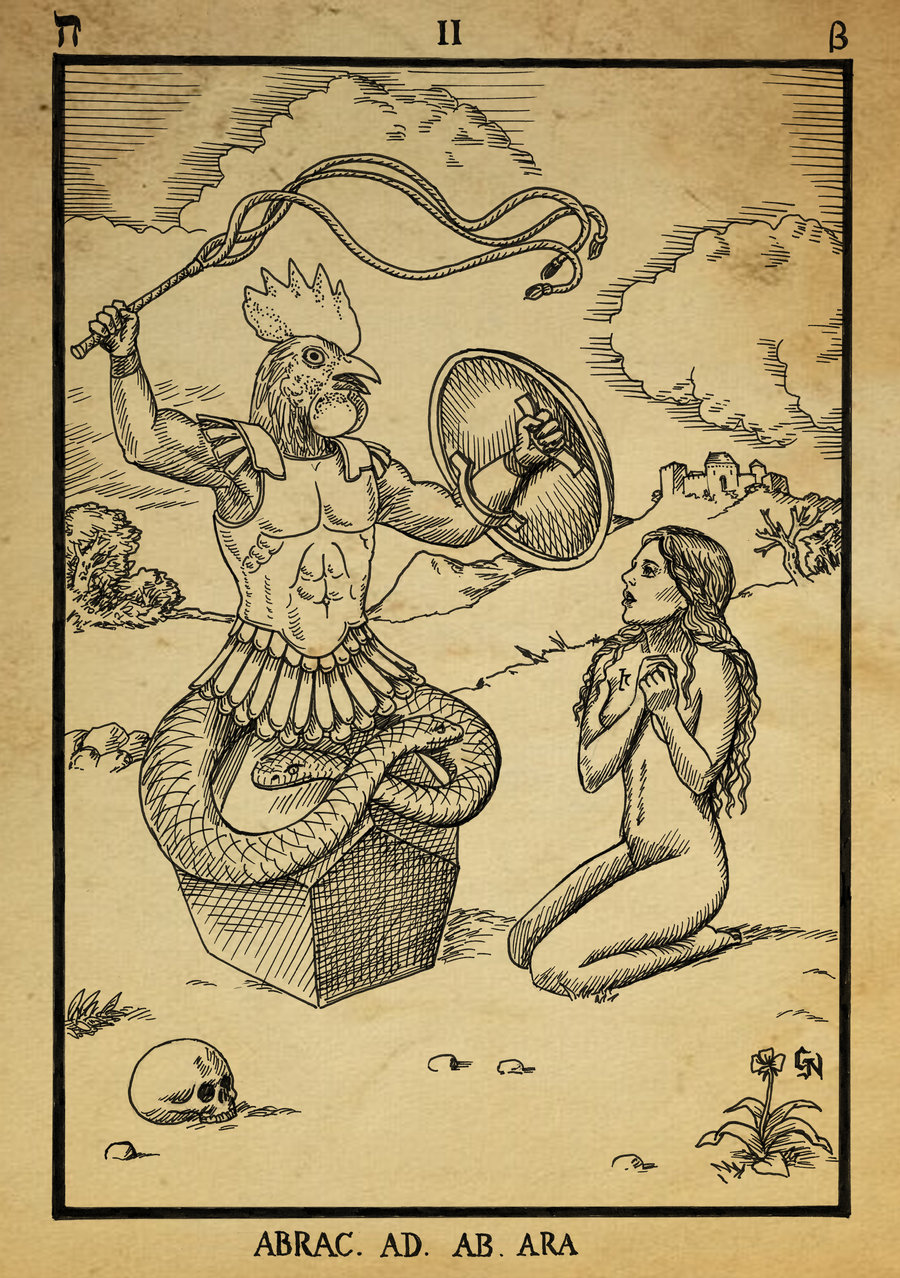
tumblr abrac ad ab ara

Within this 21st century of ours, we presume many changes and effects. We have inherited a whole corpus of occult-ure and yet, we remain but infants before its hoary and nefarious notoriety. As terms and/or catalysts for change, ‘traditional’ and ‘witchcraft’ have become synonymous with each other over the last few decades, yet it should be clear neither idiom has always been understood in this current trend of mutual inclusivity. For this reason, many ‘families’ and ‘traditions’ have commonly [though not always] subscribed to the collective term – ‘Craft.’ This does of course extend by default into various branches of folk-magic, crafts guilds, charming, herbalism, consequent to the dual faith practises of so many cunning men/women that further typify ever more individual digressions; this is especially true when regarding influences and location within Britain.

GoldenFleece

Most importantly, we must realise here that it is to such peoples, largely drawn from within the province of the laboured classes, we acquired the creative and innovative guilds-men and women. Ironically, these folk were the judicial developers of what is now deemed as: ‘Craft.’ And so it can be said with some irony, that Traditional Craft, and most particularly, the Craft, was borne out of the Witchcraft some few hundred years ago, albeit in reactionary conflict of it. Witch ‘craft,’ on the other hand, had set for itself an historical precedent for maleficia. It has been notoriously malignant and wilful in its defiant artes, typically those engaged in casting a curse by hand or eye. Existing within every religion and faith, irrespective of whether deemed to be Christian, pagan or other, it was practised by a whole strata of folk from peasant to prince, yet more than a few Cunning-folk were known for their services both sides of the fence, albeit not officially.
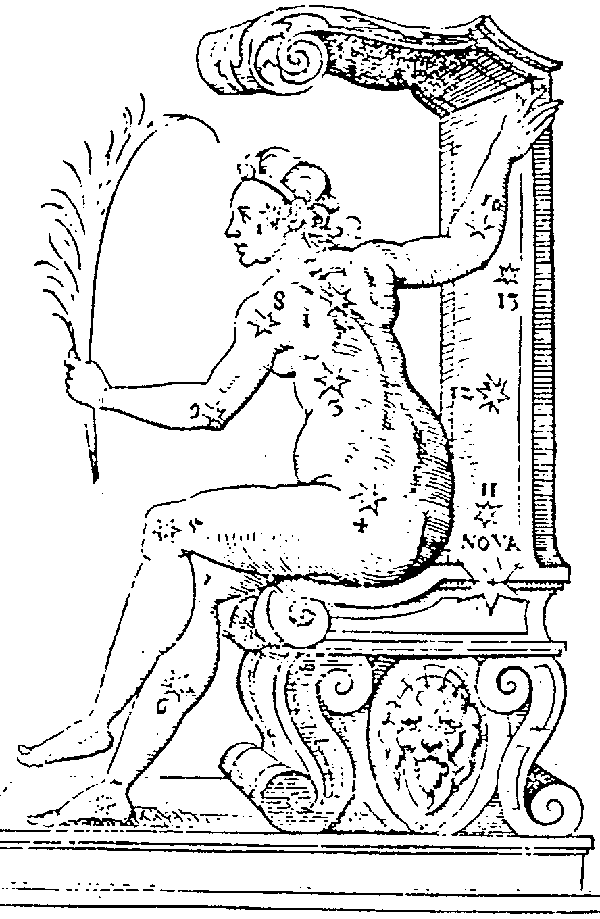
Cassiopeia

Another associated misnomer regards the usage and application of the word ‘coven’ in our time, to suggest fanciful links to a romantic view of the past in order to validate an asserted ‘tradition.’ And yet, in reality, then as now, within ‘Craft’ or folk-magic praxis, both necessity and circumstance demanded that the practitioner worked alone. Tradition may not confer age or authenticity; it simply infers a principle of stability, whether established, revived, revised, or re-introduced. If expressed and continued, even in ‘one’ generation only, it stands as tradition. The Traditions of Witchcraft are a different kettle of fish altogether, having an entirely distinct criteria that determine its existence and validity. It is important to appreciate that terms and labels used even by peoples belonging to a family or clan may still represent either individual perspective on these matters, or a distinct sensitivity/awareness of how they are perceived by the public they are addressing in their usage. Both become integral to the establishment of a term that implicitly asserts far more than cunning craft or folk magics.

229965124692203253_6uGlS3CV_b


Of course ‘traditions’ in and of themselves that range from enrichment of the former to a total cosmological Mythos within a Faith, of a belief of a ‘people’ bound in troth, in truth to something ‘other,’ offer rather more personal than generic titles. These alternative labels over time, have substituted those of the former ‘Old’ Religions of these lands; that is to say Catholicism for the most part. Opinion may vary on this but it has been my experience that the ‘Priestess’ and ‘High Priestess’ roles within certain sections of Wicca and within some Neo-Pagan systems are certainly found to be very alluring to many women. And to be quite candid, Traditional Craft is largely presented as a predominantly masculine, authoritarian, even misogynist practise with select conclaves of horsemen, toad-men etc, having side-lined women historically in terms of anything deemed little better than servants, concubines, hand-maidens et al, and then, somewhat after the event. Though a rather harsh generalisation, it remains entrenched within the current public view and widely held, whether correct or not by those within and without the Craft. By such contrast, it becomes explicitly clear how this path may hold little appeal to women who seek a better appreciation of their sex other than this gross overview.

freya-from-the-sky


In some social circles it is somewhat cynically expressed how Wicca is at fault in its weak apathy, whereas Traditional Craft is [scathingly]held as being led by megalomaniacs. Media is of course an unforgiving and brutishly cruel judge and jury. From my own perspective within both systems, it is at least fair to say Wicca is a woman’s world and Traditional Craft is certainly a ‘man’s world. But not all traditional ‘Craft’ is like this. It never was. The male dominated perspective is historically incorrect with the exception of more recent 19th century agricultural guilds and societies. My view may be deemed controversial, but it is one Evan John Jones fought hard to assert and failed in the quagmire of the natural inclination within our modern society to respect and take up ideas presented by men in preference to those offered by women, especially if and where they ‘champion’ that status quo. It has been proven time over, men just simply prefer to ‘hear’ things from another man. In the final scenario, it comes down to what is real, what is genuine and what is historically correct. In no way am I positing either a feminist argument here, nor an arcane matriarchy.


glossarysiren

There remains the need for a more honest and clear answer to redress more justly the nonsenses applied in practise and in media hype regarding what is essentially an extremely small, elitist minority that has too long misrepresented the arcane arts. Historically, all these arts stand as unmitigatedly led by female poets, artists, alchemists, warriors, mystics and so on. But to those who find themselves bemused or perplexed by this concept, or even challenged by it, I can only recommend they research genuine sources to discover how easily all of this is easily confirmed. It is always worth clarifying too the important distinction within the ‘nameless arte’ of traditions within folk magics and traditions of them. There is indeed a dearth of female voices heard, and though some female practitioners write eloquently upon their traditions within folk magics as a much needed balance to the toad men etc, they seldom achieve the same kudos, especially by other men, with particular regard to ‘cunning crafts.’
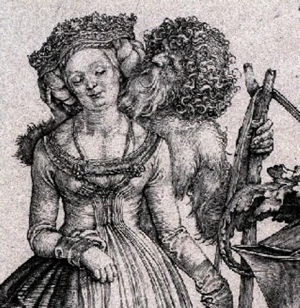
durer witch devil

In contra-distinction, however, the Mystery Traditions apropos the traditions ‘of’ the Craft have held women in the greatest esteem. Thus it is ably demonstrated in this middle ground, how that arcane ‘priestly’ role so inherent of the divine feminine, holds a much mourned and lamented missing element of the triadic mysteries deep within the psyche of these ancient Isles of Britain. It is a lost voice, drowned by the more active magical roles of the kitchen witch and the toad man alike. It is much the current flavour to express these concerns within the greater context of the crises that plague our world. The banes of hatred and prejudice, exploitation and abuse continue to gnaw away the very fabric of community spirit and of the ‘Craft’ itself. Personally, I therefore applaud any work presented that serves to shake people from their somnambulist apathy regarding the shattering inequalities and prejudicial horrors occurring every moment all over the world around us. This is our world, and we all live within it. There can be no exclusions.
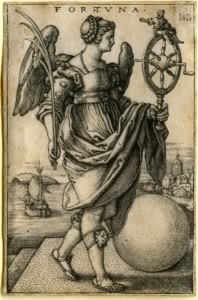

Fortuna


Furthermore, it is the duty and ‘craft’ of all to champion and support many of the disturbing eco issues raised within various topical media. Why? because we are allegedly ‘witches’ and must have a duty to care about ‘Mother Nature’ and the biosphere? Hardly probable, neither historically, nor in our contemporary climate. Rather, because the future of our world and its depleting resources and/or poisoned ones will assuredly disrupt the lifestyles of our children to come; for they will inherit our debris, and we should act simply because we SHOULD act. The issue is not requisite of our path, be that down to the labels by which we are defined in our rush to separate and articulate ourselves (somewhat ironically) as individuals.’ Being a witch, or not, being a pagan or not, is quite irrelevant in this instance. To consider the movement as being the radical duty of a ‘witch’ is not only inaccurate historically, it presumes an realistic and unprecedented homogeneity in the present to articulate the future… there can be no such singular lens. We are all bound to the ethos of tradition and ‘That’ is as diverse as the tongues and attendant culture on the planet we are invested to consider.
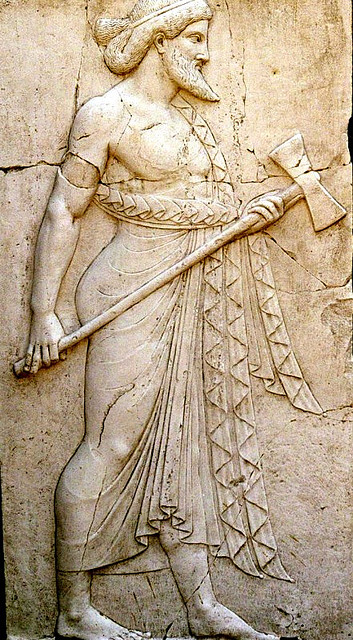
492940527_b1eed0027d_z


As human beings it is incumbent upon us to be mindful, not as witches. Traditions are by definition inherited and that assumes a duty to its preservation and development. there is no umbrella definition for tradition just as there is not for paganism, for in our era, such things are intensely diversified. The Craft, as in those skills handed down borne of tradition in perpetuity for the enhancement of life being in harmony with the natural forces and virtues of ‘Pangaia,’ must remain culturally aligned to the strains by which they were developed, and wherein specialisms intensify the potency of diversity. Above this, the ‘pangevity’ of concern SHOULD remain a priority of all , irrespective of the individual calling. Wake up, take up the call, but be true to your own path; it need not become subsumed to the new imperialism of homogeneity to rent the poison from misgovernment. We are thus doubly radical and doubly fierce; we are first of all human beings and secondly individuals.
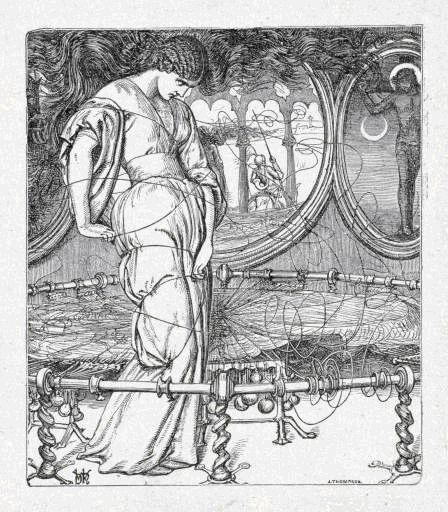
Lady-of-Shallot


In both cases, we serve an indiscriminate and inclusive desire for life. Our mutual concerns and reverential love of the planet augurs our responsibilities regarding our future upon it. Past extinctions have occurred as consequence of our unbridled greed and ignorance; yet neither at the hands of witches nor non witches, but by human beings. Clearly what needs to change is us, each and every one of us.
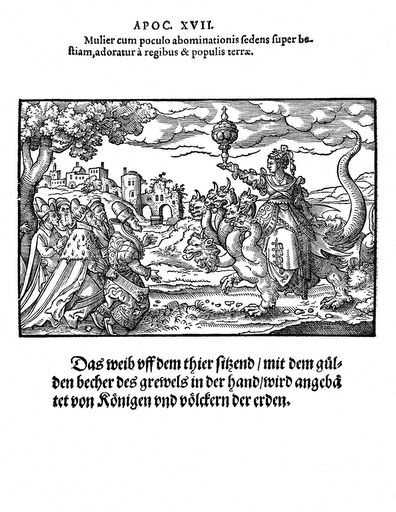
 

Blessed Sophia


Rally forth to that banner!

Leucothea – Pale faced Goddess

•June 28, 2014 • Leave a Comment


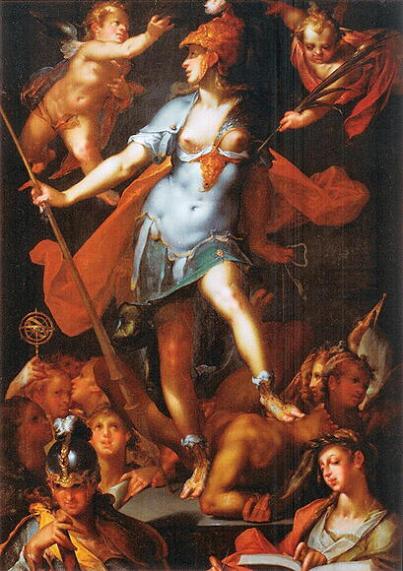
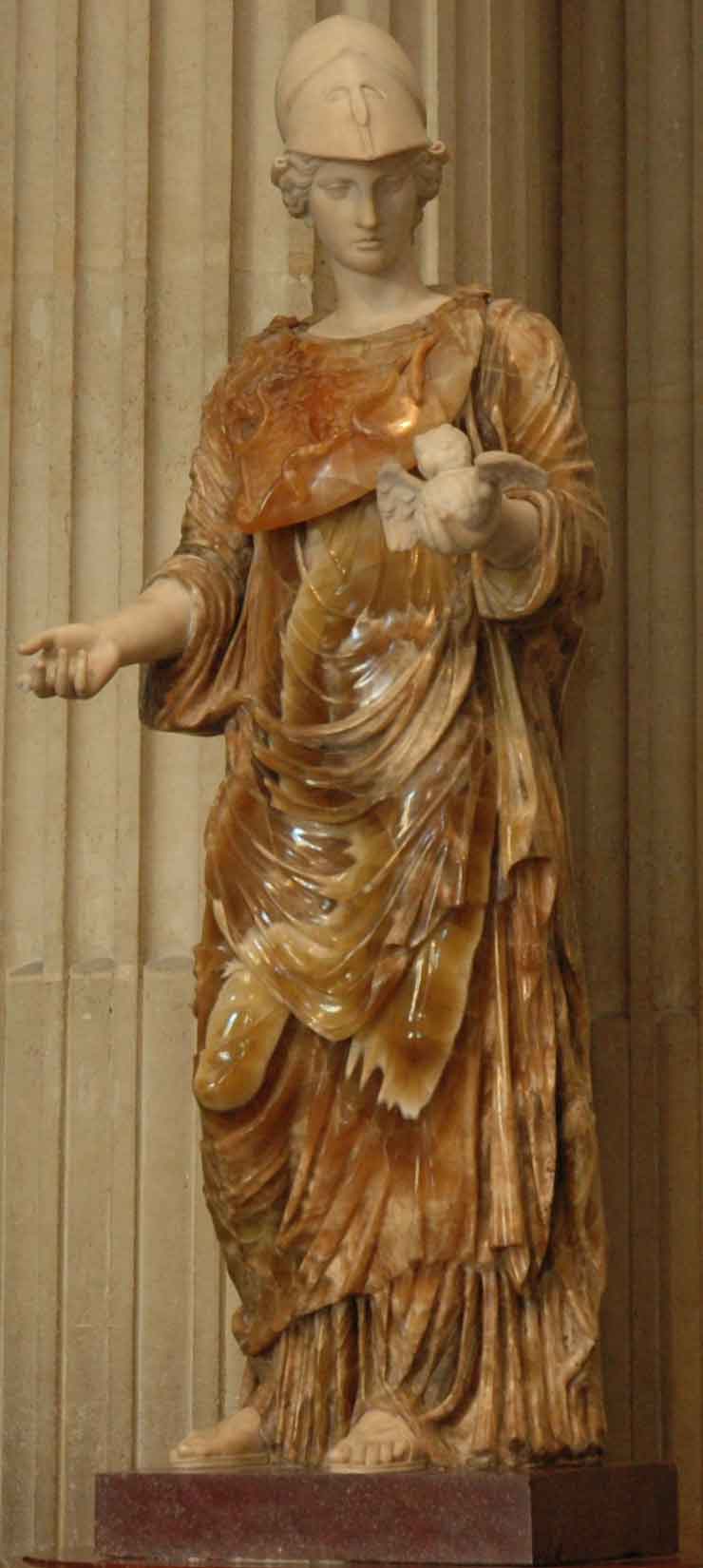
minerva

Daughter of ægis-bearing Jove, divine,
Propitious to thy vot’ries prayer incline;
From thy great father’s fount supremely bright,
Like fire resounding, leaping into light.
Shield-bearing goddess, hear, to whom belong   5
A manly mind, and power to tame the strong!
Oh, sprung from matchless might, with joyful mind
Accept this hymn; benevolent and kind!
The holy gates of wisdom by thy hand
Are wide unfolded; and the daring band  10
Of earth-born giants, that in impious fight
Strove with thy fire, were vanquish’d by thy might.
Once by thy care, as sacred poets sing,
The heart of Bacchus, swiftly-slaughter’d king,
Was sav’d in æther, when, with fury fir’d,  15
The Titans fell against his life conspir’d;
And with relentless rage and thirst for gore,
Their hands his members into fragments tore:
But ever watchful of thy father’s will,
Thy pow’r preserv’d him from succeeding ill,  20
Till from the secret counsels of his sire,
And born from Semele through heav’nly fire,
Great Dionysius to the world at length
Again appear’d with renovated strength.
Once, too, thy warlike axe, with matchless sway,  25
Lopp’d from their savage neck the heads away
Of furious beasts, and thus the pests destroy’d
Which long all-seeing Hecate annoy’d.
By thee benevolent great Juno’s might
Was rous’d, to furnish mortals with delight:  30
And through life’s wide and various range ’tis thine
Each part to beautify with arts divine:
Invigorated hence by thee, we find
A demiurgic impulse in the mind.
Towers proudly rais’d, and for protection strong,  35
To thee, dread guardian, deity belong,
As proper symbols of th’ exalted height
Thy series claims amidst the courts of light.
Lands are belov’d by thee to learning prone,
And Athens, O Athena, is thy own!  40
Great goddess, hear! and on my dark’ned mind
Pour thy pure light in measure unconfin’d;—
That sacred light, O all-protecting queen,
Which beams eternal from thy face serene:
My soul, while wand’ring on the earth, inspire   45
With thy own blessed and impulsive fire;
And from thy fables, mystic and divine,
Give all her powers with holy light to shine.
Give love, give wisdom, and a power to love,
Incessant tending to the realms above;  50
Such as, unconscious of base earth’s control,
Gently attracts the vice-subduing soul;
From night’s dark region aids her to retire,
And once more gain the palace of her sire:
And if on me some just misfortune press,  55
Remove th’ affliction, and thy suppliant bless.
All-saving goddess, to my prayer incline!
Nor let those horrid punishments be mine
Which guilty souls in Tartarus confine,
With fetters fast’ned to its brazen floors,  60
And lock’d by hell’s tremendous iron doors.
Hear me, and save (for power is all thy own)
A soul desirous to be thine alone.

proclus

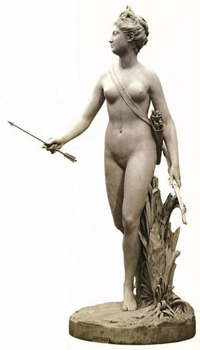
“The celestial character of Diana is reflected in Her connection with light, inaccessibility, virginity, and her preference for dwelling on high mountains and in sacred woods. Diana therefore reflects the heavenly world (diuum means sky or open air) in its sovereignty, supremacy, impassibility, and indifference towards such secular matters as the fates of mortals and states. At the same time, however, She is seen as active in ensuring the succession of kings and in the preservation of humankind through the protection of childbirth.


These functiondeusa Minerva.psds are apparent in the traditional institutions and cults related to the Goddess [especially of Hearth, Homeland and People]


The institution of the Rex Nemorensis where Diana’s sacerdos (priest) from within the Arician wood held the position till someone else challenged and killed him in a duel, but only after breaking a branch from a certain tree of the wood, [was deemed to be in Her honour and duty bound under Her aegis]. This ever open succession reveals the character and mission of the goddess as a guarantor of kingly status through successive generations.


According to Dumezil the forerunner of all frame gods is an Indian epic hero who was the image (avatar) of the Vedic god Dyaus. Having renounced the world, in his roles of father and king, he attained the status of an immortal being while retaining the duty of ensuring that his dynasty is preserved and that there is always a new king for each generation. This regality is also linked to the cult of trees, particularly oaks. In this interpretative schema, the institution of the Rex Nemorensis and related ritual should be seen as related to the theme of the dying god and the kings of May


According to Françoise Hélène Pairault’s study,

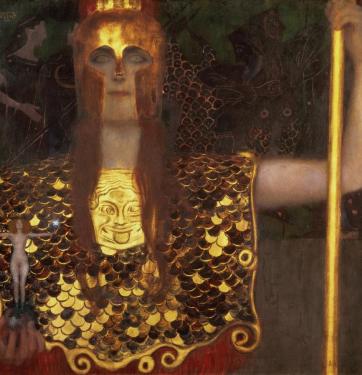
historical and archaeological evidence minerva-gustav-klimt
point to the fact that both Diana of the Aventine and Diana Nemorensis were the product of the direct or indirect influence of the cult of Artemis spread among the Greek towns of Campania Cuma and Capua, which in turn passed it over to the Etruscans and the Latins by the 6th and 5th centuries BC.

According to legend, Orestes founded Nemi together with Iphigenia. Hesiod and Stesichorus tell the story according to which after her death Iphigenia was divinised under the name of Hecate, a fact  supporting the assumption that Artemis Tauropolos had a real ancient alliance with the heroine, who was Her priestess in Taurid and Her human paragon.

This religious complex is in turn supported by a triple statue of Artemis-Hecate depicted upon a coin minted by P. Accoleius Lariscolus in 43 BC acknowledged as representing the archaic statue of Diana Nemorensis. It represents Artemis with the bow at one extremity, Luna-Selene [whom She subsumed]with flowers at the other and a central deity not immediately identifiable, all united by a horizontal bar.


Diana was worshipped at a festival on August 13, when King Servius Tullius, himself born a slave, dedicated her temple on the Aventine Hill in the mid-6th century BC. Being plMinervaOnyxLouvreMa2225aced on the Aventine, and thus outside the pomerium meant that Diana’s cult essentially remained a foreign one, like that of Bacchus; she was never officially transferred to Rome as Juno was after the sack of Veii. It seems that Her cult originated in Aricia where Her priest, the Rex Nemorensis remained.


The iconographical analysis allows the dating of this image to the 6th century at which time there are Etruscan models. Two heads found in the sanctuary and the Roman theatre at Nemi  have a hollow at the back, lending support to this interpretation of an archaic Diana Trivia, in whom three different elements are associated.


[Curiously,]the Scandinavian [deity, assumed as male, though given no gender in the Eddas and other literature] Heimdallr performs an analogous function being first born and last to  die. This figure also gives origin to kingship and the first king, bestowing on him regal prerogatives. Diana, although a female deity, has exactly the same functions, of preserving mankind through childbirth and royal succession.

Saenredam-Minerva
all images are from wiki commons and the text is quoted directly from wiki except for square bracketed /
parentheses

Solomon and Saturn

•June 3, 2014 • Leave a Comment


Image


…but they began to worship various giants,

 and men for their gods which were mighty

 in worldly dignity, and terrible in life,

 although foully they lived…..

 Image


One man was dwelling in the island Crete,

 named Saturn, powerful and ferocious,

 so that he eat his children when they were born,

 and unfatherlike made their flesh his food.


He left nevertheless one alive ;

 although he had devoured his brothers before ;

 he was called Jove, hostile and mighty ;

 he expelled his father from the aforesaid island,

 and would have slain him could he have come to him.

 Image


This Jove was so lascivious that he married his sister,

 who was named Juno, a very lofty goddess.


 Their daughters were Diana and Venus, *

 whom the father debauched both foully,

 and many of his female relatives  criminally defiled.


These guilty men were the mightiest gods

 which the heathen worshiped

 and made unto themselves for gods, but the son was nevertheless

 more honoured than the father was in their foul custom.

  [* The MS. reads ‘Minerua’ and ‘Uenus,’]

Image 


This Jove is the most venerable of all the gods

 whom the heathen had in their error, and he was called Thor

 among certain nations, whom the Danish people love the most.


His son was called Mars who made ever contests, and wrath and mischief

 he would ever stir up ; him the heathen honoured as a lofty god,

 and as often as they warred or would to battle,

 then offered they their sacrifice beforehand to this god ;

 they believed that he could much aid them

 in battle, since he loved battle.


Image


A man there was called Mercury during life who was very fraudulent

 and deceitful in deeds, and eke loved thefts and deception :

 him the heathen made a powerful god, and by the road-side

 made him offerings, and on high hills brought him sacrifice.

 This god was honourable among all the heathen, and he is called O?

 by another name in Danish.


 Image


A woman was named Venus she was Jove’s daughter,

 so bold in lust that her father had her, and eke her brother,

 and others besides after the fashion of a whore :

 but her the heathen honour as a lofty goddess,

 and as the daughter of their god.

 Image


Many other gods there were variously invented,

 and goddesses too in mighty repute throughout the world,

 for the ruin of mankind ; but these are the greatest

 though they foully lived.


 Image

The ambushed devil that besets mankind with lies

 brought the heathen to this deep error, that they such foul men

 should invent for gods, who loved the sins that please the devil,

 and their worshipers also loved their shame,

 and became estranged from almighty God

 who hateth sins and loveth purity.

 Image

They appointed also to the sun and moon

 and to the other gods, to each his day ; first to the sun

 the sunday, then to the moon he monday,

 and the third day they submitted to Mars

 their battle god for their support.


Image

The fourth day they gave for their advantage

to the aforesaid Mercury their great god ;

 the fifth day they solemnly devoted

 to Jove’s honour, the greatest god ;

 the sixth day they appointed

 to the shameless goddess called Venus,

 and Fricg in Danish.


The seventh day they gave to Saturn, Image

 the grandfather of the gods for their own comfort,

 yet last of all though he the eldest were.


Image


They would yet honour their gods more highly

 and they gave them stars, to have power over them,

 the seven constellations, sun and moon

 and the five others that go for ever

 against the firmament toward the east,

 but still the heaven turns them ever back.

 But yet the stars shone in heaven  at the creation of the world

 before the guilty gods were born, or chosen to be gods.


SATURN spake.

 Lo ! of all the islands

 I the books have tasted, [the letters, have thoroughly turned over

 the lore-craft have unlocked of Lybia and Greece, also the history

of the Indian realm. Me the expounders well directed in the great books,

 * * ** *Image *

 which I never in all the ancient writings might find truly collected.

 I sought yet what were in respect of mood or majesty, of power or

 in any respect of activity, the palm -twigged Pater Noster.

 I will give thee all, O Son of David, King of Israel, thirty pounds

 *************

 of coined gold and my twelve sons, if thou wilt bring me

 that I may be touched, through the word of the canticle,

 by Christ’s line; if thou truly reconcilest me,

 and I depart in safety, if I turn at my will upon the water’s back,

 over the Coferflood to seek Chaldsea.


 Image


 SALOMON spake.Image

 Wretched is he on earth useless in life,

 devoid of wisdom, like the neat he wandereth

 that move over the plain, the witless cattle,

 who through the canticle cannot honour Christ. [pause,

 He shall inhabit the void ex- the devil shall cast him down

 in the day of doom, the fearful dragon, contemptuously

 from the bright Balance with iron strength.

 All grown over shall he be by the heads of the waves

 of scorn ; [him then will it be better liked by

than all this bright creation filled from the very abyss

 with gold and silver, in all its regions full

 of treasure, if he ever of the organ

 anything had known : hostile shall he then be and

 strange to Almighty God,

 unlike the angels, he shall wander alone.


 SATURN spake.

 But who may easiest of all creatures

 the holy door of heaven’s kingdom bright unclose in succession ?


Image


SALOMON spake.

 The palm-twigged Pater Noster

 openeth the heavens, so blesseth the holy,

 maketh mild the Lord, putteth down murder,

 quencheth the devil’s fire kindleth the Lord’s :

 thus mayst thouwith the bright prayer

 heat the blood of the devil’s wizard, [rise

 so that in him the drops shall 

hurried with blood in the thoughts of his breast,

 more full of terror than the brazen cauldron

 when it for twelve generations of men

 in the embrace of flames most greedily bubbleth.


Therefore hath the canticle over all Christ’s books

 the greatest repute : it teacheth the scriptures,

 with voice it directeth, and its place it holdeth,

 heaven-kingdom’s arms it wieldeth


Image

 SATURN spake.

 But how like is the organ in the mind

 to be conceived, by him who would his spirit

 melt against murder, make merry out of sorrow,

 separate from guilt ?

 No doubt the Creator gave it wondrous beauty !

 About this in the world full oft

 Image


 SALOMON spake.

Golden is the word of God, stoned with gems,

it hath silver leaves ; each one can

through spiritual grace a gospel relate :

 it is wisdom of the breast and honey of the soul ;

 milk of the mind, most blessed of glories ;

 it may the soul from eternal night

 fetch back under the earth; never so deep let the fiend

 with fetters have fastened it, though he with fifty

 bonds enclose it, yet breaketh it the craft,

 and all the device steareth asunder :

 hunger it despoileth, hell it destroyeth,

 fire it casteth asunder, glory it buildeth up.


MorImagee courageous is it than this world,
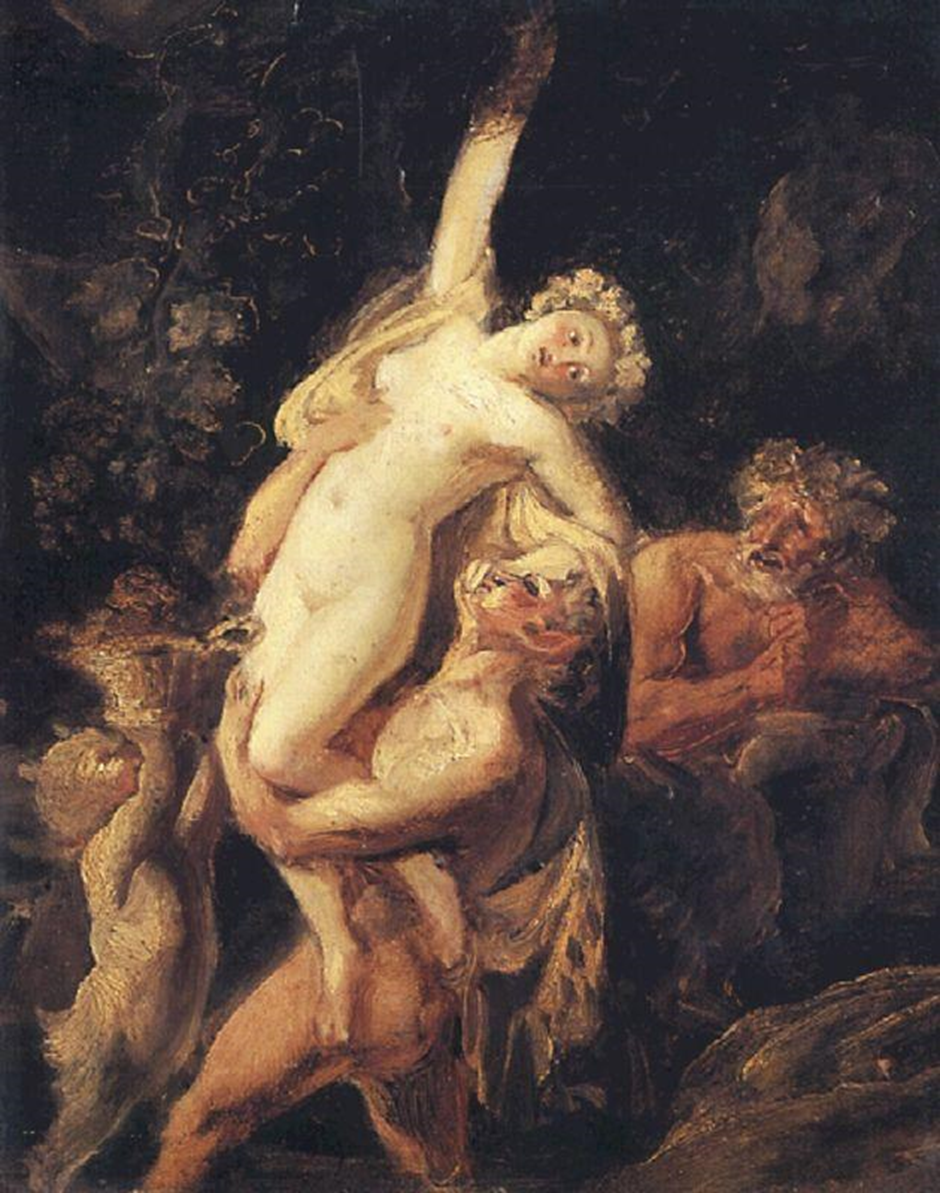
stronger in its position than the gripe of all the rocks.

 It is the leech of the lame, the light of the blind,

 it is also the door of the deaf, the tongue of the dumb,

 the shield of the guilty, the dwelling of the Creator ;

 the bringer of the flood, the saviour of the people,

 the heir of the waves of the poor fishes,

 and the defence of the worms, the refuge- wood of beasts,


a guardian in the wilderness, the garden of worship :Image

 and he that will earnestly this God’s-word

 sing in sooth, and him will ever

 ove without crime, he may the hated spirit,

 the fighting fiend bring to flight.


 …………………………………………………………………………..

Extract from the remarkable work cited as:-

“THE DIALOGUE OF SALOMON AND SATURNUS, WITH AN HISTORICAL INTRODUCTION,” BY JOHN M. KEMBLE, M.A., TRIN. COLL. CAMB.


https://archive.org/stream/dialogueofsalomo00kembuoft/dialogueofsalomo00kembuoft_djvu.txt


 images wiki commons

 [following synopsis redacted from wiki]


Solomon and Saturn is the generic name given to four Old English works, which present a dialogue of riddles between Solomon, the king of Israel, and Saturn, identified in two of the poems as a prince of the Chaldeans. They are considered some of the most enigmatic and difficult poems of the Old English corpus.

Solomon and Saturn I, Solomon and Saturn II, and the Pater Noster Solomon and Saturn) in Corpus Christi College, Cambridge MS 422 are often compared to the Vafþrúðnismál and Alvíssmál and other similar poems in the Poetic Edda.

The poetic versions are cited as an example of orientalism that suggest anxieties about the cultural identity of the English people. England was beset by anxieties about the acquisition and dissemination of knowledge, the stability of the kingdom and the efficacy of religious faith. It is argued that by displacing ignorance, political instability and lack of faith onto the Eastern and pagan Chaldean people as represented by Saturn, English people were encouraged to identify with ideals and behaviours of the Christianised figure of Solomon. This is cited as an example of bolstering English Christian culture through degrading the east.

As with most Old English poetry, the Solomon and Saturn poems have proven notoriously difficult to date, possibly during the reign of King Alfred in the ninth century, or the early tenth-century cultural milieu of Dunstan’s Glastonbury.

The Solomon and Saturn texts are often considered the earliest forms of a wider European literary tradition that comprises similar works such as the dialogue between Solomon and Marcolf.

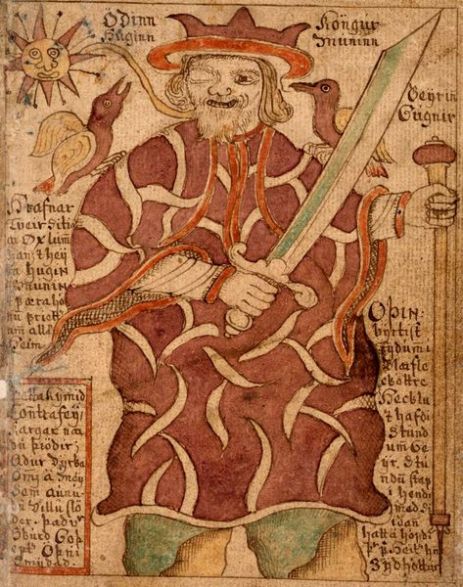
Along with the Pater Noster Solomon and Saturn, Solomon and Saturn I contains runes as a sort of riddling shorthand in which runic characters stand for the words in Old English that name them. From this, we know some of the names for the extended set of runes used to write Old English. The prose version has as one of its riddles: “Who invented letters? Mercurius the giant”, who is Woden (known in Old Norse as Óðinnr, and as Odin). The Anglo-Saxons routinely identified Mercury with Woden; both rule Wednesday (which takes its name from Woden in English).

Solomon and Saturn II include two obscure passages in Old English literature: the weallande Wulf and Vasa Mortis riddles.

Saturn’s first riddle describes a dragon slayer named Wulf and the wasteland that arises after his death. The weallende Wulf passage ultimately stems from ancient Hebrew legends regarding Nimrod and the builders of the Tower of Babel. Wulf is the Babylonian idol Bel, sharing further similarities between Wulf and Beowulf.

The riddle describes a mysterious bird [Vasa Mortis] bound by Soloman until Doomsday. Solomon’s struggles with demons are at the heart of the Old English riddle; Vasa Mortis is identified with the demon Asmodeus. There are also  parallels between the Vasa Mortis and the description of Fame in Virgil’s Aeneid, as well as the nocturnal monster in the Anglo-Saxon Liber monstrorum and the griffin in the Wonders of the East.

I, Dionysus: The Feast of God: I Dionysus.’

•May 13, 2014 • Leave a Comment

Image

[The Bacchante by Jean-Leon Gerome]

Image

[An Incantation ‘A Bacchante’ John Collier]


And now I come to Hellas—having taught
All the world else my dances and my rite
Of mysteries, to show me in men’s sight
Manifest God.


Image


And first of Hellene lands
I cry thus Thebes to waken; set her hands
To clasp my wand, mine ivied javelin,
And round her shoulders hang my wild fawn-skin.
For they have scorned me whom it least beseemed,
Semelê’s sisters; mocked my birth, nor deemed
That Dionysus sprang from Dian seed.
My mother sinned, said they; and in her need,
With Cadmus plotting, cloaked her human shame
With the dread name of Zeus; for that the flame
From heaven consumed her, seeing she lied to God.

Image

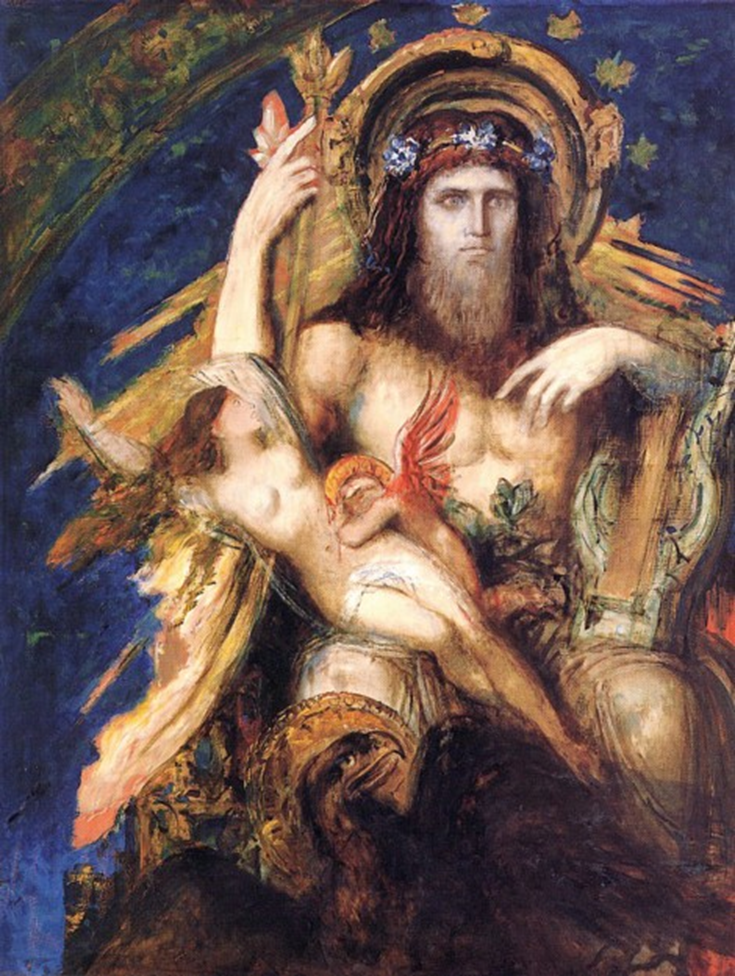
[Gustave Moreau; Zeus and Semele]


Thus must they vaunt; and therefore hath my rod
On them first fallen, and stung them forth wild-eyed
From empty chambers; the bare mountain side
Is made their home, and all their hearts are flame.
Yea, I have bound upon the necks of them
The harness of my rites. And with them all
The seed of womankind from hut and hall
Of Thebes, hath this my magic goaded out.

Image

[Satyr and Bacchante (Bacchanalia) – Karl Bryullov. 1824.]


And there, with the old King’s daughters, in a rout
Confused, they make their dwelling-place between
The roofless rocks and shadowy pine trees green.
Thus shall this Thebes, how sore soe’er it smart,
Learn and forget not, till she crave her part
In mine adoring; thus must I speak clear
To save my mother’s fame, and crown me here
As true God, born by Semelê to Zeus.

Image


Now Cadmus yieldeth up his throne and use
Of royal honour to his daughter’s son
Pentheus; who on my body hath begun
A war with God. He thrusteth me away
From due drink-offering, and, when men pray,
My name entreats not. Therefore on his own
Head and his people’s shall my power be shown.


 Image

[Floating Maenad, 1st century – Pompeii – House of the Ship fresco]


Then to another land, when all things here
Are well, must I fare onward, making clear
My godhead’s might. But should this Theban town
Essay with wrath and battle to drag down

My maids, lo, in their path myself shall be,

And maniac armies battled after me!

For this I veil my godhead with the wan
Form of the things that die, and walk as Man.

Image


[Bacchante on a Panther, William Adolphe Bouguereau, oil on fabric, 1855]


O Brood of Timolus o’er the wide world flown,
O Lydian band, my chosen and mine own,
Damsels uplifted o’er the orient deep
To wander where I wander, and to sleep
Where I sleep; up, and wake the old sweet sound,

Image

The clang that I and mystic Rhea found,
The Timbrel of the Mountain! Gather all
Thebes to your song round Pentheus’ royal hall.
I seek my new-made worshippers, to guide
Their dances up Kithaeron’s pine-clad side.

Image


Then did the messenger say

“Our herded kine were moving in the dawn
Up to the peaks, the greyest, coldest time,
When the first rays steal earthward, and the rime
Yields, when I saw three bands of them. The one
Autonoë led, one Ino, one thine own
Mother, Agâvê. There beneath the trees
Sleeping they lay, like wild things flung at ease
In the forest; one half sinking on a bed
Of deep pine greenery; one with careless head
Amid the fallen oak leaves; all most cold
In purity—not as thy tale was told
Of wine-cups and wild music and the chase
For love amid the forest’s loneliness.

Then rose the Queen Agâvê suddenly
Amid her band, and gave the God’s wild cry,
“Awake, ye Bacchanals! I hear the sound
Of hornèd kine. Awake ye!”—Then, all round,
Alert, the warm sleep fallen from their eyes,
A marvel of swift ranks I saw them rise,
Dames young and old, and gentle maids unwed
Among them. O’er their shoulders first they shed
Their tresses, and caught up the fallen fold

Image
Of mantles where some clasp had loosened hold,
And girt the dappled fawn-skins in with long
Quick snakes that hissed and writhed with quivering tongue.
And one a young fawn held, and one a wild
Wolf cub, and fed them with white milk, and smiled
In love, young mothers with a mother’s breast
And babes at home forgotten! Then they pressed
Wreathed ivy round their brows, and oaken sprays
And flowering bryony. And one would raise
Her wand and smite the rock, and straight a jet
Of quick bright water came. Another set
Her thyrsus in the bosomed earth, and there
Was red wine that the God sent up to her,
A darkling fountain. And if any lips
Sought whiter draughts, with dipping finger-tips
They pressed the sod, and gushing from the ground
Came springs of milk. And reed-wands ivy-crowned
Ran with sweet honey, drop by drop.—O King,
Hadst thou been there, as I, and seen this thing,
With prayer and most high wonder hadst thou gone
To adore this God whom now thou rail’st upon!
Howbeit, the kine-wardens and shepherds straight
Came to one place, amazed, and held debate;
And one being there who walked the streets and scanned
The ways of speech, took lead of them whose hand
Knew but the slow soil and the solemn hill,
And flattering spoke, and asked: “Is it your will,
Masters, we stay the mother of the King,
Agâvê, from her lawless worshipping,
And win us royal thanks?”—And this seemed good
To all; and through the branching underwood
We hid us, cowering in the leaves. And there
Through the appointed hour they made their prayer
And worship of the Wand, with one accord

Image

Of heart and cry—”Iacchos, Bromios, Lord,
God of God born!”—And all the mountain felt,
And worshipped with them; and the wild things knelt
And ramped and gloried, and the wilderness
Was filled with moving voices and dim stress.
Soon, as it chanced, beside my thicket-close
The Queen herself passed dancing, and I rose
And sprang to seize her. But she turned her face
Upon me: “Ho, my rovers of the chase,
My wild White Hounds, we are hunted! Up, each rod
And follow, follow, for our Lord and God!”


Image

[Bacchant – Lesrel Adolphe Alexandre]


Text: ‘The Bacchae,’ http://www.gutenberg.org/files/35173/35173-h/35173-h.htm}

Other images from tumblr/pin interest and wiki

Hermitage

•February 5, 2014 • Leave a Comment

6073_10151039293741160_1222597156_n


The pensive Train of Contemplation sweet,

Rise with the beamy Fires of Vesper’s Star;
The dying Gales in softer Whispers greet
The shadowy Night, thron’d in her silver Car.

The Scheld in gleamy Radiance glides along,
Laving the lonely Chartreux’ aged bow’rs;
From pealing organs swells the solemn Song,
And choral Hymns lead on the midnight Hours.

Save when these Rites the watchful Heart declare,
A dread Repose broods o’er the hallow’d Ground;
Or when sad Pilgrims to the Shrines repair,
Where many a sainted Relick hangs around.

The dusky Pile in Vandal Ages rear’d,
Sacred to Solitude, to Pray’r, and Praise,
The Poet’s Lay perhaps hath never heard,
Since the first Father’s long-forgotten Days.

Encircling Ivy chains the mould’ring Tow’r;
Funereal Yews throw round a death-like Gloom;
Her Cloisters Melancholy wanders o’er,
And Grief sits languid on the sculptur’d Tomb.

Can Error reign in these calm seats of Peace?
Here, doth not Wisdom make her blest Abode?
Doth not the Voice of restless Passion cease?
Here, the rapt Soul hold Converse with her God?


Hope in the prison of despaiar by evelyn de morganWhen the rais’d Spirit, dead to all below,

Burns with seraphic Ardour unconfin’d,

Can earth-born Scenes teach human Breast to glow
With such pure Flames, and leave their Dross behind?

So, when the Tempest low’rs in Ev’ning Skies,
Some wilder’d Trav’ler views a lambent Flame;
But led by treach’rous Rays where Danger lies,
He dies unpity’d, and unknown to Fame.

The Storm-tost Mariner to Ports of Rest
Anxious, o’er Rocks and wild Waves, works his Way;
But Wisdom places in the heedless Breast,
What the false World nor gives, nor takes away.

To these dank Walls, in search of true Repose,
Thus erring Zeal and harrass’d Minds have flown;
But found no blest Asylum from the Woes
That cleave to Life, and haunt the Bosom’s Throne.


IMAG0104Though Fancy decorate this awful scene,
Awhile the slumb’ring Passions Peace controul;
Yet oft Repentance wastes the placid Mien,
And silent Anguish preys upon the Soul.

Though down the sounding Isles the Vot’ries muse
On the World’s Vanities and empty Joys;
Life’s fleeting Hours the Visionaries lose,
Which active Virtue usefully employs.

Nature’s Affections on the Heart recoil
Unchanging, while the purple Currents flow;
Humanity was born to varying Toil,
Alternate Hours of Strife and Rest to know:

That Life to sullen Solitude consign’d,
For social gen’rous Purposes was giv’n:
No rigid Rules was Penitence enjoin’d,
“To purify her contrite Heart for Heav’n.”

Not countless Orisons at glittering Shrines,
Not Melodies before the sainted Stone,
Feed pure Religion’s Flame, that faintly shines,
Confin’d to solitary Cells alone.

In these Retreats, where pale-ey’d Spleen retires,
Sloth’s dronish Sons, and superstitious Zeal,
Perhaps some Bards quench’d all the Muses Fires,
And bade the radiant Paths of Fame farewell.


O Gesner! hadst thou scorn’d the heav’nly Musepaean to the sun That led thy Steps to Virtue and Renown,
Reviv’d all Eden to thy ravish’d Views,
And made the Palm of moral Song thine own:

Hadst thou to some lone Chartreux’ Cell retir’d,
Where Youth and Genius wither in their Prime;
Thy living Lays no future Age had fir’d,
Thy Name had slept beneath oblivious Time.

Here, what avails each pensive Sage’s Lore?
The thorny Paths Truth’s holy Martyrs trod?
All in their Sphere uniting to explore
The Ways that lead to Happiness and God.

Or, could those Heroes start from Death’s cold Shade,
War’s horrid Bolts in youthful Vigour flew:
Such, Fontenoy! thy fatal Fields display’d;
And brought all Thrasymene to Britain’s View:


nb_sculpture_mercie_marius_jean_antonin_tomb_of_jules_michelet_detailWould not Reproach dart from the Soldier’s Eye?
Would not his bold impartial Tongue declare,
“Fair Fame forbids the virtuous Man to die,
And all the Brave are Heav’ns peculiar Care?

“Whether triumphal Wreaths adorn their Brow,
Or Fate the Warriors from the Toils release,
When o’er their Graves the weeping Muses strew
Spring’s fairest Flow’rs, and sing their Shade to Peace.”No longer Carnage gluts her crimson Steel;Yet, while a British Muse still lingers here,

Can she forbear her Heroes Wounds to feel?
To pay the sacred Tribute of a Tear?To deck, with grateful Awe, their hallow’d Mould?

With gentle Collins breathe the mournful Lay?
“Attend the Spring with dewy Fingers cold,
And bless the Turf that wraps their honour’d Clay?”

But ye, who waste in mute lethargic Ease
Revolving Years, from hardy Manhood’s Prime;
Will Glory sculpture in her Fane like these,
And snatch your Mem’ries from the Stream of Time?

KUBLA KHAN

Here, faint and cold, the drooping Virtues beam,
With Lustre fruitless, cheerless, and unknown;
Like sad sepulchral Lamps, that bluely gleam
Through dreary Vaults, and light the Dead alone.

Unheard the Paeans of the tuneful Train,
That welcome Truth and Mercy from the Skies,
To grace Imperial Joseph’s halcyon Reign,
Around whose Throne reviving Honours rise.

O Prince belov’d! some future Bard may pour,
In loftier Lays, the Tide of Verse along;
Spread Emulation’s Flame from Shore to Shore,
And Patriot Princes kindle with her Song.


Blessed SophiaSo tow’ring Pindar’s Theban Swans aspire,
Bear to the Clouds his fam’d Sicilian’s Praise;
Like him the Muses’s Sons should wake the Lyre,
To Virtue sacred, and unspotted Bays.

But not to Themes or princely Domes confin’d;
Along sequester’d Vales they love to stray,
Where modest Worth, the Grace of Human-kind,
Blooms in the Shade, and shuns the Glare of Day.

Oft at the silent Eve, or Saffron Dawn,


Palaces and DungeonsThere, rapt’rous Visions bless the Poet’s Eyes,
Ideal Forms glide o’er the pearly Lawn,
Or Structures fair with moral Meaning rise:

Mild beams the Ray from Truth’s all-piercing Eye,
Lucid and full her snowy Mantle flows,
Touch’d by her Wand the murky Shadows fly,
And all the Landscape at her Presence glows.

Around their Queen, the Sister Arts attend;
The Pow’rs of Painting, Melody, and Song;
And Liberty, the Muse and Virtue’s Friend,
To Honour’s Temple leads her Train along;

Unmov’d at Tyranny’s malignant Frown,
Gleaming in Mail, and grasping clanking Chains;
Red Persecution, with her triple Crown,
Or Vice, with Satyrs, rev’ling o’er the Plains.

But not one Spark of this celestial Fire,
Here warms the Heart, unlocks the silent Tongue,
Or arms with Pow’rs that Freedom could inspire,
When Zeuxis painted, or Alcaeus sung.


TamerlaneThe Lyre, with Rage divine, then fill’d the Breast,
With glowing Zeal, to bigot Hearts unknown;
And Genius, with her boldest Strokes, imprest
The vivid Canvass and the breathing Stone.

But here, how fall’n! how droops the free-born Soul!
Crouching beneath a Pontiff’s sacred Frown:
Behold, alas! the mystic Beads and Cowl,
Succeed the Patriot’s Steel and Laurel Crown.

Would such with Rapture on the Canvass dwell?
Would kindred Ardours sparkle in their Eye?
Would Life’s warm Pulses emulative swell,
Like those to conquer, or like those to die?

When Freedom mourns her sacred Fires opprest,
How bright Demosthenes and Tully shine!
But here, dull Legends sooth a torpid Rest,
And all neglected sleeps their Page divine.


The Four WindsSo lift the frozen Alps their hoary Brow,
Cold and unmov’d before the Solar Ray,
Though roseate Spring smiles in the Vales below,
Pours her gay Notes, and greets the genial Day.

But let not Candour close the Lay severe,
Nor frown indignant on a cloister’d Life:
Haply some antient Virtues linger here,
That fled from venal Crouds and noisy Strife.

Here the Heart, dead to Folly’s tinsel Joys,


Demeter_mourning_Persephone_1906Cleaves to the hallow’d Cross and spiny Crown:
Those Hours which Vice in Orgies still employs,
Are wing’d with Praises to their Maker’s Throne.

Their Gates, unfolding at the Trav’ler’s Voice,
Declare some hospitable Genius here,
That bids the weary’d Pilgrim’s Heart rejoice,
Pours Pity’s Balm, and shares in Mis’ry’s Tear.

So may the Tiding of eternal Peace,
In brighter Worlds, these pious Cares repay!
There, human Woes with human Frailties cease,
And Truth no longer mourns her clouded Ray.

[Second edition (1777) 3-14] Anon

Blake


Pistis Sophia

•January 21, 2014 • Leave a Comment

Anthony Frederick Sandys - Mary Magdalene

“Mary continued again and said unto the Saviour: “My Lord, if the faith and the mysteries shall have revealed themselves,–now, therefore, if souls come into the world in many circuits and are neglectful of receiving mysteries, hoping that, if they come into the world at any other circuit, they will receive them, will they not then be in danger of not succeeding in receiving the mysteries?”

The Saviour answered and said unto his disciples: “Herald unto the whole world and say unto men: Strive thereafter that ye may receive the mysteries of the Light in this time of affliction and enter into the Light-kingdom. Join not one day to another, or one circuit to another, hoping that ye may succeed in receiving the mysteries if ye come into the world in another circuit.

“And these know not when the number of the perfect souls will be at hand; for if the number of the perfect souls shall be at hand, I will now shut the gates of the Light, and no one from this hour onwards will enter in, nor will any one hereafter go forth, for the number of the perfect souls is completed and the mystery of the First Mystery is completed, for the sake of which the universe hath arisen,–that is: I am that Mystery.

“And from this hour onwards no one will be able to enter into the Light and no one be able to go forth. For at the completion of the time of the number of the perfect souls, before I have set fire to the world, in order that it may purify the æons and the veils and the firmaments and the whole earth and also all the matters which are on it, mankind . will be still existing.
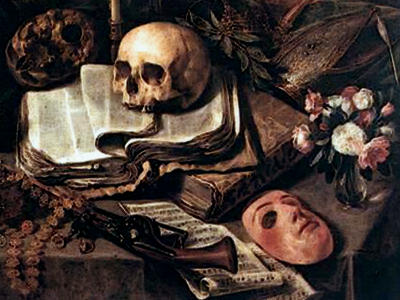
images

“At that time then the faith will reveal itself still more and the mysteries in those days. And many souls will come by means of the circuits of the changes of the body, and coming back into the world are some of those in this present time who have hearkened unto me, how I taught, who at the completion of the number of the perfect souls will find the mysteries of the Light and receive them and come to the gates of the Light and find that the number of the perfect souls is complete, which is the completion of the First Mystery and the gnosis of the universe. And they will find that I have shut the gates of the Light and that it is impossible that any one should enter in or that any one should go forth from this hour.

Pistis Sofia

“Those souls then will knock at the gates of the Light, saying: Lord, open unto us! And I will answer unto them: I know you not, whence ye are. And they will say unto me: We have received of thy mysteries and fulfilled thy whole teaching and thou hast taught us on the high ways

sophia_nude And I will answer and say unto them: I know you not, who ye are, ye who are doers of iniquity and of evil even unto now. Wherefore go into the outer darkness. And  from that hour they will go into the outer darkness, there where is howling and grinding of teeth.“Now, therefore, who hath ears to hear, let him hear.

“For this cause then, herald unto the whole world and say unto them: ‘Strive thereafter, to renounce the whole world and the whole matter therein, that ye may receive the mysteries of the Light before the number of the perfect souls is completed, in order that they may not make you stop before the gates of the Light and. lead you away into the outer darkness.’

When then the Saviour had said this, Mary started forward again and said: “My Lord, not only hath my light-man ears, but my soul hath heard and understood all the words which thou sayest.

Now, therefore, my Lord, concerning the words which thou hast spoken: ‘Herald unto the men of the world and say unto them: Strive thereafter, to receive the mysteries of the Light, in this time of affliction, that ye may inherit the Light-kingdom. . . .”


1508148_572339516185032_1330648453_n

The Highwayman

•December 17, 2013 • Leave a Comment

The Highwayman

Image


PART ONE

THE wind was a torrent of darkness among the gusty trees,

The moon was a ghostly galleon tossed upon cloudy seas,

The road was a ribbon of moonlight over the purple moor,

And the highwayman came riding—

Riding—riding—

The highwayman came riding, up to the old inn-door.


He’d a French cocked-hat on his forehead, a bunch of lace at his chin,

A coat of the claret velvet, and breeches of brown doe-skin;

They fitted with never a wrinkle: his boots were up to the thigh!

And he rode with a jewelled twinkle,

His pistol butts a-twinkle,

His rapier hilt a-twinkle, under the jewelled sky.

 Image


Over the cobbles he clattered and clashed in the dark inn-yard,

And he tapped with his whip on the shutters, but all was locked and barred;

He whistled a tune to the window, and who should be waiting there

But the landlord’s black-eyed daughter,

Bess, the landlord’s daughter,

Plaiting a dark red love-knot into her long black hair.


And dark in the dark old inn-yard a stable-wicket creaked

Where Tim the ostler listened; his face was white and peaked;

His eyes were hollows of madness, his hair like mouldy hay,

But he loved the landlord’s daughter,

The landlord’s red-lipped daughter,

Dumb as a dog he listened, and he heard the robber say—


Image


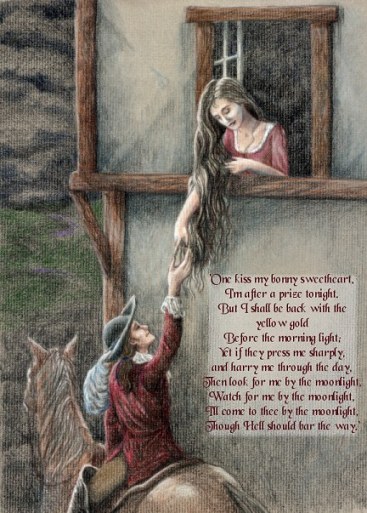
‘One kiss, my bonny sweetheart, I’m after a prize to-night,

But I shall be back with the yellow gold before the morning light;

Yet, if they press me sharply, and harry me through the day,

Then look for me by moonlight,

Watch for me by moonlight,

I’ll come to thee by moonlight, though hell should bar the way.’


He rose upright in the stirrups; he scarce could reach her hand,

But she loosened her hair i’ the casement! His face burnt like a brand

As the black cascade of perfume came tumbling over his breast;

And he kissed its waves in the moonlight,

(Oh, sweet, black waves in the moonlight!)

Then he tugged at his rein in the moonlight, and galloped away to the West.


 Image


 PART TWO


He did not come in the dawning; he did not come at noon;

And out o’ the tawny sunset, before the rise o’ the moon,

When the road was a gypsy’s ribbon, looping the purple moor,

A red-coat troop came marching—

Marching—marching—

King George’s men came matching, up to the old inn-door.


They said no word to the landlord, they drank his ale instead,

But they gagged his daughter and bound her to the foot of her narrow bed;

Two of them knelt at her casement, with muskets at their side!

There was death at every window;

And hell at one dark window;

For Bess could see, through her casement, the road that he would ride.


Image


They had tied her up to attention, with many a sniggering jest;

They had bound a musket beside her, with the barrel beneath her breast!

‘Now, keep good watch!’ and they kissed her.

She heard the dead man say—

Look for me by moonlight;

Watch for me by moonlight;

I’ll come to thee by moonlight, though hell should bar the way!


She twisted her hands behind her; but all the knots held good!

She writhed her hands till her fingers were wet with sweat or blood!

They stretched and strained in the darkness, and the hours crawled by like years,

Till, now, on the stroke of midnight,

Cold, on the stroke of midnight,

The tip of one finger touched it! The trigger at least was hers!


The tip of one finger touched it; she strove no more for the rest!

Up, she stood up to attention, with the barrel beneath her breast,

She would not risk their hearing; she would not strive again;

For the road lay bare in the moonlight;

Blank and bare in the moonlight;

And the blood of her veins in the moonlight throbbed to her love’s refrain .

 Image


Tlot-tlot; tlot-tlot! Had they heard it? The horse-hoofs ringing clear;

Tlot-tlot, tlot-tlot, in the distance? Were they deaf that they did not hear?

Down the ribbon of moonlight, over the brow of the hill,

The highwayman came riding,

Riding, riding!

The red-coats looked to their priming! She stood up, straight and still!


Tlot-tlot, in the frosty silence! Tlot-tlot, in the echoing night!

Nearer he came and nearer! Her face was like a light!

Her eyes grew wide for a moment; she drew one last deep breath,

Then her finger moved in the moonlight,

Her musket shattered the moonlight,

Shattered her breast in the moonlight and warned him—with her death.


He turned; he spurred to the West; he did not know who stood

Bowed, with her head o’er the musket, drenched with her own red blood!

Not till the dawn he heard it, his face grew grey to hear

How Bess, the landlord’s daughter,

The landlord’s black-eyed daughter,

Had watched for her love in the moonlight, and died in the darkness there.

 Image

Back, he spurred like a madman, shrieking a curse to the sky,

With the white road smoking behind him and his rapier brandished high!

Blood-red were his spurs i’ the golden noon; wine-red was his velvet coat,

When they shot him down on the highway,

Down like a dog on the highway,

And he lay in his blood on the highway, with the bunch of lace at his throat.


And still of a winter’s night, they say, when the wind is in the trees,

When the moon is a ghostly galleon tossed upon cloudy seas,

When the road is a ribbon of moonlight over the purple moor,

A highwayman comes riding—

Riding—riding—

A highwayman comes riding, up to the old inn-door.

 Image


Over the cobbles he clatters and clangs in the dark inn-yard;

He taps with his whip on the shutters, but all is locked and barred;

He whistles a tune to the window, and who should be waiting there

But the landlord’s black-eyed daughter,

Bess, the landlord’s daughter,

Plaiting a dark red love-knot into her long black hair.

Alfred Noyes


whisky in the jar,o

http://www.youtube.com/watch?v=_j4OC7-g_84 ………………………………………………………………………………………………

ARTWORK:

Martin McKenna

Charles Keeping

Ronald Clyne

A Summoning!

•November 27, 2013 • Leave a Comment

Manfred – Lord Byron


ACT I – SCENE I

MANFRED alone. — Scene, a Gothic Gallery. — Time, Midnight.

 Image


MANFRED. The lamp must be replenish’d, but even then

It will not burn so long as I must watch.

My slumbers– if I slumber– are not sleep,

But a continuance of enduring thought,

Which then I can resist not: in my heart 

There is a vigil, and these eyes but close

To look within; and yet I live, and bear

The aspect and the form of breathing men.

But grief should be the instructor of the wise;

Sorrow is knowledge: they who know the most                 10 

Must mourn the deepest o’er the fatal truth,

The Tree of Knowledge is not that of Life.


Image


Philosophy and science, and the springs

Of wonder, and the wisdom of the world,
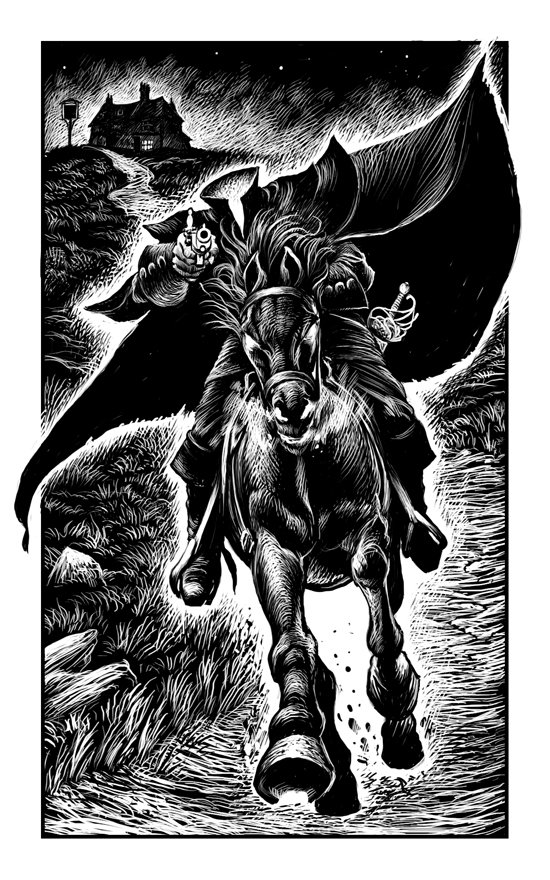
I have essay’d, and in my mind there is

A power to make these subject to itself–

But they avail not: I have done men good,

And I have met with good even among men–

But this avail’d not: I have had my foes,

And none have baffled, many fallen before me–              20 

But this avail’d not: Good, or evil, life,

Powers, passions, all I see in other beings,

Have been to me as rain unto the sands,

Since that all-nameless hour. I have no dread,

And feel the curse to have no natural fear

Nor fluttering throb, that beats with hopes or wishes

Or lurking love of something on the earth.

Now to my task.–

                     Mysterious Agency!


Image


Ye spirits of the unbounded Universe,

Whom I have sought in darkness and in light!                           30 

Ye, who do compass earth about, and dwell

In subtler essence!  ye, to whom the tops

Of mountains inaccessible are haunts,

And earth’s and ocean’s caves familiar things–

I call upon ye by the written charm

Which gives me power upon you– Rise! appear!   [A pause.

They come not yet.– Now by the voice of him

Who is the first among you; by this sign,

Which makes you tremble; by the claims of him

Who is undying,– Rise! appear!– Appear!     [A pause.   40 

If it be so.– Spirits of earth and air, 

Ye shall not thus elude me: by a power, 

Deeper than all yet urged, a tyrant-spell, 

Which had its birthplace in a star condemn’d, 

The burning wreck of a demolish’d world, 
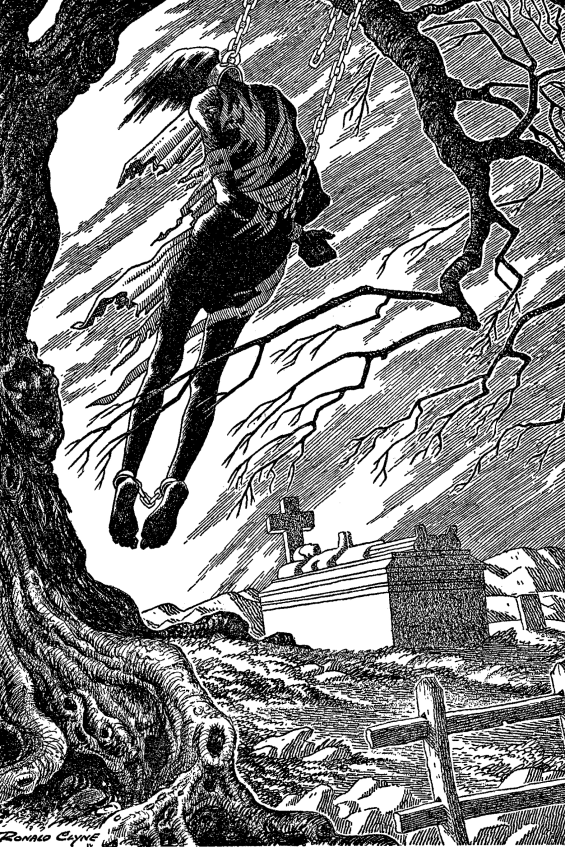
A wandering hell in the eternal space; 

By the strong curse which is upon my soul, 

The thought which is within me and around me, 

I do compel ye to my will.  Appear!

Image


[A star is seen at the darker end of the gallery: it is

stationary; and a voice is heard singing.


               FIRST SPIRIT.


     Mortal! to thy bidding bow’d,         50

     From my mansion in the cloud,

     Which the breath of twilight builds,

     And the summer’s sunset gilds

     With the azure and vermilion

     Which is mix’d for my pavilion;

     Though thy quest may be forbidden,

     On a star-beam I have ridden,

     To thine adjuration bow’d;

     Mortal– be thy wish avow’d!


 Image


          Voice of the SECOND SPIRIT.


     Mont Blanc is the monarch of mountains;                              60

       They crown’d him long ago

     On a throne of rocks, in a robe of clouds,

       With a diadem of snow.

     Around his waist are forests braced,

       The Avalanche in his hand;

     But ere it fall, that thundering ball

       Must pause for my command.

     The Glacier’s cold and restless mass

       Moves onward day by day;

     But I am he who bids it pass,                                        70

       Or with its ice delay.

     I am the spirit of the place,

       Could make the mountain bow

     And quiver to his cavern’d base–

     And what with me wouldst Thou?


    Image


          Voice of the THIRD SPIRIT.


     In the blue depth of the waters,

       Where the wave hath no strife,

     Where the wind is a stranger

       And the sea-snake hath life,

     Where the Mermaid is decking                   80

       Her green hair with shells;

     Like the storm on the surface

       Came the sound of thy spells;

     O’er my calm Hall of Coral

       The deep echo roll’d–

     To the Spirit of Ocean

       Thy wishes unfold!

 Image


               FOURTH SPIRIT.


     Where the slumbering earthquake

         Lies pillow’d on fire,

     And the lakes of bitumen                      90

         Rise boilingly higher;

     Where the roots of the Andes

         Strike deep in the earth,

     As their summits to heaven

       Shoot soaringly forth;

     I have quitted my birthplace,

       Thy bidding to bide–

     Thy spell hath subdued me,

       Thy will be my guide!


 Image


               FIFTH SPIRIT.


     I am the Rider of the wind,                100   

       The Stirrer of the storm;

     The hurricane I left behind

       Is yet with lightning warm;

     To speed to thee, o’er shore and sea

       I swept upon the blast:

     The fleet I met sail’d well, and yet

       ‘T will sink ere night be past.

 Image


               SIXTH SPIRIT.


     My dwelling is the shadow of the night,

     Why doth thy magic torture me with light?


               SEVENTH SPIRIT


     The star which rules thy destiny             110

     Was ruled, ere earth began, by me:

     It was a world as fresh and fair

     As e’er revolved round sun in air;

     Its course was free and regular,

     Space bosom’d not a lovelier star.

     The hour arrived– and it became

     A wandering mass of shapeless flame,

     A pathless comet, and a curse,

     The menace of the universe;

     Still rolling on with innate force,          120

     Without a sphere, without a course,

     A bright deformity on high,

     The monster of the upper sky!

     And thou! beneath its influence born–

     Thou worm! whom I obey and scorn–

     Forced by a power (which is not thine,

     And lent thee but to make thee mine)

     For this brief moment to descend,

     Where these weak spirits round thee bend

     And parley with a thing like thee–         130

     What wouldst thou, Child of Clay! with me?


 Image


               The SEVEN SPIRITS


     Earth, ocean, air, night, mountains, winds, thy star,

     Are at thy beck and bidding, Child of Clay!

     Before thee at thy quest their spirits are–

     What wouldst thou with us, son of mortals– say?   


MANFRED. Forgetfulness–


FIRST SPIRIT.    Of what– of whom– and why?


MANFRED. Of that which is within me; read it there–

Ye know it, and I cannot utter it.


SPIRIT. We can but give thee that which we possess:

Ask of us subjects, sovereignty, the power              140

O’er earth, the whole, or portion, or a sign

Which shall control the elements, whereof

We are the dominators,– each and all,

These shall be thine.

 Image


MANFRED.          Oblivion, self-oblivion–

Can ye not wring from out the hidden realms

Ye offer so profusely what I ask?


SPIRIT. It is not in our essence, in our skill;

But– thou mayst die.


MANFRED.       Will death bestow it on me?


SPIRIT. We are immortal, and do not forget;

We are eternal; and to us the past                   150

Is, as the future, present. Art thou answered?

 Image


MANFRED. Ye mock me– but the power which brought ye here

Hath made you mine. Slaves, scoff not at my will!

The mind, the spirit, the Promethean spark,

The lightning of my being, is as bright,

Pervading, and far-darting as your own,

And shall not yield to yours, though coop’d in clay!

Answer, or I will teach you what I am.

 Image


SPIRIT. We answer as we answer’d; our reply

Is even in thine own words.


MANFRED.                   Why say ye so?                160


SPIRIT. If, as thou say’st, thine essence be as ours,

We have replied in telling thee, the thing

Mortals call death hath nought to do with us.


MANFRED. I then have call’d ye from your realms in vain;

Ye cannot, or ye will not, aid me.


SPIRIT.                           Say;

What we possess we offer; it is thine:

Bethink ere thou dismiss us, ask again–

Kingdom, and sway, and strength, and length of days–

 Image


MANFRED. Accursèd! what have I to do with days?

They are too long already.– Hence– begone!            170


SPIRIT. Yet pause: being here, our will would do thee service;

Bethink thee, is there then no other gift

Which we can make not worthless in thine eyes?


MANFRED. No, none: yet stay– one moment, ere we part–

I would behold ye face to face. I hear

Your voices, sweet and melancholy sounds,

As music on the waters; and I see

The steady aspect of a clear large star;

But nothing more. Approach me as ye are,

Or one, or all, in your accustom’d forms.             180

 Image


SPIRIT. We have no forms, beyond the elements

Of which we are the mind and principle:

But choose a form– in that we will appear.


MANFRED. I have no choice, there is no form on earth

Hideous or beautiful to me. Let him,

Who is most powerful of ye, take such aspect

As unto him may seem most fitting.– Come!

 Image


Seventh spirit (appearing in the shape of a beautiful female

figure).  Behold!


MANFRED. Oh God! if it be thus, and thou

Art not a madness and a mockery

I yet might be most happy–I will clasp thee,              190

And we again will be–                [The figure vanishes.

                      My heart is crushed!  

                                      [MANFRED falls senseless.

 Image


 (A voice is heard in the Incantation which follows.)


When the moon is on the wave,

  And the glow-worm in the grass,

And the meteor on the grave,

  And the wisp on the morass;

When the falling stars are shooting,

And the answer’d owls are hooting,

And the silent leaves are still

In the shadow of the hill,

Shall my soul be upon thine,                      200

With a power and with a sign.


Image


Though thy slumber may be deep,

Yet thy spirit shall not sleep;

There are shades which will not vanish,

There are thoughts thou canst not banish;                  

By a power to thee unknown,

Thou canst never be alone;

Thou art wrapt as with a shroud,

Thou art gather’d in a cloud;

And forever shalt thou dwell                        210

In the spirit of this spell.


Though thou seest me not pass by,

Thou shalt feel me with thine eye

As a thing that, though unseen,

Must be near thee, and hath been;

And when in that secret dread

Thou hast turn’d around thy head,

Thou shalt marvel I am not

As thy shadow on the spot,

And the power which thou dost feel                    220

Shall be what thou must conceal.


And a magic voice and verse

Hath baptized thee with a curse;

And a spirit of the air

Hath begirt thee with a snare;

In the wind there is a voice

Shall forbid thee to rejoice;

And to thee shall Night deny

All the quiet of her sky;

And the day shall have a sun,                        230

Which shall make thee wish it done.

 Image


From thy false tears I did distil

An essence which hath strength to kill;

From thy own heart I then did wring

The black blood in its blackest spring;

From thy own smile I snatch’d the snake,

For there it coil’d as in a brake;

From thy own lip I drew the charm

Which gave all these their chiefest harm;

In proving every poison known,                      240

I found the strongest was thine own.

By thy cold breast and serpent smile,

By thy unfathom’d gulfs of guile,

By that most seeming virtuous eye,

By thy shut soul’s hypocrisy;

By the perfection of thine art

Which pass’d for human thine own heart;

By thy delight in others’ pain,

And by thy brotherhood of Cain,

I call upon thee! and compel                         250

Thyself to be thy proper Hell!

 Image


And on thy head I pour the vial

Which doth devote thee to this trial;

Nor to slumber, nor to die,

Shall be in thy destiny;

Though thy death shall still seem near

To thy wish, but as a fear;

Lo! the spell now works around thee,

And the clankless chain hath bound thee;

O’er thy heart and brain together                   260

Hath the word been pass’d — now wither!


Image


MEPHISTOPHELES

•November 19, 2013 • Leave a Comment


Image

“We can say that Faustus makes a choice, and that he is responsible for his choice, but there is in the play a suggestion—sometimes explicit, sometimes only dimly implicit—that Faustus comes to destruction not merely through his own actions but through the actions of a hostile cosmos that entraps him. In this sense, too, there is something of Everyman in Faustus. The story of Adam, for instance, insists on Adam’s culpability; Adam, like Faustus, made himself, rather than God, the center of his existence. And yet, despite the traditional expositions, one cannot entirely suppress the commonsense response that if the Creator knew Adam would fall, the Creator rather than Adam is responsible for the fall; Adam ought to have been created of better stuff.” [― Sylvan Barnet, Doctor Faustus]


MEPHISTOPHELES


Since thou, O Lord, approachest us once more,    

And how it fares with us, to ask art fain,           30

Since thou hast kindly welcom’d me of yore,         

Thou see’st me also now among thy train.             

Excuse me, fine harangues I cannot make,            

Though all the circle look on me with scorn;          

My pathos soon thy laughter would awake,                   35

Hadst thou the laughing mood not long forsworn.              

Of suns and worlds I nothing have to say,              

I see alone mankind’s self-torturing pains.             

The little world-god still the self-same stamp retains,        

And is as wondrous now as on the primal day.               40

Better he might have fared, poor wight,  

Hadst thou not given him a gleam of heavenly light;          

Reason, he names it, and doth so              

Use it, than brutes more brutish still to grow.       

With deference to your grace, he seems to me             45

Like any long-legged grasshopper to be, 

Which ever flies, and flying springs,          

And in the grass its ancient ditty sings.     

Would he but always in the grass repose!              

In every heap of dung he thrusts his nose.                       50

 Image


THE LORD


Hast thou naught else to say? Is blame    

In coming here, as ever, thy sole aim?     

Does nothing on the earth to thee seem right?     


MEPHISTOPHELES


No, Lord! I find things there, as ever, in sad plight.             

Men, in their evil days, move my compassion;               55

Such sorry things to plague is nothing worth.        


THE LORD


Know’st thou my servant, Faust?


MEPHISTOPHELES


                The doctor?      


THE LORD


                Right.  


MEPHISTOPHELES


He serves thee truly in a wondrous fashion.                    60

Poor fool! His food and drink are not of earth.     

An inward impulse hurries him afar,          

Himself half conscious of his frenzied mood;         

From heaven claimeth he the fairest star,              

And from the earth craves every highest good,              65

And all that’s near, and all that’s far,        

Fails to allay the tumult in his blood.         

 Image

THE LORD


Though in perplexity he serves me now,  

I soon will lead him where more light appears;     

When buds the sapling, doth the gardener know           70

That flowers and fruit will deck the coming years.              


MEPHISTOPHELES


What wilt thou wager? Him thou yet shall lose,    

If leave to me thou wilt but give,

Gently to lead him as I choose!   


THE LORD


So long as he on earth doth live,          75

So long ’tis not forbidden thee.   

Man still must err, while he doth strive.   

Image


MEPHISTOPHELES


I thank you; for not willingly        

I traffic with the dead, and still aver         

That youth’s plump blooming cheek I very much prefer.             80

I’m not at home to corpses; ’tis my way, 

Like cats with captive mice to toy and play.           


THE LORD


Enough! ’tis granted thee! Divert              

This mortal spirit from his primal source; 

Him, canst thou seize, thy power exert             85

And lead him on thy downward course,   

Then stand abash’d, when thou perforce must own,          

A good man in his darkest aberration,      

Of the right path is conscious still.             

 Image


MEPHISTOPHELES


’Tis done! Full soon thou’lt see my exultation;               90

As for my bet no fears I entertain.             

And if my end I finally should gain,            

Excuse my triumphing with all my soul.    

Dust he shall eat, ay, and with relish take,              

As did my cousin, the renowned snake.


[Goethe – The Prologue in Heaven: Faust]

The Culprit Fay

•November 6, 2013 • Leave a Comment

THE CULPRIT FAY

(Selection)

by

Joseph Rodman Drake

Image

(Grimshaw – spirit of the night)

          ‘Tis the hour of fairy ban and spell:

            The wood-tick has kept the minutes well;

          He has counted them all with click and stroke,

            Deep in the heart of the mountain oak,

          And he has awakened the sentry elve

            Who sleeps with him in the haunted tree,

          To bid him ring the hour of twelve,

            And call the fays to their revelry;

          Twelve small strokes on his tinkling bell

            (‘Twas made of the white snail’s pearly shell)

          “Midnight comes, and all is well!

            Hither, hither, wing your way!

          ‘Tis the dawn of the fairy-day.”


          They come from beds of lichen green,

            They creep from the mullen’s velvet screen;

          Some on the backs of beetles fly

            From the silver tops of moon-touched trees,

          Where they swung in their cobweb hammocks high,

            And rocked about in the evening breeze;

          Some from the hum-bird’s downy nest—

            They had driven him out by elfin power,

          And, pillowed on plumes of his rainbow breast,

            Had slumbered there till the charmed hour;

          Some had lain in the scoop of the rock,

            With glittering ising-stars’ inlaid;

          And some had opened the four-o’clock,

            And stole within its purple shade.

          And now they throng the moonlight glade,

            Above, below, on every side,

          Their little minim forms arrayed

            In the tricksy pomp of fairy pride.

 Image

(Grimshaw – Dame Autumn)

          They come not now to print the lea,

            In freak and dance around the tree,

          Or at the mushroom board to sup

            And drink the dew from the buttercup.

          A scene of sorrow waits them now,

            For an Ouphe has broken his vestal vow

          He has loved an earthly maid,

            And left for her his woodland shade;

          He has lain upon her lip of dew,

            And sunned him in her eye of blue,

          Fanned her cheek with his wing of air,

            Played in the ringlets of her hair,

          And, nestling on her snowy breast,

            Forgot the lily-king’s behest.

          For this the shadowy tribes of air

            To the elfin court must haste away;

          And now they stand expectant there,

            To hear the doom of the Culprit Fay.


          The throne was reared upon the grass,

            Of spice-wood and of sassafras;

          On pillars of mottled tortoise-shell

            Hung the burnished canopy,—

          And over it gorgeous curtains fell

            Of the tulip’s crimson drapery.

          The monarch sat on his judgment-seat,

            On his brow the crown imperial shone,

          The prisoner Fay was at his feet,

            And his peers were ranged around the throne.

          He waved his sceptre in the air,

            He looked around and calmly spoke;

          His brow was grave and his eye severe,

            But his voice in a softened accent broke:

 Image

(EBJ – fairies playing)

          “Fairy! Fairy! list and mark!

            Thou halt broke thine elfin chain;

          Thy flame-wood lamp is quenched and dark,

            And thy wings are dyed with a deadly stain;

          Thou hast sullied thine elfin purity

            In the glance of a mortal maiden’s eye:

          Thou bast scorned our dread decree,

            And thou shouldst pay the forfeit high,

          But well I know her sinless mind

            Is pure as the angel forms above,

          Gentle and meek and chaste and kind,

            Such as a spirit well might love.

          Fairy! had she spot or taint,

            Bitter had been thy punishment

          Tied to the hornet’s shardy wings,

            Tossed on the pricks of nettles’ stings,

          Or seven long ages doomed to dwell

            With the lazy worm in the walnut-shell;

          Or every night to writhe and bleed

            Beneath the tread of the centipede;

          Or bound in a cobweb dungeon dim,

            Your jailer a spider huge and grim,

          Amid the carrion bodies to lie

            Of the worm, and the bug and the murdered fly:

          These it had been your lot to bear,

            Had a stain been found on the earthly fair.

          Now list and mark our mild decree

            Fairy, this your doom must be:

 Image

(Stanhope – Eve)

          “Thou shaft seek the beach of sand

            Where the water bounds the elfin land;

          Thou shaft watch the oozy brine

            Till the sturgeon leaps in the bright moonshine;

          Then dart the glistening arch below,

            And catch a drop from his silver bow.

          The water-sprites will wield their arms,

            And dash around with roar and rave;

          And vain are the woodland spirits’ charms—

            They are the imps that rule the wave.

          Yet trust thee in thy single might:

            If thy heart be pure and thy spirit right,

          Thou shalt win the warlock fight.” . . .


          The goblin marked his monarch well;

            He spake not, but he bowed him low;

          Then plucked a crimson colen-bell,

            And turned him round in act to go.

          The way is long, he cannot fly,

            His soiled wing has lost its power;

          And he winds adown the mountain high

            For many a sore and weary hour

          Through dreary beds of tangled fern,

            Through groves of nightshade dark and dern,

          Over the grass and through the brake,

            Where toils the ant and sleeps the snake;

          Now over the violet’s azure flush

            He skips along in lightsome mood;

          And now he thrids the bramble-bush,

            Till its points are dyed in fairy blood;

          He has leaped the bog, he has pierced the brier,

            He has swum the brook, and waded the mire,

          Till his spirits sank and his limbs grew weak,

            And the red waxed fainter in his cheek.

          He had fallen to the ground outright,

            For rugged and dim was his onward track,

          But there came a spotted toad in sight,

            And he laughed as he jumped upon her back;

          He bridled her mouth with a silkweed twist,

            He lashed her sides with an osier thong;

          And now through evening’s dewy mist

            With leap and spring they bound along,

          Till the mountain’s magic verge is past,

            And the beach of sand is reached at last.

 Image

(E.R.Hughes – Valkyrie)

          Soft and pale is the moony beam,

            Moveless still the glassy stream;

          The wave is clear, the beach is bright

            With snowy shells and sparkling stones;

          The shore-surge comes in ripples light,

            In murmurings faint and distant moans;

          And ever afar in the silence deep

            Is heard the splash of the sturgeon’s leap,

          And the bend of his graceful bow is seen—

            A glittering arch of silver sheen,

          Spanning the wave of burnished blue,

            And dripping with gems of the river-dew.

 Image

(EBJ – luna)

          The elfin cast a glance around,

            As he lighted down from his courser toad,

          Then round his breast his wings he wound,

            And close to the river’s brink he strode;

          He sprang on a rock, he breathed a prayer,

            Above his head his arms he threw,

          Then tossed a tiny curve in air,

            And headlong plunged in the waters blue.


          Up sprung the spirits of the waves,

            from the sea-silk beds in their coral caves;

          With snail-plate armor snatched in haste,

            They speed their way through the liquid waste.

          Some are rapidly borne along

            On the mailed shrimp or the prickly prong,

          Some on the blood-red leeches glide,

            Some on the stony star-fish ride,

          Some on the back of the lancing squab,

            Some on the sideling soldier-crab,

          And some on the jellied quarl that flings

            At once a thousand streamy stings.

          They cut the wave with the living oar,

            And hurry on to the moonlight shore,

          To guard their realms and chase away

            The footsteps of the invading Fay.


          Fearlessly he skims along;

            His hope is high and his limbs are strong;

          He spreads his arms like the swallow’s wing,

            And throws his feet with a frog-like fling;

          His locks of gold on the waters shine,

            At his breast the tiny foam-beads rise,

          His back gleams bright above the brine,

            And the wake-line foam behind him lies.

          But the water-sprites are gathering near

            To check his course along the tide;

          Their warriors come in swift career

            And hem him round on every side:

          On his thigh the leech has fixed his hold,
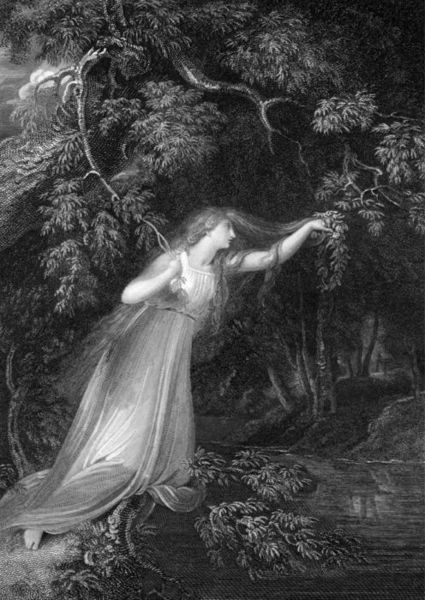
            The quad’s long arms are round him rolled,
          The prickly prong has pierced his skin,
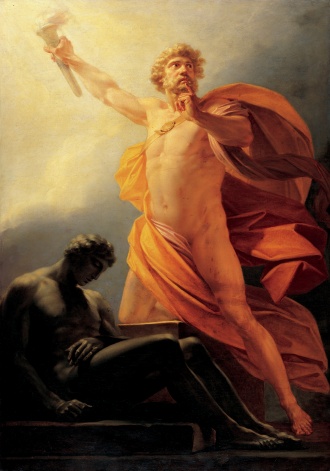
            And the squab has thrown his javelin,

          The gritty star has rubbed him raw,

            And the crab has struck with his giant claw.

          He howls with rage, and he shrieks with pain;

            He strikes around, but his blows are vain;

          Hopeless is the unequal fight

            Fairy, naught is left but flight.

 Image

(Meister)

          He turned him round and fled amain,

            With hurry and dash, to the beach again;

          He twisted over from side to side,

            And laid his cheek to the cleaving tide;

          The strokes of his plunging arms are fleet,

            And with all his might he flings his feet.

          But the water-sprites are round him still,

            To cross his path and work him ill:

          They bade the wave before him rise;

            They flung the sea-fire in his eyes;

          And they stunned his ears with the scallop-stroke,

            With the porpoise heave and the drum-fish croak.

          Oh, but a weary wight was he

            When he reached the foot of the dog-wood tree.

          Gashed and wounded, and stiff and sore,

            He laid him down on the sandy shore;

          He blessed the force of the charmed line,

            And he banned the water-goblins spite,

          For he saw around in the sweet moonshine

            Their little wee faces above the brine,

          Giggling and laughing with all their might

            At the piteous hap of the Fairy wight.


          Soon he gathered the balsam dew

            From the sorrel-leaf and the henbane bud;

          Over each wound the balm he drew,

            And with cobweb lint he stanched the blood.

          The mild west wind was soft and low;

            It cooled the heat of his burning brow,

          And he felt new life in his sinews shoot

            As he drank the juice of the calamus root.

          And now he treads the fatal shore

            As fresh and vigorous as before.

 Image

(A.Rackham – Bride Gift)

          Wrapped in musing stands the sprite

            ‘Tis the middle wane of night;

          His task is hard, his way is far,

            But he must do his errand right

          Ere dawning mounts her beamy car,

            And rolls her chariot wheels of light;

          And vain are the spells of fairy-land,

            He must work with a human hand.


          He cast a saddened look around;

            But he felt new joy his bosom swell,

          When glittering on the shadowed ground

            He saw a purple mussel-shell;

          Thither he ran, and he bent him low,

            He heaved at the stern and he heaved at the bow,

          And he pushed her over the yielding sand

            Till he came; to the verge of the haunted land.

          She was as lovely a pleasure-boat

            As ever fairy had paddled in,

          For she glowed with purple paint without,

            And shone with silvery pearl within

          A sculler’s notch in the stern he made,

            An oar he shaped of the bootle-blade;

          Then sprung to his seat with a lightsome leap,

            And launched afar on the calm, blue deep.


          The imps of the river yell and rave

            They had no power above the wave,

          But they heaved the billow before the prow,

            And they dashed the surge against her side,

          And they struck her keel with jerk and blow,

            Till the gunwale bent to the rocking tide.

          She wimpled about to the pale moonbeam,

            Like a feather that floats on a wind-tossed stream;

          And momently athwart her track

            The quad upreared his island back,

          And the fluttering scallop behind would float,

            And patter the water about the boat;

          But he bailed her out with his colon-bell,

            And he kept her trimmed with a wary tread,

          While on every side like lightning fell

            The heavy strokes of his Bootle-blade.

 Image

(A.Rackham – Soul)

          Onward still he held his way,

            Till he came where the column of moonshine lay,

          And saw beneath the surface dim

            The brown-backed sturgeon slowly swim.

          Around him were the goblin train;

            But he sculled with all his might and main,

          And followed wherever the sturgeon led,

            Till he saw him upward point his head;

          “Mien he dropped his paddle-blade,

            And held his colen-goblet up

          To catch the drop in its crimson cup.


          With sweeping tail and quivering fin

            Through the wave the sturgeon flew,

          And like the heaven-shot javelin

            He sprung above the waters blue.

          Instant as the star-fall light,

            He plunged him in the deep again,

          But left an arch of silver bright,

            The rainbow of the moony main.

          It was a strange and lovely sight

            To see the puny goblin there:

          He seemed an angel form of light,

            With azure wing and sunny hair,

          Throned on a cloud of purple fair,

            Circled with blue and edged with white,

          And sitting at the fall of even

            Beneath the bow of summer heaven.

 Image

          A moment, and its lustre fell;

            But ere it met the billow blue

          He caught within his crimson bell

            A droplet of its sparkling dew.

          Joy to thee, Fay! thy task is done;

            Thy wings are pure, for the gem is won.

          Cheerly ply thy dripping oar,

            And haste away to the elfin shore!


          He turns, and to on either side

            The ripples on his path divide;

          And the track o’er which his boat must pass

            Is smooth as a sheet of polished glass.

          Around, their limbs the sea-nymphs lave,

            With snowy arms half swelling out,

          While on the glossed and gleamy wave

            Their sea-green ringlets loosely float:

          They swim around with smile and song;

            They press the bark with pearly hand,

          And gently urge her course along,

            Toward the beach of speckled sand;

          And as he lightly leaped to land

            They bade adieu with nod and bow,

          Then gaily kissed each little hand,

            And dropped in the crystal deep below.

 Image

(EBJ)

          A moment stayed the fairy there:

            He kissed the beach and breathed a prayer;

          Then spread his wings of gilded blue,

            And on to the elfin court he flew.

          As ever ye saw a bubble rise,

            And shine with a thousand changing dyes,

          Till, lessening far, through ether driven,

            It mingles with the hues of heaven;

          As, at the glimpse of morning pale,

            The lance-fly spreads his silken sail

          And gleams with bleedings soft and bright

            Till lost in the shades of fading night;

          So rose from earth the lovely Fay,

            So vanished far in heaven away!

Image

(EBJ)

 
Picnic in Akeldama

Cooking... And something like cooking...

Tales From The Under Gardener's Lodge

Home, hearth and life immeasurable

Of Axe and Plough

Anglo-Saxon Heathenry and Roman Polytheism

My search for magic

Looking for magic in the modern world

Man of Goda

People of Goda, Clan of Tubal Cain

The Elder Tree

Life as a Witch.

Sorcerous Transmutations

Meanderings of the Muse:honouring the sacred muse in word and vision

Across the Abyss

Meanderings of the Muse:honouring the sacred muse in word and vision

Clan of the Entangled Thicket 1734

Meanderings of the Muse:honouring the sacred muse in word and vision

Daniel Bran Griffith - The Chattering Magpie

Meanderings of the Muse:honouring the sacred muse in word and vision

The Cunning Apostle

Cunning Man, Mystic, Eccentric & Outcast